Showing posts with label name - Paul Jaminet Phd. Show all posts

17.10.11

Jimmy Moore inquires about "safe starches" - Archevore Blog

Archevore - Archevore Blog - Jimmy Moore inquires about "safe starches"

Kurt Harris MD - An Archevore is someone who eats based on essential principles, and also someone who hungers for essential principles. Take your pick.

Jimmy Moore inquires about "safe starches"

This morning I got an email from Jimmy Moore inquiring what I thought about Paul Jaminet’s ideas about safe starches as espoused on his blog and in his book The Pefect Health Diet. I am not sure if Jimmy has noted the updates I’ve made in the Archevore diet, or if he has seen where I have come down on the issue of the CIH ( the carbohydrate-insulin hypothesis of obesity), as he would have to be scouring the nooks and crannies of blog comments all over the nutrition blogosphere ; )

I’ve not had time to write the magnum opus blog posts that the repuditation of the CIH really requires (and not much can be added to what Stephan has already written), so I thought this was a good opportunity to get the message outside of my own echo chamber by responding in detail to Jimmy’s inquiry. My response to him is pretty long, and I doubt if he will quote much of it, so I’ve reproduced the email response, with his inquiry broken into bits in italics and my responses afterward in roman.

Kurt, I've been getting a lot of questions this year from my "Livin' La Vida Low-Carb" blog readers about the concepts in Paul Jaminet's book "Perfect Health Diet." He advocates for eating white potatoes and white rice as part of a low-carb eating plan.

I also have come to see most starchy plant organs as perfectly legitimate fuel sources.
Low carb plans have helped people lose fat by reducing food reward from white flour and excess sugar and maybe linoleic acid. This is by accident as it happens that most of the "carbs" in our diet are coming in the form of manufactured and processed items that are simply not real food. Low carb does not work for most people via effects on blood sugar or insulin "locking away" fat. Insulin is necessary to store fat, but is not the main hormone regulating fat storage. That would be leptin.

My reading of the anthropology and ethnology literature, as well as my current understanding of biochemistry and metabolism, lead me to see the human metabolism as a multi-fuel stove, equally capable of burning either glucose or fatty acids at the cellular level depending on the organ, the task and the diet, and equally capable of depending on either animal fats or starches from plants as our dietary fuel source, depending on the biome (biological environment) we find ourselves born in or that we migrate to.

We are a highly adaptable species. It is not plausible that carbohydrates as a class of macronutrient are toxic.

Diabetics need to avoid high carbohydrate intake the same way those with gall bladder disease need to avoid fat, but carbohydrates do not cause obesity or diabetes and fat consumption does not cause gall bladder disease (in fact low fat diets may contribute to gallstone formation via stasis)

Here's a one-page explanation and illustration of Jaminet's program:http://perfecthealthdiet.com/?page_id=8
Several places in the book and on Jaminet's blog (http://perfecthealthdiet.com) he specifically warns against the danger of a very low-carb diet (defined as less than about 300-400 calories per day (~100 grams) from so-called "safe starches"--taro, plantains, yams, white potatoes, sweet potatoes, white rice and berries) because less than this leads to the risks, including: 1) "insufficient production of mucus in the digestive tract" leading to dysbiosis

I have not looked into that claim enough to comment in detail, but it seems plausible.

2) vitamin deficiencies (he particularly mentions Vitamin C and glutathione
 
Yes I would agree with that. Whites and sweets are loaded with ascorbic acid.

on pages 253-254)In particular he emphasizes these calories need to come from "safe starches and berrries" and "don't count vegetables as as a carb source (because) they are a fiber (and therefore a fat) source" (page 45).

My list is white potatoes, sweet potatoes, white rice and bananas. If more exotic fare like plantains and taro is available to you, that is fine, too. Except for white rice, these are all whole food starch sources with good mineral and micronutrient content that have been eaten in good health for thousands of years in many environments by genetically diverse populations. Many of these plants have spread far from their biomes of origin and serve as staples for populations who have adopted them with success over just the past few thousand years.

These starchy plant organs or vegetables are like night and day compared to most cereal grains, particularly wheat. One can eat more than half of calories from these safe starches without the risk of disease from phytates and mineral deficiencies one would have from relying on grains.
White rice is kind of a special case. It lacks the nutrients of root vegetables and starchy fruits like plantain and banana, but is good in reasonable quantities as it is a very benign grain that is easy to digest and gluten free.

I think consumption of quality animal products is the sine qua non of a healthy diet.

Once you have that, then eating starchy plants is more important for nutrition than eating colorful leafy greens - the veggies that are high fiber and low starch. (Some green leafy vegetables are good sources of folate and along with some fruits are sources of flavonoids that may benefit you via hormesis.)

I view most non-starchy fruit with indifference. In reasonable quantities it is fine but it won't save your life either. I like citrus now and then myself, especially grapefruit. But better to rely on starchy vegetables for carbohydrate intake than fruit.

Primitive populations practicing horticulture or hunting and gathering do not eat a lot of big green salads with lots of variety, but they do eat healthy starchy plant organs with monotony on top of their foraged animal foods.

Eating a very low carb (VLC) diet for a period of time can be a good fat loss maneuver, acting via the effects of ketosis on appetite suppression. I also like to see people limit themselves to two or three meals a day with absolutely no snacking, and it may give benefits via hormesis for longer periods of fasting (24 hours or more) once in a while.

But a long term VLC ketogenic diet is not a good idea. It does not mimic the ancestral diet in general, even if some populations have tolerated it when they had to. There is no need for most people to do it to lose fat, as food reward effects are more powerful. I would advocate long term ketosis in those with neurodegenerative brains diseases like Alzheimer dementia and Parkinson disease, and a 10 day water fast followed by long term ketogenic diet is worth trying if you have cancer.

But I would not recommend VLC ketosis as a long term way of life the way I would not recommend running a half marathon every day, or lifting weights to failure on a daily basis, or taking chemotherapy drugs when you don't have cancer. Ketosis probably stresses the body and works via hormesis. But the clean up and repair response cannot happen if there is no rest from it.

A recent post he wrote for cancer patients revealed his recommendion of obtaining 400 to 600 glucose calories a day, mainly from these safe starches. He says it is important to avoid a glucose deficiency, since glycosylated proteins are the means of intercellular coordination, and defects in glycosylation are characteristic of the cancer phenotype.

My arguments are based more on ethnography and anthropology than some of Paul's theorizing, but I arrive at pretty much the same place that he does. I personally eat around 30% carbohydrate now and have not gained an ounce from when I ate 10-15% (and I have eaten as high as 40% for over a year also with zero fat gain) If anything I think even wider ranges of carbohydrate intake are healthy.
One can probably eat well over 50% of calories from starchy plant organs as long as the animal foods you eat are of high quality and micronutrient content.

Grass fed ruminants, pastured butter and eggs and wild caught cold water fish are the kernel of a healthy diet, but the fuel source can be larger than the kernel on a caloric basis if the kernel is high quality and consistent.


He notes, "You don’t want to aggravate this with a self-induced glucose deficiency." I'd like to write a blog post about this topic of "safe starches" to help my readers understand fact from fiction and will quote from your response. THANK YOU! If you cannot assist me, then please let me know so I ask someone else to contribute.

I've given you plenty to quote from, Jimmy. Go for it!

1.7.11

Paul Jaminet, Ph.D & S. S Jaminet, Ph.D - Perfect Health Diet blog

team from the Perfect Health Diet blog:

Paul Jaminet, Ph.D. Paul was an astrophysicist at the Harvard-Smithsonian Center for Astrophysics, became a software entrepreneur during the Internet boom, and now provides strategic advice to entrepreneurial companies while pursuing research in economics (see pauljaminet.com for more information). Paul’s experience overcoming a chronic illness has been key to our views of aging and disease. Paul can be reached by email to pauljaminet@perfecthealthdiet.com.

Shou-Ching Shih Jaminet, Ph.D. Shou-Ching is a molecular biologist and cancer researcher at Beth Israel Deaconess Medical Center and Harvard Medical School, and Director of BIDMC’s Multi-Gene Transcriptional Profiling Core. Shou-Ching was born in Korea to Chinese parents, grew up in Korea, attended college at National Taiwan University in Taipei, and graduate school at University of Newcastle in Australia, before coming to the US to work at Sloan-Kettering Cancer Center, Children’s Hospital Boston, and Beth Israel Deaconess and Harvard Medical School. Her publications may be found by searching Pubmed for “Shih SC.”

30.6.11

Ketogenic diet basics - Paul Jaminet, Ph.D & Shou-Ching Shih Jaminet, Ph.D

from the Perfect Health Diet blog:

Extract:

Part 1 - Summary

Ketogenic Diets, I: Ways to Make a Diet Ketogenic | Perfect Health Diet

Three ways to make the diet ketogenic:

1)      Make Wilder’s “ketogenic ratio” high by eating a lot of fat, very few carbs, and not too much protein.
2)      Supplement with the ketogenic amino acids lysine and leucine.
3)      Supplement with coconut oil or another source of short-chain fats.

If we do (2) or (3), then the diet can be ketogenic even if it has a fair number of carbs.

So now we have an arsenal of ways to generate ketones. We have to look at diseases and diet risks to figure out which way of making the diet ketogenic is optimal.


------------------------------------------

Part 2 - Summary

 Ketogenic Diets 2: Preventing Muscle and Bone Loss on Ketogenic Diets | Perfect Health Diet

I believe the extreme limits on carb and protein intake in conventional clinical ketogenic diets are responsible for their growth stunting, muscle destroying, fattening effects.

In order to supply sufficient protein and carbs while maintaining ketosis, it is necessary to provide ketogenic short-chain fats and amino acids.

Clinical testing of such supplemented diets has so far produced encouraging results. Providing supplemental amino acids to epileptic children on ketogenic diets improved their health and allowed them to maintain ketosis with higher protein intake. Seizure frequency was reduced even as side effects diminished.

Personally, I wouldn’t attempt a long-term ketogenic diet without the aid of coconut oil (or MCTs), lysine, and the branched chain amino acids.

For the NBIA/PKAN kids, it seems that the amino acid supplements should be some mix of lysine, leucine, isoleucine, and valine, with the isoleucine and valine included solely to reduce leucine toxicity. The optimal amount of isoleucine and valine should be smaller than is found in branched-chain amino acid supplements, since leucine by itself may help prevent iron accumulation and increase ketosis. Also, one rat study [4] indicates that isoleucine alone, excluding valine, might be enough to relieve leucine toxicity. Excluding valine would increase the ketogenicity of the supplement mix.

I think the NBIA/PKAN kids will need to experiment with primarily lysine and leucine, and secondarily isoleucine and BCAA supplements, to see what mix works best for them.


References


[1] Owen OE et al. Brain metabolism during fasting. J Clin Invest. 1967 Oct;46(10):1589-95. http://pmid.us/6061736.
[1] Groesbeck DK et al. Long-term use of the ketogenic diet in the treatment of epilepsy. Dev Med Child Neurol. 2006 Dec;48(12):978-81. http://pmid.us/17109786. Hat tip CarbSane.
[2] Ribeiro LC et al. Ketogenic diet-fed rats have increased fat mass and phosphoenolpyruvate carboxykinase activity. Mol Nutr Food Res. 2008 Nov;52(11):1365-71. http://pmid.us/18655006. Hat tip CarbSane.
[3] Evangeliou A et al. Branched chain amino acids as adjunctive therapy to ketogenic diet in epilepsy: pilot study and hypothesis. J Child Neurol. 2009 Oct;24(10):1268-72. http://pmid.us/19687389. Hat tip Nigel Kinbrum.
[4] Tsubuku S et al. Thirteen-week oral toxicity study of branched-chain amino acids in rats. Int J Toxicol. 2004 Mar-Apr;23(2):119-26. http://pmid.us/15204732.
[5] Yudkoff M et al. Brain amino acid requirements and toxicity: the example of leucine. J Nutr. 2005 Jun;135(6 Suppl):1531S-8S. http://pmid.us/15930465.
[6] Mawatari K et al. Prolonged oral treatment with an essential amino acid L-leucine does not affect female reproductive function and embryo-fetal development in rats. Food Chem Toxicol. 2004 Sep;42(9):1505-11. http://pmid.us/15234081.
[7] Tsubuku S et al. Thirteen-week oral toxicity study of L-lysine hydrochloride in rats. Int J Toxicol. 2004 Mar-Apr;23(2):113-8. http://pmid.us/15204731.
Ketogenic Diets | Perfect Health Diet

26.6.11

HDL and Immunity - Perfect Health Diet

HDL and Immunity | Perfect Health Diet

HDL – high-density lipoprotein – particles are good for you: High HDL levels are associated with lower mortality overall and lower mortality from many diseases – not only cardiovascular disease but also cancer and infection.

People with high HDL are only one-sixth as likely to develop pneumonia [1], and in the Leiden 85-Plus study, those with high HDL experienced 35% lower mortality from infection [2].
Each rise of 16.6 mg/dl in HDL reduced the risk of bowel cancer by 22% in the EPIC study. [3]
In terms of overall mortality, in the VA Normative Aging Study, “Each 10-mg/dl increment in HDL cholesterol was associated with a 14% [decrease] in risk of mortality before 85 years of age.” [4]
This must be surprising to those who think HDL is only a carrier of cholesterol. The lipid hypothesis presumed that the function of HDL is to clear toxic cholesterol from arteries, cholesterol having evolved for the purpose of giving us heart attacks. HDL then brings cholesterol to the liver which disposes of it returns it to the blood via LDL (which evolved for the purpose of poisoning arteries with cholesterol, and giving HDL something to do). (Hat tip to Peter for this formulation of the lipid hypothesis.)

But there is an alternative hypothesis: that infections cause disease, and that HDL has an immune function. This hypothesis would explain why HDL protects against infections and against all diseases of aging.

Conclusion

HDL particles are “Trojan Horses” that attack pathogens and neutralize their toxins.
If you want to remain free from infectious diseases – which is to say, all diseases – to a ripe old age, it’s important to make your HDL particles numerous.

On Thursday, I’ll discuss ways to do that.

References

[1] Gruber M et al. Prognostic impact of plasma lipids in patients with lower respiratory tract infections – an observational study. Swiss Med Wkly. 2009 Mar 21;139(11-12):166-72. http://pmid.us/19330560.
[2] Berbรฉe JF et al. Plasma apolipoprotein CI protects against mortality from infection in old age. J Gerontol A Biol Sci Med Sci. 2008 Feb;63(2):122-6. http://pmid.us/18314445
[3] van Duijnhoven FJ et al. Blood lipid and lipoprotein concentrations and colorectal cancer risk in the European Prospective Investigation into Cancer and Nutrition. Gut. 2011 Mar 7. [Epub ahead of print] http://pmid.us/21383385.
[4] Rahilly-Tierney CR et al. Relation Between High-Density Lipoprotein Cholesterol and Survival to Age 85 Years in Men (from the VA Normative Aging Study). Am J Cardiol. 2011 Apr 15;107(8):1173-7. http://pmid.us/21296318.
[5] Kieft R et al. Mechanism of Trypanosoma brucei gambiense (group 1) resistance to human trypanosome lytic factor. Proc Natl Acad Sci U S A. 2010 Sep 14;107(37):16137-16141. http://pmid.us/20805508.
[6] Cheung MC et al. Phospholipid transfer protein in human plasma associates with proteins linked to immunity and inflammation. Biochemistry. 2010 Aug 31;49(34):7314-22. http://pmid.us/20666409.
[7] Genovese G et al. Association of trypanolytic ApoL1 variants with kidney disease in African Americans. Science. 2010 Aug 13;329(5993):841-5. http://pmid.us/20647424.
[8] Henning MF et al. Contribution of the C-terminal end of apolipoprotein AI to neutralization of lipopolysaccharide endotoxic effect. Innate Immun. 2010 May 25. [Epub ahead of print] http://pmid.us/20501516.
[9] El Harchaoui K et al. High-density lipoprotein particle size and concentration and coronary risk. Ann Intern Med. 2009 Jan 20;150(2):84-93. http://pmid.us/19153411.

Dangers of Zero-Carb Diets - No 4 kidney stones

Dangers of Zero-Carb Diets, IV: Kidney Stones | Perfect Health Diet

Conclusion

Zero-carb dieters are at risk for

  • Excess renal oxalate from failure to recycle vitamin C;
  • Excess renal uric acid from disposal of nitrogen products of gluconeogenesis and ketogenesis;
  • Salt and other electrolyte deficiencies from excretion of oxalate, urea and uric acid; and
  • Dehydration.

These four conditions dramatically elevate the risk of kidney stones.

To remedy these deficiencies, we recommend that everyone who fasts or who follows a zero-carb diet obtain dietary and supplemental antioxidants, eat salt and other electrolytes, and drink lots of water.

Also, unless there is a therapeutic reason to restrict carbohydrates, it is best to obtain about 20% of calories from carbs in order to relieve the need to manufacture glucose and ketones from protein. This will substantially reduce uric acid excretion. If it also reduces vitamin C degradation rates, as we argued in our last post, then it will substantially reduce oxalate excretion as well.

Related Posts

Other posts in this series:

  1. Dangers of Zero-Carb Diets, I: Can There Be a Carbohydrate Deficiency? Nov 10, 2010.
  2. Dangers of Zero-Carb Diets, II: Mucus Deficiency and Gastrointestinal Cancers A Nov 15, 2010.
  3. Danger of Zero-Carb Diets III: Scurvy Nov 20, 2010.

References

[1] Furth SL et al. Risk factors for urolithiasis in children on the ketogenic diet. Pediatr Nephrol. 2000 Nov;15(1-2):125-8. http://pmid.us/11095028.

[2] Herzberg GZ et al. Urolithiasis associated with the ketogenic diet. J Pediatr. 1990 Nov;117(5):743-5. http://pmid.us/2231206.

[3] Sampath A et al. Kidney stones and the ketogenic diet: risk factors and prevention. J Child Neurol. 2007 Apr;22(4):375-8. http://pmid.us/17621514.

[4] “Ketogenic diet,” Wikipedia, http://en.wikipedia.org/wiki/Ketogenic_diet.

[5] Groesbeck DK et al. Long-term use of the ketogenic diet. Dev Med Child Neurol. 2006 Dec;48(12):978-81. http://pmid.us/17109786.

[6] Taylor EN et al. DASH-style diet associates with reduced risk for kidney stones. J Am Soc Nephrol. 2009 Oct;20(10):2253-9. http://pmid.us/19679672.

[7] Gutman AB. Significance of uric acid as a nitrogenous waste in vertebrate evolution. Arthritis Rheum. 1965 Oct;8(5):614-26. http://pmid.us/5892984.

[8] Boyle JA et al. Serum uric acid levels in normal pregnancy with observations on the renal excretion of urate in pregnancy. J Clin Pathol. 1966 Sep;19(5):501-3. http://pmid.us/5919366.

[9] Linster CL, Van Schaftingen E. Vitamin C. Biosynthesis, recycling and degradation in mammals. FEBS J. 2007 Jan;274(1):1-22. http://pmid.us/17222174.

[10] Marengo SR, Romani AM. Oxalate in renal stone disease: the terminal metabolite that just won’t go away. Nat Clin Pract Nephrol. 2008 Jul;4(7):368-77. http://pmid.us/18523430.

[11] Taylor EN et al. Fatty acid intake and incident nephrolithiasis. Am J Kidney Dis. 2005 Feb;45(2):267-74. http://pmid.us/15685503.

[12] Taylor EN, Curhan GC. Oxalate intake and the risk for nephrolithiasis. J Am Soc Nephrol. 2007 Jul;18(7):2198-204. http://pmid.us/17538185.

Danger of Zero-Carb Diets - No 3 Scurvy

Danger of Zero-Carb Diets III: Scurvy | Perfect Health Diet

Conclusion

Zero-carb dieters are at high risk for vitamin C deficiency, glutathione deficiency, and selenium deficiency. Anyone on a zero-carb diet should remedy these by supplementation.

These deficiencies are exacerbated by chronically low insulin levels. Insulin helps recycle vitamin C, which supports glutathione status. Lack of insulin increases vitamin C degradation and loss.

The failure of the body to efficiently recycle vitamin C and maintain antioxidant stores on a zero-carb diet is evidence of an evolutionary maladaption to the zero-carb diet.

There was no reason why our ancestors should have become adapted to a zero-carb diet; after, all they’ve been eating starches for at least 2 million years. It seems a risky step to try to live this way.

Related Posts

Other posts in this series:

  1. Dangers of Zero-Carb Diets, I: Can There Be a Carbohydrate Deficiency? Nov 10, 2010.
  2. Dangers of Zero-Carb Diets, II: Mucus Deficiency and Gastrointestinal Cancers A Nov 15, 2010.
  3. Dangers of Zero-Carb Diets, IV: Kidney Stones Nov 23, 2010.

References

[1] Willmott NS, Bryan RA. Case report: Scurvy in an epileptic child on a ketogenic diet with oral complications. Eur Arch Paediatr Dent. 2008 Sep;9(3):148-52. http://pmid.us/18793598.

[2] Willmott NS, personal communication.

[3] “Dehydroascorbate,” Wikipedia, http://en.wikipedia.org/wiki/Dehydroascorbate.

[4] Fain O et al. Hypovitaminosis C in hospitalized patients. Eur J Intern Med. 2003 Nov;14(7):419-425. http://pmid.us/14614974.

[5] Tyml K et al. Delayed ascorbate bolus protects against maldistribution of microvascular blood flow in septic rat skeletal muscle. Crit Care Med. 2005 Aug;33(8):1823-8. http://pmid.us/16096461.

[6] Rivas CI et al. Vitamin C transporters. J Physiol Biochem. 2008 Dec;64(4):357-75. http://pmid.us/19391462.

[7] Huang J et al. Dehydroascorbic acid, a blood-brain barrier transportable form of vitamin C, mediates potent cerebroprotection in experimental stroke. Proc Natl Acad Sci U S A. 2001 Sep 25;98(20):11720-4. http://pmid.us/11573006.

[8] Qutob S et al. Insulin stimulates vitamin C recycling and ascorbate accumulation in osteoblastic cells. Endocrinology. 1998 Jan;139(1):51-6. http://pmid.us/9421397.

[9] Will JC, Byers T. Does diabetes mellitus increase the requirement for vitamin C? Nutr Rev. 1996 Jul;54(7):193-202. http://pmid.us/8918139.

[10] Seghieri G et al. Renal excretion of ascorbic acid in insulin dependent diabetes mellitus. Int J Vitam Nutr Res. 1994;64(2):119-24. http://pmid.us/7960490.

[11] Linster CL, Van Schaftingen E. Vitamin C. Biosynthesis, recycling and degradation in mammals. FEBS J. 2007 Jan;274(1):1-22. http://pmid.us/17222174.

[12] Bank IM et al. Sudden cardiac death in association with the ketogenic diet. Pediatr Neurol. 2008 Dec;39(6):429-31. http://pmid.us/19027591. (Hat tip Dr. Deans.)

Dangers of Zero-Carb Diets - No 2 mucus & cancerstinal Cancers | Perfect Health Diet

Dangers of Zero-Carb Diets, II: Mucus Deficiency and Gastrointestinal Cancers | Perfect Health Diet

Conclusion

A healthy diet should be robust to faults. The Optimal Diet is not robust to glucose deficiency.

There’s good reason to suspect that at least some of the Optimal Dieters developed mucin deficiencies as a result of the body’s effort to conserve glucose and protein. This would have substantially elevated risk of gastrointestinal cancers. Thus, it’s not a great surprise that many Optimal Dieters have been coming down with GI cancers after 15-20 years on the diet.

We recommend a carb plus protein intake of at least 600 calories per day to avoid possible glucose deficiency. It’s plausible that a zero-carb diet that included at least 600 calories per day protein for gluconeogenesis would not elevate gastrointestinal cancer risks as much as the Optimal Diet. But why be the guinea pig who tests this idea? Your body needs some glucose, and it’s surely less stressful on the body to supply some glucose, rather than forcing the body to manufacture glucose from protein.

Fasting and low-carb ketogenic diets are therapeutic for various conditions. But anyone on a fast or ketogenic diet should carefully monitor eyes and mouth for signs of decreased saliva or tear production. If there is a sign of dry eyes or dry mouth, the fast should be interrupted to eat some glucose/starch. Rice is a good source. The concern is not only cancer in 15 years; a healthy mucosal barrier is also essential to protect the gut and airways against pathogens.

Related Posts

Other posts in this series:

  1. Dangers of Zero-Carb Diets, I: Can There Be a Carbohydrate Deficiency? Nov 10, 2010.
  2. Danger of Zero-Carb Diets III: Scurvy Nov 20, 2010.
  3. Dangers of Zero-Carb Diets, IV: Kidney Stones Nov 23, 2010.

References

[1] Sonksen P, Sonksen J. Insulin: understanding its action in health and disease. Br J Anaesth. 2000 Jul;85(1):69-79. http://pmid.us/10927996.

[2] Peek RM Jr, Crabtree JE. Helicobacter infection and gastric neoplasia. J Pathol. 2006 Jan;208(2):233-48. http://pmid.us/16362989.

[3] Bornschein J et al. H. pylori Infection Is a Key Risk Factor for Proximal Gastric Cancer. Dig Dis Sci. 2010 Jul 29. [Epub ahead of print] http://pmid.us/20668939.

[4] Guang W et al. Muc1 cell surface mucin attenuates epithelial inflammation in response to a common mucosal pathogen. J Biol Chem. 2010 Jul 2;285(27):20547-57. http://pmid.us/20430889.

[5] Velcich A et al. Colorectal cancer in mice genetically deficient in the mucin Muc2. Science. 2002 Mar 1;295(5560):1726-9. http://pmid.us/11872843.

[6] An G et al. Increased susceptibility to colitis and colorectal tumors in mice lacking core 3-derived O-glycans. J Exp Med. 2007 Jun 11;204(6):1417-29. http://pmid.us/17517967.

[7] Paz HB et al. The role of calcium in mucin packaging within goblet cells. Exp Eye Res. 2003 Jul;77(1):69-75. http://pmid.us/12823989.

[8] Schmidt DR, Mangelsdorf DJ. Nuclear receptors of the enteric tract: guarding the frontier. Nutr Rev. 2008 Oct;66(10 Suppl 2):S88-97. http://pmid.us/18844851.

[9] Go?kowski F et al. Iodine prophylaxis–the protective factor against stomach cancer in iodine deficient areas. Eur J Nutr. 2007 Aug;46(5):251-6. http://pmid.us/17497074.

Dangers of Zero-Carb Diets - No 1 introarbohydrate Deficiency? | Perfect Health Diet

Dangers of Zero-Carb Diets, I: Can There Be a Carbohydrate Deficiency? | Perfect Health Diet
It’s frequently said in the Paleo blogosphere that carbs are unnecessary. Here’s an example from Don Matesz, an outstanding blogger who eats a diet extremely close to ours:
Protein is essential, carbs are not…. You can only cut protein so much, but you can cut carbs dramatically.
Dr. Michael Eades has mocked the idea of a carbohydrate deficiency disease:
Are there carbohydrate deficiency diseases, Mr. Harper, that you know about that the rest of the nutritional world doesn’t?  I’ll clue you in: there aren’t.  But there are both fat and protein deficiency diseases written about in every internal medicine textbook.
Such statements made an impression on me when I first started eating Paleo five years ago. But several years and health problems later, I realized that this view was mistaken.

How Should We Look for a Carbohydrate Deficiency Disease?

To find a carbohydrate deficiency syndrome in humans, we should look at populations that eat very low-carb diets, such as:
  • The Inuit on their traditional hunting diet.
  • Epilepsy patients being treated with a ketogenic diet.
  • Optimal Dieters in Poland, who have been following a very low-carb diet for more than 20 years.
  • Very low-carb dieters in other countries, who took up low-carb dieting in the last 10 years as the Paleo movement gathered steam.
We should also have an idea what kind of symptoms we should be looking for. Major glucose-consuming parts of the body are:
  • Brain and nerves.
  • Immune system.
  • Gut.
The body goes to great lengths to assure that the brain and nerves receive sufficient energy, so shortfalls in glucose are most likely to show up in immune and gut function.
So, we’ve mapped our project. Over the coming week, or however long it takes before we get tired, we’ll investigate the evidence for carbohydrate deficiency conditions in humans.

Related Posts

Other posts in this series:
  1. Dangers of Zero-Carb Diets, II: Mucus Deficiency and Gastrointestinal Cancers A Nov 15, 2010.
  2. Danger of Zero-Carb Diets III: Scurvy Nov 20, 2010.
  3. Dangers of Zero-Carb Diets, IV: Kidney Stones Nov 23, 2010.

References

[1] Holman RT. The slow discovery of the importance of omega 3 essential fatty acids in human health. J Nutr. 1998 Feb;128(2 Suppl):427S-433S. http://pmid.us/9478042
[2] Aiello LC, Wheeler P. The expensive tissue hypothesis: the brain and the digestive system in human and primate evolution. Current Anthropology 1995(Apr); 36(2):199-211.

How to Raise HDL | Perfect Health Diet

How to Raise HDL | Perfect Health Diet

Conclusion

HDL can be raised in destructive ways – such as ingestion of toxins or pathogens – but there are healthy ways to raise HDL.

I believe the following four ways are healthiest, and are sufficient to optimize HDL levels:

  • Eat a nourishing diet rich in saturated and monounsaturated fat, especially dairy fat, but low in omega-6 fats, fructose, and other toxins. In short: eat the Perfect Health Diet.
  • Be physically active. Be on your feet as much as possible; favor a standing desk over sitting. Do resistance exercise or other intense exercise occasionally.
  • Engage in intermittent fasting, and consume a lot of coconut oil, coconut milk, or MCTs to stimulate the ketone receptor.
  • Drink alcoholic beverages – but only when consuming meals low in polyunsaturated fats. Drink up when you eat beef, but be cautious when the entrรฉe is salmon.

Niacin, the most effective pharmaceutical for raising HDL, has some toxicity and is probably inferior to coconut oil and intermittent fasting except in people with protozoal or fungal infections.

Our best wishes for high HDL!

Related posts:

References

[1] Navab M et al. HDL and cardiovascular disease: atherogenic and atheroprotective mechanisms. Nat Rev Cardiol. 2011 Apr;8(4):222-32. http://pmid.us/21304474.

[2] Ahmed K et al. GPR109A, GPR109B and GPR81, a family of hydroxy-carboxylic acid receptors. Trends Pharmacol Sci. 2009 Nov;30(11):557-62. http://pmid.us/19837462.

[3] Spate-Douglas T, Keyser RE. Exercise intensity: its effect on the high-density lipoprotein profile. Arch Phys Med Rehabil. 1999 Jun;80(6):691-5. http://pmid.us/10378497.

[4] Bey L, Hamilton MT. Suppression of skeletal muscle lipoprotein lipase activity during physical inactivity: a molecular reason to maintain daily low-intensity activity. J Physiol. 2003 Sep 1;551(Pt 2):673-82. http://pmid.us/12815182.

[5] Yanagibori R et al. The effects of 20 days bed rest on serum lipids and lipoprotein concentrations in healthy young subjects. J Gravit Physiol. 1997 Jan;4(1):S82-90. http://pmid.us/11541183.

[6] Costa RR et al. Effects of resistance training on the lipid profile in obese women. J Sports Med Phys Fitness. 2011 Mar;51(1):169-77. http://pmid.us/21297577.

[7] Hamilton MT et al. Role of low energy expenditure and sitting in obesity, metabolic syndrome, type 2 diabetes, and cardiovascular disease. Diabetes. 2007 Nov;56(11):2655-67. http://pmid.us/17827399.

[8] Tall AR et al. Metabolic fate of chylomicron phospholipids and apoproteins in the rat. J Clin Invest. 1979 Oct;64(4):977-89. http://pmid.us/225354.

[9] Rice BH et al. Ruminant-produced trans-fatty acids raise plasma total and small HDL particle concentrations in male Hartley guinea pigs. J Nutr. 2010 Dec;140(12):2173-9. http://pmid.us/20980644.

[9b] Mozaffarian D et al. Trans-palmitoleic acid, metabolic risk factors, and new-onset diabetes in U.S. adults: a cohort study. Ann Intern Med. 2010 Dec 21;153(12):790-9. http://pmid.us/21173413.

[10] Lakshman R et al. Is alcohol beneficial or harmful for cardioprotection? Genes Nutr. [Epub ahead of print] http://pmid.us/20012900.

[11] Thornton J et al. Moderate alcohol intake reduces bile cholesterol saturation and raises HDL cholesterol. Lancet. 1983 Oct 8;2(8354):819-22. http://pmid.us/6137650.

[12] McConnell MV et al. Effects of a single, daily alcoholic beverage on lipid and hemostatic markers of cardiovascular risk. Am J Cardiol. 1997 Nov 1;80(9):1226-8. http://pmid.us/9359559.

[13] Brien SE et al. Effect of alcohol consumption on biological markers associated with risk of coronary heart disease: systematic review and meta-analysis of interventional studies. BMJ. 2011 Feb 22;342:d636. http://pmid.us/21343206.

[14] Suh I et al. Alcohol use and mortality from coronary heart disease: the role of high-density lipoprotein cholesterol. The Multiple Risk Factor Intervention Trial Research Group. Ann Intern Med. 1992 Jun 1;116(11):881-7. http://pmid.us/1580443.

[15] Carlson LA, Hamsten A, Asplund A. Pronounced lowering of serum levels of lipoprotein Lp(a) in hyperlipidaemic subjects treated with nicotinic acid. J Intern Med 1989; 226: 271–6.

[16] Carlson LA. Nicotinic acid: the broad-spectrum lipid drug. A 50th anniversary review. J Intern Med. 2005 Aug;258(2):94-114. http://pmid.us/16018787.

[17] Dunbar RL, Gelfand JM. Seeing red: flushing out instigators of niacin-associated skin toxicity. J Clin Invest. 2010 Aug 2;120(8):2651-5. http://pmid.us/20664168.

[18] Bassan M. A case for immediate-release niacin. Heart Lung. 2011 Mar 15. [Epub ahead of print] http://pmid.us/21414665.

[19] Lukasova M et al. Nicotinic acid inhibits progression of atherosclerosis in mice through its receptor GPR109A expressed by immune cells. J Clin Invest. 2011 Mar 1;121(3):1163-73. http://pmid.us/21317532.

[20] Li Y et al. Effects of multivitamin and mineral supplementation on adiposity, energy expenditure and lipid profiles in obese Chinese women. Int J Obes (Lond). 2010 Jun;34(6):1070-7. http://pmid.us/20142823.

[21] Yanai H, Morimoto M. Effect of ascorbate on serum lipids and urate metabolism during exhaustive training. Clin Sci (Lond). 2004 Jan;106(1):107-9. http://pmid.us/12927020.

[22] Choi MJ. Effects of dietary taurine supplementation on plasma and liver lipids in OVX rats fed calcium-deficient diet. Nutr Res Pract. 2008 Spring;2(1):13-6. http://pmid.us/20126359.

[23] Elvevoll EO et al. Seafood diets: hypolipidemic and antiatherogenic effects of taurine and n-3 fatty acids. Atherosclerosis. 2008 Oct;200(2):396-402. http://pmid.us/18242615.

[24] Ruiz-Roso B et al. Insoluble carob fiber rich in polyphenols lowers total and LDL cholesterol in hypercholesterolemic sujects. Plant Foods Hum Nutr. 2010 Mar;65(1):50-6. http://pmid.us/20094802.

[25] Giacosa A, Rondanelli M. The right fiber for the right disease: an update on the psyllium seed husk and the metabolic syndrome. J Clin Gastroenterol. 2010 Sep;44 Suppl 1:S58-60. http://pmid.us/20616745.

[26] Ishikawa M et al. Taurine’s health influence on Japanese high school girls. J Biomed Sci. 2010 Aug 24;17 Suppl 1:S47. http://pmid.us/20804624.

[27] Hata Y, Nakajima K. Life-style and serum lipids and lipoproteins. J Atheroscler Thromb. 2000;7(4):177-97. http://pmid.us/11521681.

HDL: Higher is Good, But is Highest Best? | Perfect Health Diet

HDL: Higher is Good, But is Highest Best? | Perfect Health Diet

Conclusion

There’s little data to evaluate the healthfulness of very high HDL levels, but what data we have suggests that more is better.

There’s also a plausible (to me) evolutionary story for why our optimal HDL levels may be far higher than the ones selected by evolution.

For most biomarkers I would trust evolutionary selection and let my body do whatever it wants; but for HDL I will make an exception. I think we will benefit from dietary tactics that raise HDL levels above the evolutionary norm. And this is especially true for those with infectious diseases.

So my judgment is: let’s be like Richard Nikoley and aim for high HDL. I’ll discuss how on Tuesday.

References

[1] Pirillo A et al. Modification of HDL3 by mild oxidative stress increases ATP-binding cassette transporter 1-mediated cholesterol efflux. Cardiovasc Res. 2007 Aug 1;75(3):566-74. http://pmid.us/17524375.
[2] Berrougui H, Khalil A. Age-associated decrease of high-density lipoprotein-mediated reverse cholesterol transport activity. Rejuvenation Res. 2009 Apr;12(2):117-26. http://pmid.us/19405812.
[3] Feingold KR, Grunfeld C. The acute phase response inhibits reverse cholesterol transport. J Lipid Res. 2010 Apr;51(4):682-4. http://pmid.us/20071695.
[4] Undurti A et al. Modification of high density lipoprotein by myeloperoxidase generates a pro-inflammatory particle. J Biol Chem. 2009 Nov 6;284(45):30825-35. http://pmid.us/19726691.
[5] Smith JD. Myeloperoxidase, inflammation, and dysfunctional high-density lipoprotein. J Clin Lipidol. 2010 Sep-Oct;4(5):382-8. http://pmid.us/21076633.
[6] Lindeberg S et al. Determinants of serum triglycerides and high-density lipoprotein cholesterol in traditional Trobriand Islanders: the Kitava Study. Scand J Clin Lab Invest. 2003;63(3):175-80. http://pmid.us/12817903.
[7] Wang S et al. Prevalence and associated factors of dyslipidemia in the adult chinese population. PLoS One. 2011 Mar 10;6(3):e17326. http://pmid.us/21423741.
[8] He J et al. Serum total and lipoprotein cholesterol levels and awareness, treatment, and control of hypercholesterolemia in China. Circulation. 2004 Jul 27;110(4):405-11. http://pmid.us/15238453.
[9] Rahilly-Tierney CR et al. Relation Between High-Density Lipoprotein Cholesterol and Survival to Age 85 Years in Men (from the VA Normative Aging Study). Am J Cardiol. 2011 Apr 15;107(8):1173-7. http://pmid.us/21296318.

Omega-3 - New Paper: Linked to Cancer Progression

Omega-3 Fats, Angiogenesis, and Cancer: Part I | Perfect Health Diet

New Paper: DHA Linked to Cancer Progression

A new paper, just published yesterday, from “the largest study ever to examine the association of dietary fats and prostate cancer risk” has linked blood DHA levels to cancer risk. Specifically:

Docosahexaenoic acid was positively associated with high-grade disease (quartile 4 vs. 1: odds ratio (OR) = 2.50, 95% confidence interval (CI): 1.34, 4.65) … [4]

This is a large effect: the highest quartile had 2.5-fold higher risk than the lowest-quartile.

That it was the omega-3 DHA specifically, and not polyunsaturated fats generally, that caused the problem, is supported by the fact that (note: edited to correct error in original post – PJ) omega-6 linoleic acid had no effect, and 18:1 and 18:2 trans-fats which are mostly obtained from partially hydrogenated vegetable oils were associated with protection against cancer:

TFA 18:1 and TFA 18:2 were linearly and inversely associated with risk of high-grade prostate cancer (quartile 4 vs. 1: TFA 18:1, OR = 0.55, 95% CI: 0.30, 0.98; TFA 18:2, OR = 0.48, 95% CI: 0.27, 0.84). [4]

People in the top trans-fat quartile had only half the risk of people in the lowest omega-6 quartile. This makes it looks like omega-6-derived trans-fats were protective.

This result conflicts with the idea that the only influence of omega-3 fats is through regulation of inflammation; if so the anti-inflammatory omega-3 would have suppressed cancer. As lead study author Theodore Brasky said in the press release:

“We were stunned to see these results and we spent a lot of time making sure the analyses were correct,” said Brasky, a postdoctoral research fellow in the Hutchinson Center’s Cancer Prevention Program. “Our findings turn what we know — or rather what we think we know — about diet, inflammation and the development of prostate cancer on its head and shine a light on the complexity of studying the association between nutrition and the risk of various chronic diseases.”

Angiogenesis A Possible Pathway

Angiogenesis is very important for cancer progression. Cancers need to form angiogenic vessels if the tumor is to be able to grow beyond about 0.5 mm (0.02 inch) in diameter.

Indeed, angiogenesis seems to be a controlling factor for cancer mortality risk. It is believed that 50% of adults over age 40, and 100% of adults over age 70, have microscopic cancers. However, most tumors never develop an ability to induce angiogenesis and thus the tumors never grow beyond 0.5 mm and cause no observable disease.

Dietary factors that promote angiogenesis favor cancer progression, and anti-angiogenic factors tend to prevent cancer progression. Diet seems to be crucial for cancer prevention. Here is a TED video by Dr. William Li discussing the link between angiogenesis, dietary influences upon angiogenesis, and cancer.

Conclusion

So far, we’ve set the stage. On Thursday I’ll discuss a mechanism by which excessive DHA intake may promote angiogenesis. If this mechanism is important, then excessive fish oil or DHA supplementation may act as a major cancer-promoting food.

UPDATE: The next post in this series: Omega-3s, Angiogenesis and Cancer: Part II

References

[1] Nanji AA et al. Dietary saturated fatty acids: a novel treatment for alcoholic liver disease. Gastroenterology. 1995 Aug;109(2):547-54. http://pmid.us/7615205.

[2] Church MW et al. Excess omega-3 fatty acid consumption by mothers during pregnancy and lactation caused shorter life span and abnormal ABRs in old adult offspring. Neurotoxicol Teratol. 2010 March – April;32(2):171-181. http://pmid.us/19818397.

[3] Szymczak M et al. Modulation of angiogenesis by omega-3 polyunsaturated fatty acids is mediated by cyclooxygenases. Blood. 2008 Apr 1;111(7):3514-21. http://pmid.us/18216296.

[4] Brasky TM et al. Serum Phospholipid Fatty Acids and Prostate Cancer Risk: Results From the Prostate Cancer Prevention Trial. Am. J. Epidemiol. April 24, 2011 DOI: 10.1093/aje/kwr027 (Will be at http://pmid.us/21518693.)

Omega-3 - Angiogenesis & Cancer

Omega-3s, Angiogenesis and Cancer: Part II | Perfect Health Diet
Omega-3 - Angiogenesis & Cancer

Conclusion

It looks like we have a recipe for angiogenesis:

DHA + retinyl + oxidative stress = angiogenesis

This recipe is invoked normally and properly during wound healing. But it is also invoked excessively in pathological contexts – notably in cancers and age-related macular degeneration, probably also in other angiogenesis-associated diseases such as arthritis, rosacea, obesity, psoriasis, endometriosis, dementia, and multiple sclerosis.
In the case of cancer, DHA oxidation to CEP might transform miniscule, harmless cancers to high-grade, life-threatening cancers.
Should this possibility affect our dietary omega-3 recommendations? Well, we need to know the relative importance of the three ingredients on the left side of the above equation in producing angiogenesis. Chris Kresser wondered in the comments Tuesday whether oxidation may be the key factor:
I question whether DHA supplementation would truly play a causative role in the absence of a *pro-oxidative environment*.
In other words, perhaps in someone eating a SAD, not exercising, under a lot of stress, etc. DHA is more easily oxidized and thus potentially carcinogenic.
But in someone that is keeping all other oxidative risk factors low (i.e. they’re avoiding n-6, exercising, managing stress, reducing exposure to chemical toxins, etc.) I tend to doubt that supplementing with DHA could cause significant harm.
That’s the last piece of the puzzle: how do we minimize the level of oxidized DHA?
As I replied to Chris in the comments, low-carb Paleo dieters are not out of the woods in regard to oxidative stress. Oxidative stress is generated normally during metabolism, immune function – and by cancers. If anti-oxidant minerals like zinc, copper, and selenium and vitamins like vitamin C are deficient, then oxidative stress can be very high on a low-carb Paleo diet.
At the moment, I think it’s prudent to eat no more than 1 pound of salmon or similar cold-water fish per week, to avoid further EPA/DHA supplements, and to avoid low-fat diets which tend to elevate membrane DHA levels. Moderate omega-3 consumption is especially important for those suffering from diseases of pathological angiogenesis – especially cancer. DHA is essential for good health – but in excess, it is probably dangerous.

References

[1] Brasky TM et al. Serum Phospholipid Fatty Acids and Prostate Cancer Risk: Results From the Prostate Cancer Prevention Trial. Am. J. Epidemiol. April 24, 2011 DOI: 10.1093/aje/kwr027 (Will be at http://pmid.us/21518693.)
[2] Raatz SK et al. Total fat intake modifies plasma fatty acid composition in humans. J Nutr. 2001 Feb;131(2):231-4. http://pmid.us/11160538.
[3] MacLean CH, Newberry SJ, Mojica WA, et al. Effects of Omega-3 Fatty Acids on Cancer. Summary, Evidence Report/Technology Assessment: Number 113. AHRQ Publication Number 05-E010-1, February 2005. Agency for Healthcare Research and Quality, Rockville, MD. http://www.ahrq.gov/clinic/epcsums/o3cansum.htm.
[4] Harris RE. Cyclooxygenase-2 (cox-2) and the inflammogenesis of cancer. Subcell Biochem. 2007;42:93-126. http://pmid.us/17612047.
[5] Gu X et al. Carboxyethylpyrrole protein adducts and autoantibodies, biomarkers for age-related macular degeneration. J Biol Chem. 2003 Oct 24;278(43):42027-35. http://pmid.us/12923198.
[6] Hollyfield JG et al. A hapten generated from an oxidation fragment of docosahexaenoic acid is sufficient to initiate age-related macular degeneration. Mol Neurobiol. 2010 Jun;41(2-3):290-8. http://pmid.us/20221855.
[7] West XZ et al. Oxidative stress induces angiogenesis by activating TLR2 with novel endogenous ligands. Nature. 2010 Oct 21;467(7318):972-6. http://pmid.us/20927103.
[8] Amann PM et al. Vitamin A metabolism in benign and malignant melanocytic skin cells: Importance of lecithin/retinol acyltransferase and RPE65. J Cell Physiol. 2011 Apr 4. doi: 10.1002/jcp.22779. [Epub ahead of print] http://pmid.us/21465477.

Omega-3 - Angiogenesis, excess & Cancer

Omega-3 Fats, Angiogenesis, and Cancer: Part I | Perfect Health Diet

Some Known Consequences of Omega-3 Excess

What are the likely consequences of omega-3 toxicity?

The obvious dangers are those related to oxidative stress from lipid peroxidation. The concern with omega-3 fats is not direct toxicity, but toxicity from their oxidation products. Omega-3 fats have a lot of fragile carbon double bonds which are easily oxidized: EPA has 5 double bonds and DHA 6. These are therefore among the most fragile lipids in the human body.

We would expect such problems to show up primarily in the liver and in the nervous system, where EPA and DHA levels are highest.

Indeed, they do. In mice, high dietary omega-3, in conjunction with alcohol or sugar, induces fatty liver disease. [1] In pregnant rats, excessive doses of omega-3 fats cause offspring to have shortened life span and neural degeneration. The authors concluded, “both over- and under-supplementation with omega-3 FA can harm offspring development.” [2]

However, there are associations of high omega-3 intake with disease in other tissues. In particular, emerging work is linking high omega-3 intake to diseases of pathological angiogenesis.

Angiogenesis is the creation of new blood vessels in mature tissue. (Vasculogenesis is the creation of vessels in a developing embryo.) It is a normal part of wound healing, but over a dozen diseases feature inappropriate angiogenesis.

Omega-3 Intake Is Usually Anti-Angiogenic

Before I go further, let me emphasize that nothing I am saying here repudiates the idea that it is desirable to bring tissue omega-6 and omega-3 fats into proper balance.

There are many studies showing that when tissue omega-6 to omega-3 ratios are too high, as on the standard American diet (SAD), additional omega-3 DHA and EPA can improve the omega-6 to omega-3 balance, reduce inflammatory signaling, and through reduced inflammation exercise an anti-angiogenic effect.

The mechanisms linking the anti-angiogenic effects of omega-3 to a condition of omega-6 excess are fairly well understood. Here is one description of the mechanism:

Here, we demonstrate that omega-6 PUFAs stimulate and omega-3 PUFAs inhibit major proangiogenic processes in human endothelial cells, including the induction of angiopoietin-2 (Ang2) and matrix metalloprotease-9, endothelial invasion, and tube formation, that are usually activated by the major omega-6 PUFA arachidonic acid. The cyclooxygenase (COX)-mediated conversion of PUFAs to prostanoid derivatives participated in modulation of the expression of Ang2. Thus, the omega-6 PUFA-derived prostaglandin E2 augmented, whereas the omega-3 PUFA-derived prostaglandin E3 suppressed the induction of Ang2 by growth factors. Our findings are consistent with the suggestion that PUFAs undergo biotransformation by COX-2 to lipid mediators that modulate tumor angiogenesis, which provides new insight into the beneficial effects of omega-3 PUFAs. [3]

So the question at issue is not whether omega-6 and omega-3 balance needs to be achieved. Rather, two points are at issue:

(a) At what level of polyunsaturated (and omega-3) fat intake should balance be achieved – high or low?

(b) Does overshooting toward an omega-3 excess generate significant or insignificant dangers?

If omega-3 toxicity is significant, then it will be important to achieve balance at low intakes of both omega-6 and omega-3, and to be careful to avoid overshooting to an omega-3 excess.

New Paper: DHA Linked to Cancer Progression

A new paper, just published yesterday, from “the largest study ever to examine the association of dietary fats and prostate cancer risk” has linked blood DHA levels to cancer risk. Specifically:

Docosahexaenoic acid was positively associated with high-grade disease (quartile 4 vs. 1: odds ratio (OR) = 2.50, 95% confidence interval (CI): 1.34, 4.65) … [4]

This is a large effect: the highest quartile had 2.5-fold higher risk than the lowest-quartile.

That it was the omega-3 DHA specifically, and not polyunsaturated fats generally, that caused the problem, is supported by the fact that (note: edited to correct error in original post – PJ) omega-6 linoleic acid had no effect, and 18:1 and 18:2 trans-fats which are mostly obtained from partially hydrogenated vegetable oils were associated with protection against cancer:

TFA 18:1 and TFA 18:2 were linearly and inversely associated with risk of high-grade prostate cancer (quartile 4 vs. 1: TFA 18:1, OR = 0.55, 95% CI: 0.30, 0.98; TFA 18:2, OR = 0.48, 95% CI: 0.27, 0.84). [4]

People in the top trans-fat quartile had only half the risk of people in the lowest omega-6 quartile. This makes it looks like omega-6-derived trans-fats were protective.

This result conflicts with the idea that the only influence of omega-3 fats is through regulation of inflammation; if so the anti-inflammatory omega-3 would have suppressed cancer. As lead study author Theodore Brasky said in the press release:

“We were stunned to see these results and we spent a lot of time making sure the analyses were correct,” said Brasky, a postdoctoral research fellow in the Hutchinson Center’s Cancer Prevention Program. “Our findings turn what we know — or rather what we think we know — about diet, inflammation and the development of prostate cancer on its head and shine a light on the complexity of studying the association between nutrition and the risk of various chronic diseases.”

Angiogenesis A Possible Pathway

Angiogenesis is very important for cancer progression. Cancers need to form angiogenic vessels if the tumor is to be able to grow beyond about 0.5 mm (0.02 inch) in diameter.

Indeed, angiogenesis seems to be a controlling factor for cancer mortality risk. It is believed that 50% of adults over age 40, and 100% of adults over age 70, have microscopic cancers. However, most tumors never develop an ability to induce angiogenesis and thus the tumors never grow beyond 0.5 mm and cause no observable disease.

Dietary factors that promote angiogenesis favor cancer progression, and anti-angiogenic factors tend to prevent cancer progression. Diet seems to be crucial for cancer prevention. Here is a TED video by Dr. William Li discussing the link between angiogenesis, dietary influences upon angiogenesis, and cancer.

Conclusion

So far, we’ve set the stage. On Thursday I’ll discuss a mechanism by which excessive DHA intake may promote angiogenesis. If this mechanism is important, then excessive fish oil or DHA supplementation may act as a major cancer-promoting food.

UPDATE: The next post in this series: Omega-3s, Angiogenesis and Cancer: Part II

References

[1] Nanji AA et al. Dietary saturated fatty acids: a novel treatment for alcoholic liver disease. Gastroenterology. 1995 Aug;109(2):547-54. http://pmid.us/7615205.

[2] Church MW et al. Excess omega-3 fatty acid consumption by mothers during pregnancy and lactation caused shorter life span and abnormal ABRs in old adult offspring. Neurotoxicol Teratol. 2010 March – April;32(2):171-181. http://pmid.us/19818397.

[3] Szymczak M et al. Modulation of angiogenesis by omega-3 polyunsaturated fatty acids is mediated by cyclooxygenases. Blood. 2008 Apr 1;111(7):3514-21. http://pmid.us/18216296.

[4] Brasky TM et al. Serum Phospholipid Fatty Acids and Prostate Cancer Risk: Results From the Prostate Cancer Prevention Trial. Am. J. Epidemiol. April 24, 2011 DOI: 10.1093/aje/kwr027 (Will be at http://pmid.us/21518693.)

Fish Oil Capsules - innefective, harmfult Health Diet

Fish, Not Fish Oil Capsules | Perfect Health Diet

Yesterday I recommended eating about a pound a week of salmon or sardines as part of the strategy for achieving an optimal omega-6 to omega-3 ratio.

Yet this is not the way many health-conscious people obtain omega-3 fatty acids. They buy fish oil capsules.

The trouble with this approach is that omega-3 fats are chemically fragile: their carbon double bonds are easily oxidized. EPA has 5 double bonds and DHA 6 double bonds, so they are the most vulnerable of all dietary fats. They easily become rancid.

Fish oil capsules often sit on a shelf for months before they are eaten. If someone offered you the opportunity to eat salmon that had been sitting on a shelf for six months, would you do it? No? Then why accept the same deal with salmon oil?

In fact, clinical trials have compared eating fish to eating fish oil capsules. Fish consumption has an excellent record in a number of clinical trials, but fish oil capsule supplements do not.

In the Diet and Angina Randomized Trial (DART-2), 3114 men with stable angina were followed for 3-9 years. There was a control group, a group advised to eat oily fish like salmon, and a group taking 3 fish oil capsules daily. There was a significant increase in sudden cardiac death among the subgroup taking fish oil capsules. [1]

So, give up the fish oil capsules: they’re all too likely to poison you. Instead, buy some fresh fish. Poached or baked salmon is an excellent summer dinner.

[1] Burr ML et al. Lack of benefit of dietary advice to men with angina: results of a controlled trial. Eur J Clin Nutr. 2003 Feb;57(2):193-200. http://pmid.us/12571649.

Protein - Putting it together: A prescription for athletes

Protein for Athletes | Perfect Health Diet
Putting it together: A prescription for athletes

Let’s say our athlete is an 80 kg man. Then maximum muscle gain will be achieved at a protein intake of 1.875*80 = 150 g/day. Toxicity will begin somewhere between 150 to 200 g/day. So the “plateau region” where all the benefits, and none of the toxicity, are achieved is between 150 g/day and some protein intake not much above 150 g/day.
The plateau region is quite narrow! What this tells us is that athletes should consume about 150 g/day protein.

This assumes a high-carb diet, so that no protein is needed for gluconeogenesis. The body utilizes about 600 calories/day of glucose, plus another 100 calories per hour of intense training.

With carb intakes below 600 calories/day, additional dietary protein would be needed, because protein would be consumed nearly 1-for-1 with the missing carbs.

So we can summarize these results as follows:
  • On a high-carb diet (>600 calories/day), 600 protein calories/day maximizes muscle gain.
  • On a low-carb diet (<600 calories/day), 1200 carb+protein calories/day maximizes muscle gain.
Looking back at Advocatus Avocado’s personal experience, he eats a low-carb diet with 460 carb calories per day. We predict therefore that he would need 740 protein calories a day to maximize his muscle gain (plus up to another 100 calories per hour of training, to replace lost glycogen).

Advocatus says he needs 800 protein calories/day to maximize muscle gain. Close enough for blog work!

At these protein intake levels, Advocatus is probably experiencing mild ammonia toxicity. He might slightly improve his health by eating a few more carbs, and cutting his protein intake a bit.

He might also find that leucine supplementation would reduce his protein needs a bit.
Overall, however, I think his experiences are consistent with our framework for understanding nutritional needs.

Those who are content with maintaining an ordinary person’s muscle mass can get by with relatively low protein intakes of 0.8 g/kg/day or less. But muscle-building athletes need high protein intakes, around 1.9 g/kg/day, to maximize the rate of muscle gain. If they eat low-carb, they may need even more protein. Such high protein intakes are likely to exceed the threshold of toxicity.

References

[1] Brooks, G.A., Fahey, T.D., & Baldwin, K.M. (2005). Exercise physiology: Human bioenergetics and its applications. Boston, MA: McGraw-Hill.
[2] Wilson, J., & Wilson, G.J. (2006). Contemporary issues in protein requirements and consumption for resistance trained athletes. Journal of the International Society of Sports Nutrition, 3(1), 7-27.
[3] Rudman D et al. Maximal rates of excretion and synthesis of urea in normal and cirrhotic subjects. J Clin Invest. 1973 Sep;52(9):2241-9. http://pmid.us/4727456.

High LDL on Low-Carb Paleo - causes and cures

Low Carb Paleo, and LDL is Soaring – Help! | Perfect Health Diet

(pre-article to: Answer Day: What Causes High LDL on Low-Carb Paleo? | Perfect Health Diet)

Here’s the puzzle. Someone adopts a low-carb Paleo diet. Very healthy diet, right? But their LDL cholesterol level starts to rise. And rise. And rise.
Larry Eshelman emailed me last December with this problem. His LDL history:
  • 103 mg/dl (1990-2002, eating a low fat diet)
  • 115 mg/dl (2002-2007, eating a low carb diet)
  • 195 mg/dl (2007-2009, after reading Gary Taubes and adding saturated fat)
  • 254 mg/dl (Dec 2009, very low-carb Paleo for 5 weeks)
  • 295 mg/dl (Jun 2010, very low-carb Paleo for 7 months)
(SI system readers, convert to mmol/l by dividing by 38.67.)

A common problem

This is not a terribly uncommon problem in the Paleo community; it afflicts famous and brilliant bloggers as well as ordinary folks. It’s been discussed by Richard Nikoley in several posts:

High LDL on Low-Carb Paleo - why?

Answer Day: What Causes High LDL on Low-Carb Paleo? | Perfect Health Diet
(follow up post to: Low Carb Paleo, and LDL is Soaring – Help! | Perfect Health Diet)
  • explains how:
  • folk can be malnourished on a paleo diet
  • this can be reflected in high LDL levels
  • certain foods and supplements can rix the prob and result in reduced LDL

First, thank you to everyone who commented on the quiz. I enjoyed reading your thoughts.

Is High LDL Something to Worry About?

Perhaps this ought to be the first question. Jack Kronk says “I don’t believe that high LDL is necessarily a problem” and Poisonguy writes “Treat the symptoms, Larry, not the numbers.” Poisonguy’s comment assumes that the LDL number is not a symptom of trouble. Is it?
I think so. It helps to know a little about the biology of cholesterol and of blood vessels.

Mortality goes up as cholesterol goes down - Blood Lipids and Infectious Disease

Mortality goes up as cholesterol goes down - Blood Lipids and Infectious Disease

If there will be a general theme to our second year of blogging, it will be chronic infections – how they interact with the body to promote disease, and how we can use diet-related techniques to successfully combat them.

Blood lipids, such as LDL and HDL cholesterol, provide a fascinating window into health. We’ve already discussed both LDL and HDL (Low Carb Paleo, and LDL is Soaring – Help!, March 2, 2011; Answer Day: What Causes High LDL on Low-Carb Paleo?, March 3, 2011; HDL and Immunity, April 12, 2011; HDL: Higher is Good, But is Highest Best?, April 14, 2011; How to Raise HDL, April 20, 2011), but there’s quite a bit more to be said.

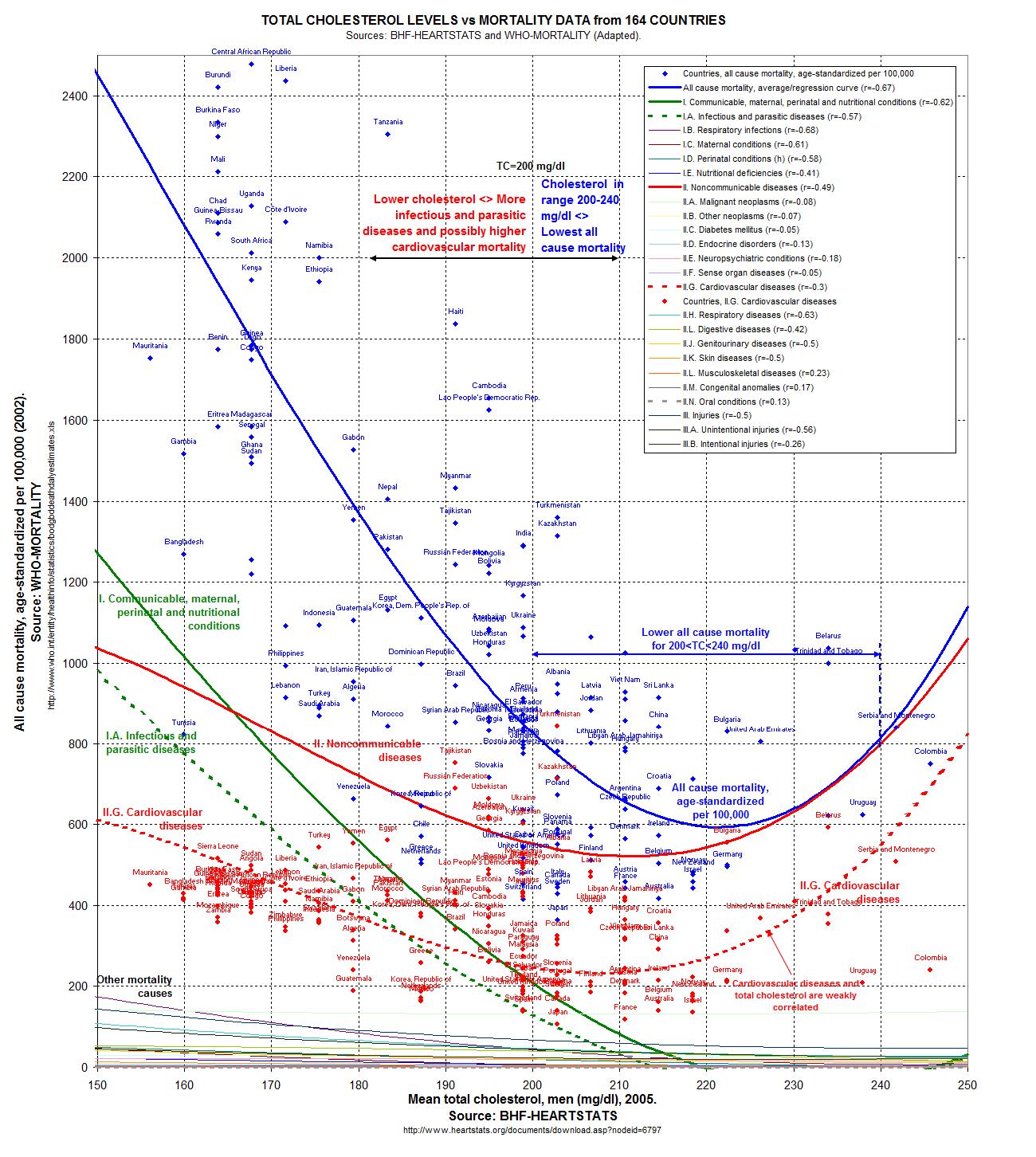
The extraordinary Portuguese blogger Ricardo Carvalho, better known as O Primitivo, of Canibais e Reis did some great work a few years back assembling World Health Organization statistics into an Excel database. One of the fruits of this labor was that he was able to correlate disease rates against serum cholesterol levels for all the countries in the database. His post about that is here and he created a great graphical representation of the results which I’ve reproduced here (click here to enlarge):


There’s a lot of interesting. information in this graph.

On the upper right are some correlation coefficients between serum cholesterol and disease incidence. Most diseases are either uncorrelated with cholesterol, or negatively correlated, meaning that mortality goes up as cholesterol goes down.

Ketogenic Diets - Perfect Health Diet blog

by husband-and-wife team from the Perfect Health Diet blog:
Paul Jaminet, Ph.D.
and Shou-Ching Shih Jaminet, Ph.D.

Part 1 - Summary Ketogenic Diets, I: Ways to Make a Diet Ketogenic | Perfect Health Diet

So we have three ways to make the diet ketogenic:

1) Make Wilder’s “ketogenic ratio” high by eating a lot of fat, very few carbs, and not too much protein.
2) Supplement with the ketogenic amino acids lysine and leucine.
3) Supplement with coconut oil or another source of short-chain fats.

If we do (2) or (3), then the diet can be ketogenic even if it has a fair number of carbs.
So now we have an arsenal of ways to generate ketones. We have to look at diseases and diet risks to figure out which way of making the diet ketogenic is optimal.

References

[1] Owen OE et al. Brain metabolism during fasting. J Clin Invest. 1967 Oct;46(10):1589-95. http://pmid.us/6061736.

------------------------------------------

Part 2 - Summary Ketogenic Diets 2: Preventing Muscle and Bone Loss on Ketogenic Diets | Perfect Health Diet


I believe the extreme limits on carb and protein intake in conventional clinical ketogenic diets are responsible for their growth stunting, muscle destroying, fattening effects.

In order to supply sufficient protein and carbs while maintaining ketosis, it is necessary to provide ketogenic short-chain fats and amino acids.

Clinical testing of such supplemented diets has so far produced encouraging results. Providing supplemental amino acids to epileptic children on ketogenic diets improved their health and allowed them to maintain ketosis with higher protein intake. Seizure frequency was reduced even as side effects diminished.

Personally, I wouldn’t attempt a long-term ketogenic diet without the aid of coconut oil (or MCTs), lysine, and the branched chain amino acids.

For the NBIA/PKAN kids, it seems that the amino acid supplements should be some mix of lysine, leucine, isoleucine, and valine, with the isoleucine and valine included solely to reduce leucine toxicity. The optimal amount of isoleucine and valine should be smaller than is found in branched-chain amino acid supplements, since leucine by itself may help prevent iron accumulation and increase ketosis. Also, one rat study [4] indicates that isoleucine alone, excluding valine, might be enough to relieve leucine toxicity. Excluding valine would increase the ketogenicity of the supplement mix.

I think the NBIA/PKAN kids will need to experiment with primarily lysine and leucine, and secondarily isoleucine and BCAA supplements, to see what mix works best for them.

References

[1] Groesbeck DK et al. Long-term use of the ketogenic diet in the treatment of epilepsy. Dev Med Child Neurol. 2006 Dec;48(12):978-81. http://pmid.us/17109786. Hat tip CarbSane.
[2] Ribeiro LC et al. Ketogenic diet-fed rats have increased fat mass and phosphoenolpyruvate carboxykinase activity. Mol Nutr Food Res. 2008 Nov;52(11):1365-71. http://pmid.us/18655006. Hat tip CarbSane.
[3] Evangeliou A et al. Branched chain amino acids as adjunctive therapy to ketogenic diet in epilepsy: pilot study and hypothesis. J Child Neurol. 2009 Oct;24(10):1268-72. http://pmid.us/19687389. Hat tip Nigel Kinbrum.
[4] Tsubuku S et al. Thirteen-week oral toxicity study of branched-chain amino acids in rats. Int J Toxicol. 2004 Mar-Apr;23(2):119-26. http://pmid.us/15204732.
[5] Yudkoff M et al. Brain amino acid requirements and toxicity: the example of leucine. J Nutr. 2005 Jun;135(6 Suppl):1531S-8S. http://pmid.us/15930465.
[6] Mawatari K et al. Prolonged oral treatment with an essential amino acid L-leucine does not affect female reproductive function and embryo-fetal development in rats. Food Chem Toxicol. 2004 Sep;42(9):1505-11. http://pmid.us/15234081.
[7] Tsubuku S et al. Thirteen-week oral toxicity study of L-lysine hydrochloride in rats. Int J Toxicol. 2004 Mar-Apr;23(2):113-8. http://pmid.us/15204731.
Ketogenic Diets | Perfect Health Diet

by husband-and-wife team from the Perfect Health Diet blog:

Paul Jaminet, Ph.D. Paul was an astrophysicist at the Harvard-Smithsonian Center for Astrophysics, became a software entrepreneur during the Internet boom, and now provides strategic advice to entrepreneurial companies while pursuing research in economics (see pauljaminet.com for more information). Paul’s experience overcoming a chronic illness has been key to our views of aging and disease. Paul can be reached by email to pauljaminet@perfecthealthdiet.com.

Shou-Ching Shih Jaminet, Ph.D. Shou-Ching is a molecular biologist and cancer researcher at Beth Israel Deaconess Medical Center and Harvard Medical School, and Director of BIDMC’s Multi-Gene Transcriptional Profiling Core. Shou-Ching was born in Korea to Chinese parents, grew up in Korea, attended college at National Taiwan University in Taipei, and graduate school at University of Newcastle in Australia, before coming to the US to work at Sloan-Kettering Cancer Center, Children’s Hospital Boston, and Beth Israel Deaconess and Harvard Medical School. Her publications may be found by searching Pubmed for “Shih SC.”