20.2.15

Insulin: An Undeserved Bad Reputation, Part 3…MOOOOO!!!! » Weightology Weekly

Insulin: An Undeserved Bad Reputation, Part 3…MOOOOO!!!! » Weightology Weekly


This article represents part 3 of a series on
how insulin has been unfairly demonized by many in the nutrition
field.  If you have yet to read the first few parts, you can read Part 1 here, and you can read Part 2 here
In this article, I will discuss how dairy products are among the most
insulinemic foods out there, yet do not promote fat or weight gain,
which pokes holes in the hypothesis that carbohydrates drive fat
accumulation through insulin secretion. 
Dairy Products Are Insulinemic Yet Don't Promote Weight Gain


One of the premises of individuals like Gary Taubes is that
carbohydrates stimulate fat accumulation by stimulating insulin
secretion.  I've already shown how this premise is flawed in the last
two parts of my series.  Namely, I
showed how protein also stimulates insulin secretion (sometimes as much
as carbohydrate) yet does not promote weight or fat gain
.  I also showed how the drug exenatide restores rapid-phase insulin secretion in diabetics yet promotes weight loss.


If the carbohydrate/insulin hypothesis were true, then we would
predict that foods that are extremely insulinemic would be uniquely fat
promoting.  What many people do not realize is that dairy foods are
among the most insulinemic foods out there.  In fact, they create much
greater insulinemic responses than you would expect based on their
carbohydrate content.  Not only that, but lactose, the primary
carbohydrate in dairy foods, is actually low glycemic and produces slow
rises in blood sugar (lactose has a glycemic index of 46 compared to white bread which is 100).  In fact, the
glycemic index of many dairy products is quite low, with full-fat milk
at 39, skim milk at 37, ice cream at 51, and fruit yogurt at 41.


Despite the low blood sugar responses, dairy products create very large insulin responses.  For example, in one study,
dairy products created similar or greater insulin responses than white
bread, despite the fact that the blood sugar response for some of the
dairy products was 60% lower than the white bread.  In this study, the
researchers compared the glycemic and insulinemic responses between
white bread, a low gluten/lactose mixture, a high gluten/lactose
mixture, cod with added lactose, milk, whey protein with added lactose,
and cheese with added lactose.  All of the conditions contained 25 grams
of carbohydrate and 18.2 grams of protein, except for the white bread
and low gluten/lactose mixtures, which contained 25 grams of
carbohydrate and 2.8 grams of protein.  Thus, lactose was the
carbohydrate in all of the conditions except for white bread.


When you look at the insulin area-under-the-curve (AUC) for the
various conditions, you can see that the dairy products actually created
greater insulin responses than the white bread, despite having similar
amounts of carbohydrate:
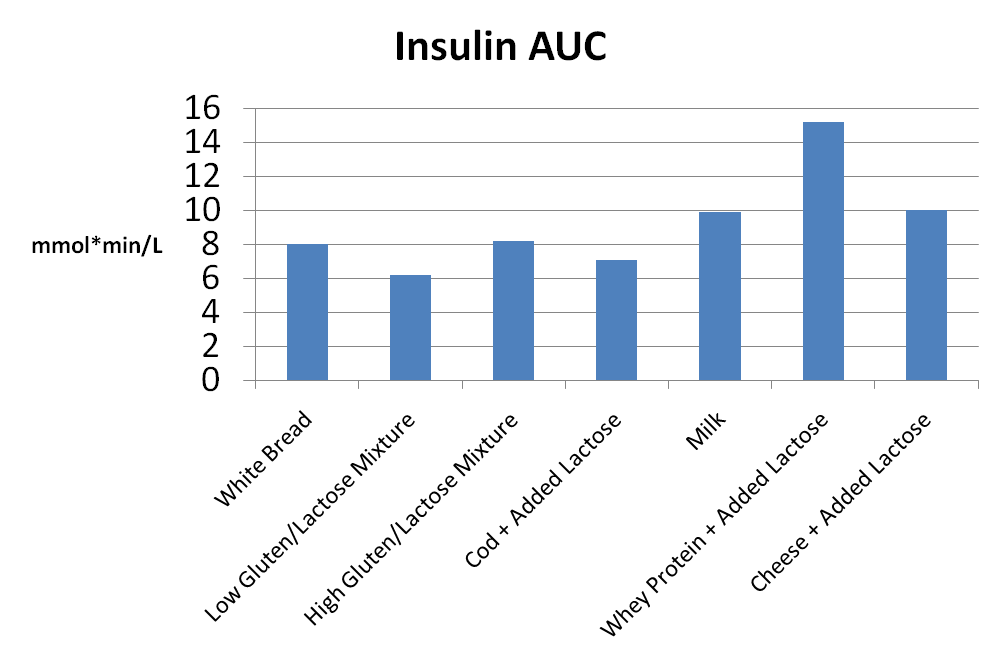

Insulin response of dairy foods compared to white bread
It is obvious that it is not the lactose that is responsible for the
greater insulin response, because the gluten/lactose and cod/lactose
mixtures resulted in similar or lower insulin responses to white bread.


The blood sugar response was also not responsible for the greater
insulin response.  In fact, the blood sugar response was lower in all of
the conditions compared to the white bread, with the milk creating the
lowest blood sugar response yet 3rd highest insulin response:
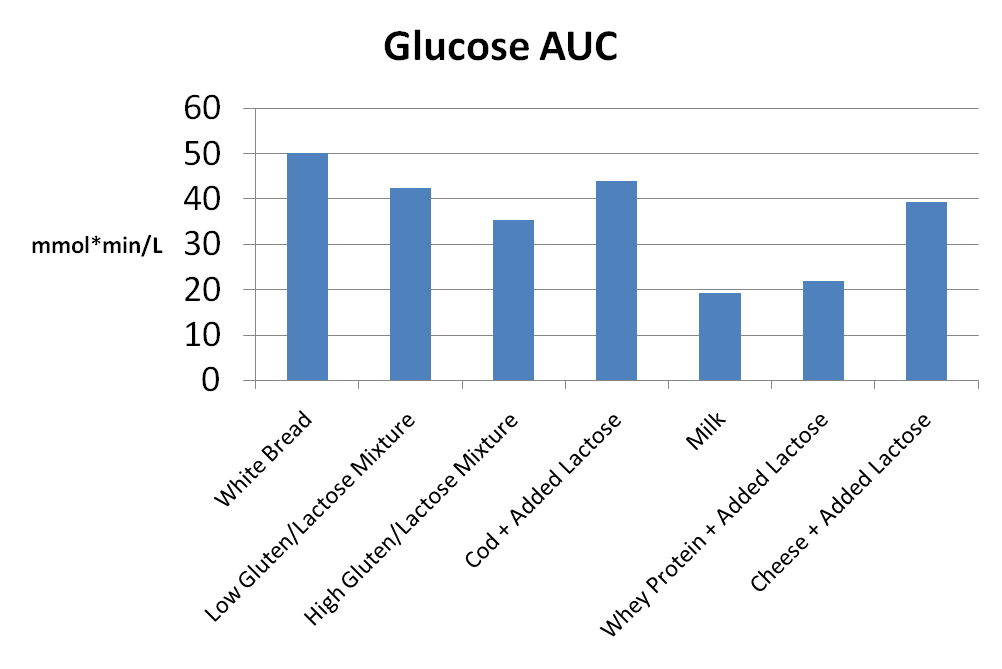

Blood glucose response to dairy foods compared to white bread
The insulinogenic index, which relates the amount of insulin
secretion to the blood glucose response, was significantly higher in the
dairy products, indicating that the dairy products stimulated much
greater insulin secretion that you would expect based on the blood
glucose response:
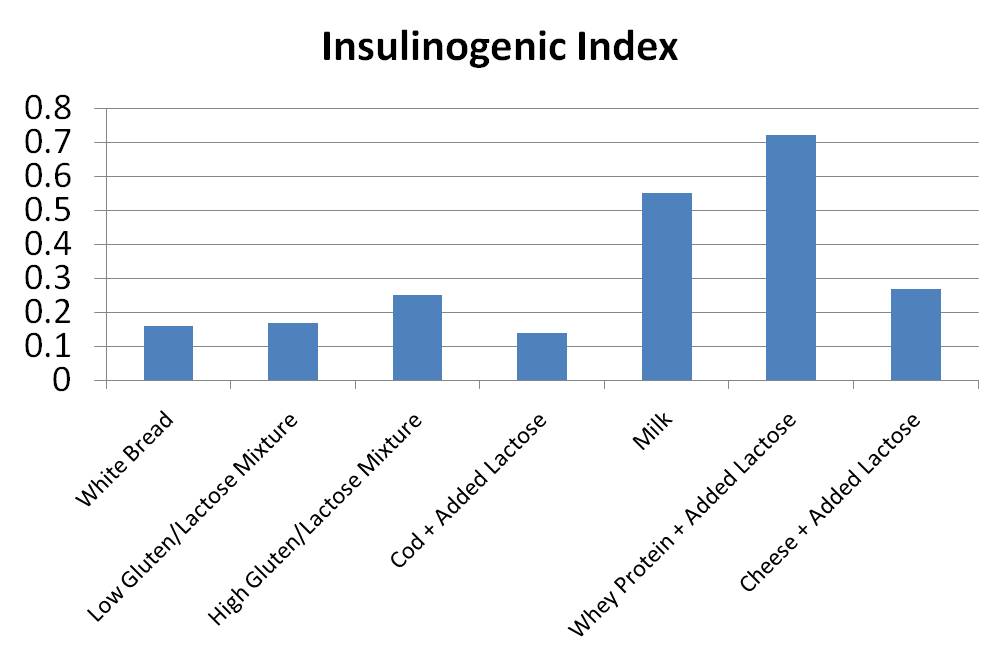

Insulinogenic index of dairy products compared to white bread
This is not the only study to show the insulinemic effects of dairy products.  I showed in my previous article how whey protein, a dairy protein, created the highest insulin response compared to non-dairy proteins.  In a study on type 2 diabetics,
the inclusion of whey protein in a meal increased the insulin response
by 31-57%, while the blood glucose response was reduced by up to 21%.  In another study,
the addition of 400 mL of milk to a bread meal increased the insulin
response by 65%, despite the fact there was no change in the blood
glucose response.  In this same study, the addition of 200 or 400 mL of
milk to a spaghetti meal increased the insulin response by 300%; again,
there was no change in the blood glucose response.  In fact, drinking
milk with the spaghetti meal created an insulin response that was
similar to white bread.


Here's the results of another study showing the glycemic and insulinemic indexes of milk compared to white bread:
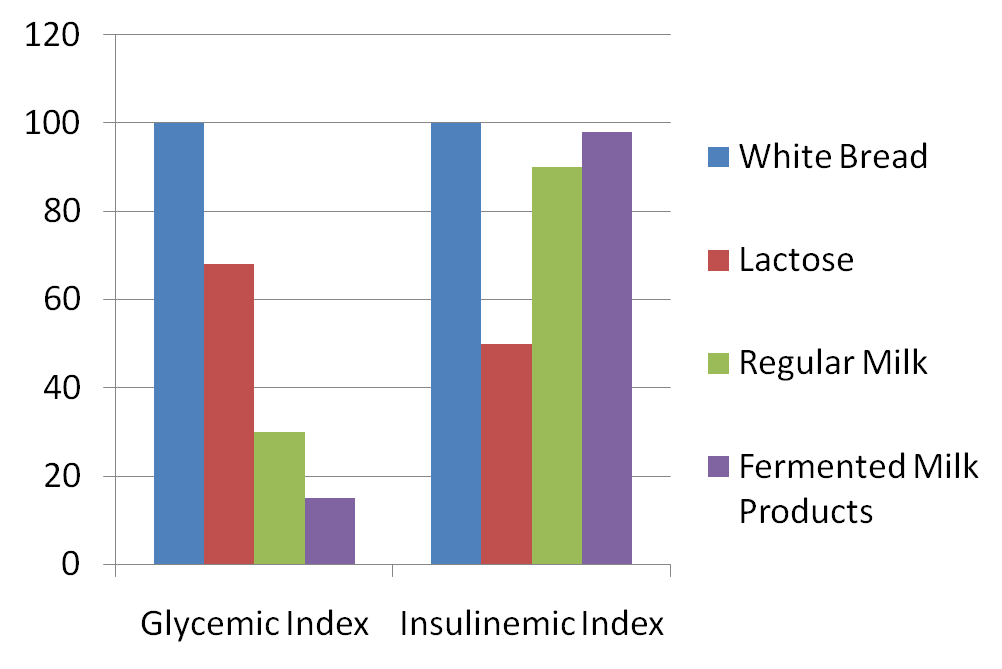


Why Does Dairy Stimulate So Much Damn Insulin?


It is clear that dairy products stimulate large amounts of insulin
secretion, as much or more than white bread.  One of the reasons dairy
products create large insulin responses is due to their amino acid
content.  In fact, the
postprandial insulin response from dairy products correlates with the
rise in branched chain amino acids leucine, valine, and isoleucine
.  I already pointed out in part 1 of this series how leucine will directly stimulate your pancreas to produce insulin.


Another reason that dairy products stimulate so much insulin
secretion is their effects on a hormone called glucose-dependent
insulinotropic polypeptide (GIP).  Like GLP-1 which I wrote about in part 2 of this series, GIP is an incretin
This means that it is a hormone produced by your intestines that
stimulates insulin secretion.  Dairy products stimulate increased
production of GIP.  In the study I discussed earlier
which compared whey, milk, and cheese to white bread, whey and cheese
resulted in 21-67% greater GIP responses than white bread:
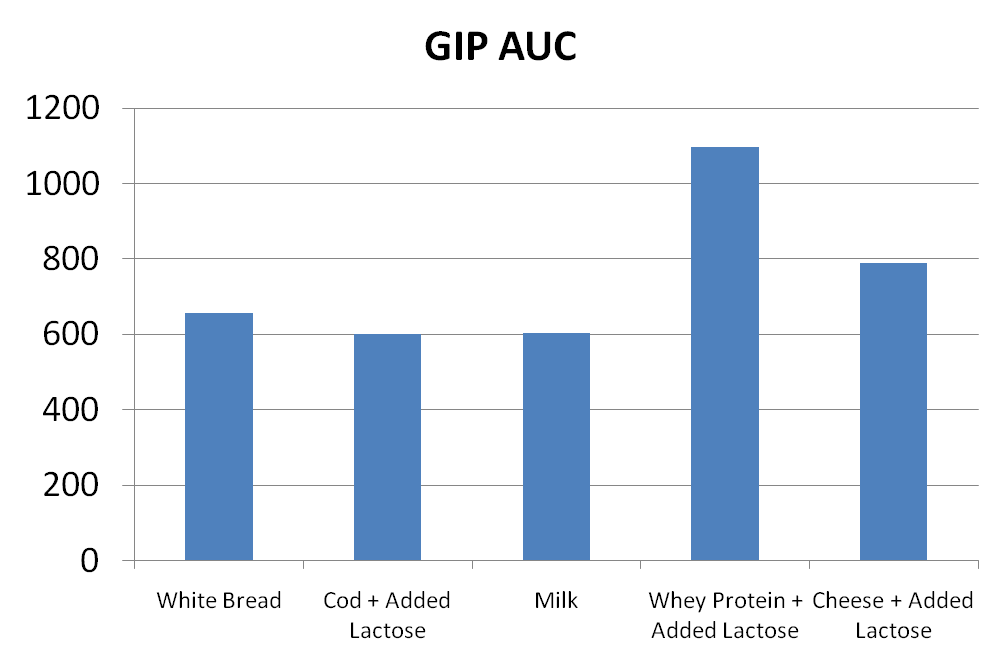

Glucose-dependent insulinotropic polypeptide (GIP) response to dairy foods compared to white bread
The above data illustrates one of the problems with the
carbohydrate/insulin hypothesis...it assumes that carbohydrate is the
primary stimulus of insulin secretion.  However, it is clear that amino
acids and incretins play significant roles in insulin secretion as
well.  And as I pointed out in part 1 of this series,
the blood sugar response of a food only explains 23% of the variation
in the insulin response.  Thus, a lot more goes into insulin secretion
than the blood sugar response from eating carbohydrate.


Dairy and Weight Gain/Loss


It is clear that dairy products are extremely insulinemic, moreso
than many high carbohydrate foods.  Thus, if the carbohydrate/insulin
hypothesis were true, then we would predict that a diet high in dairy
products should promote weight and fat gain.  However, studies fail to
show any relationship between dairy product intake and weight gain.  For
example, there is no relationship between intake of dairy products and BMI in Japanese women.  In U.S. men, there is no relationship between an increase in dairy consumption and long-term weight gain.  In perimenopausal women, high
intakes of dairy products are actually inversely associated with weight
gain (i.e, higher dairy product intakes are associated with less weight
gain)
.


While these are observational studies, the results from controlled
studies on animals and humans are similar.  In fact, animal studies show
less weight gain when they are fed dairy products.  In mice, yogurt supplementation results in less weight and fat gain than controls on isocaloric diets.  In another study, transgenic mice lost weight on energy restricted diets.  The mice were then allowed to eat ad libitum (i.e., as much as they felt like).  The mice fed dairy products regained less fat and weight during refeeding.  In a third study, the intake of dairy products, but not a calcium supplement, decreased weight gain and body fat in mice fed a high-fat diet.  In a fourth study, dairy protein attenuated fat gain in rodents fed a high-fat, high-sugar diet.  In a fifth study, a dairy diet attenuated weekly weight gain in Sprague-Dawley rats.


Of course, these are animal studies.  What about humans?  In one study,
low-fat dairy products did not promote weight gain, while high-fat
dairy products did.  Hmmm, could it be that the weight gain in this
study was simply caused by excess calories and not insulin?   In another study, increased intake of dairy products did not affect body composition.  In a third study, increased intake of dairy products did not impair weight loss.  In a one-year study, increased intake of dairy products did not affect changes in fat mass.  In a 6-month follow-up to this study, high dairy product intake predicted lower levels of fat mass.  In a 9-month study,
increased intake of dairy products did not affect weight maintenance,
but the high dairy group exhibited evidence of greater fat oxidation.


Why Am I Not Fat?


My own personal experience with dairy fits right in with the
science.  I consume a lot of dairy and have for many years.  I go
through 2-3 gallons of milk per week.  I also go through a lot of Greek
yogurt, cottage cheese, regular cheese, and whey protein.  I have some
type of dairy with just about every meal.   Thus, I have large amounts
of insulin flowing through my body pretty much all day.  If insulin was
truly the fat-promoting, weight-gaining hormone that some have made it
out to be, then I should be obese by now.  Yet, I am not...not even
close.


Not only that, but the people who think insulin makes you hungry,
that would imply that I should be starving all of the time with all of
the insulin that is flowing through my body all day.  Yet, I'm not.


Got Milk?  Got Insulin!


The evidence is overwhelming that dairy products do not promote
weight gain, and they actually inhibit weight gain in animal studies. 
This is despite the fact that dairy products produce very large insulin
responses, as much or greater than many high carbohydrate foods.  Thus,
it is clear from this article, as well as my previous articles, that the
carbohydrate/insulin hypothesis is incorrect.  Insulin is not the
criminal in the obesity epidemic; instead, it is an innocent bystander
that has been wrongly accused through guilt by association.


Click here to read part 4 of my series, where I address the misconception of how insulin regulates blood sugar.


Insulin: An Undeserved Bad Reputation, Part 2 » Weightology Weekly

Insulin: An Undeserved Bad Reputation, Part 2 » Weightology Weekly


In a previous issue of Weightology Weekly, I wrote about insulin and how it's been unfairly demonized by many in the nutrition field
This demonization has been based on a number of misconceptions
regarding insulin, its biological effects, and its secretion.  I want to
continue clarifying these misconceptions. 
MYTH:  Insulin Spikes are "Bad"


FACT:  Insulin Spikes Serve a Normal & Important Physiological Function


In my previous article,
I discussed how dietary protein can cause insulin spikes just like
dietary carbohydrate, and these spikes are not related to
gluconeogenesis from the protein (i.e., the protein being converted to
sugar).  I also showed how these spikes are partly responsible for the
suppression of appetite that is caused by dietary protein (due to
insulin's effects on your brain to inhibit appetite).


I want to expand on the importance of rapid insulin spikes due to
feeding, and how they are important in blood sugar regulation.  To do
this, we need to discuss the phases of insulin secretion.  Insulin
secretion from your pancreas comes in two phases.  The first phase
happens very quickly; your pancreas senses rising glucose, and insulin
is released within 1-2 minutes of this rise in blood sugar.  This
rapid-phase response is the result of your pancreas releasing stored
insulin.  It is typically over within 10 minutes.  This rapid-phase
response has been found to be impaired in people with impaired glucose tolerance
(people who have higher blood sugar responses to meals than normal, and
higher fasting levels of blood sugar, but who are not diabetic).  This
rapid-phase response is completely absent in people with type 2
diabetes.


There is a second phase that continues as long as glucose is
elevated.  This release of insulin is achieved by the release of stored
insulin, as well as the creation of new insulin (insulin is created from
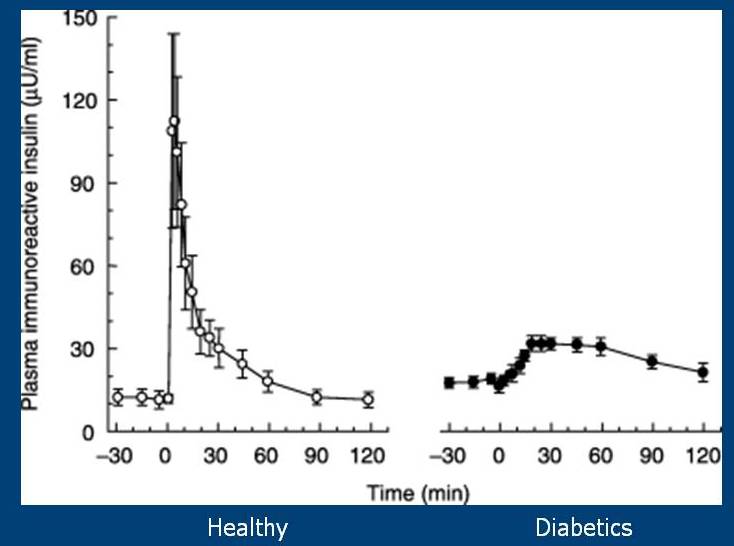
a precursor called proinsulin).  When you infuse glucose into the blood
of healthy people and type 2 diabetics, you get insulin responses that
look like this:


Insulin Response to Intravenous Glucose Administration in Healthy People Versus Type 2 Diabetics
You can see that the diabetics completely lack the rapid phase response that is present in the healthy individuals.


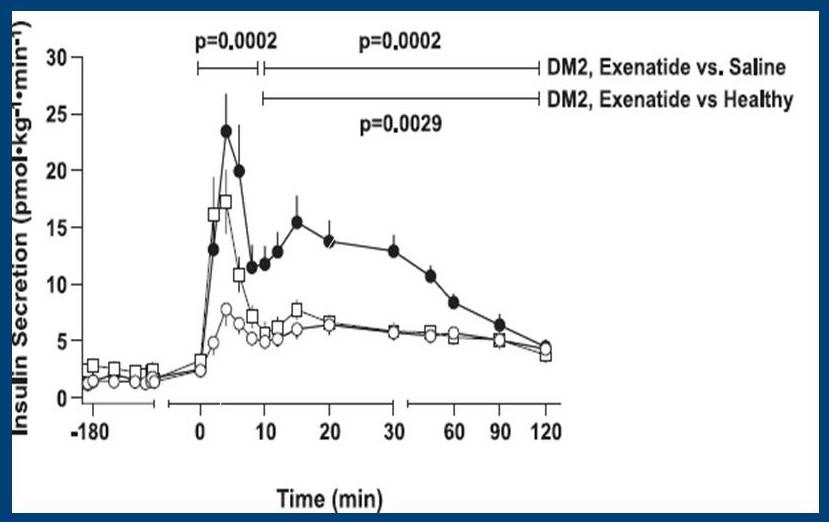
There is a drug called exenatide (Byetta),  which has been found to restore this rapid phase insulin response in diabetics:


Insulin
responses of type2 diabetics and healthy individuals, who have been
administered glucose intravenously. Circles represent the insulin
response of the type 2 diabetics when given a placebo. Squares represent
the insulin response of the diabetics when given exenatide. You can see
that exenatide restores the rapid phase insulin response. Black circles
represent the insulin response of healthy individuals.
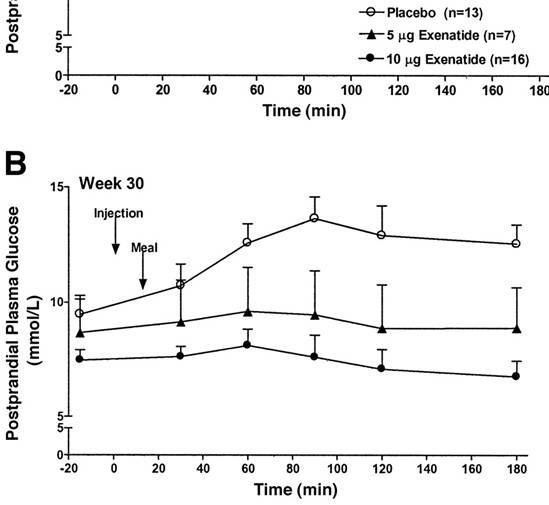
This restoration of the rapid phase insulin response improves blood sugar regulation in diabetics:


Blood
sugar response to a meal in type 2 diabetics. Circles represent
subjects on a placebo. Dark triangles and circles represent subjects on
exenatide. You can see that blood sugar remained steady in the subjects
on exenatide, but gradually increased in the subjects on the placebo.
 You can see in the above chart that blood sugar remained consistent
in response to a meal in the subjects on exenatide, but it increased
over time in the subjects on the placebo.


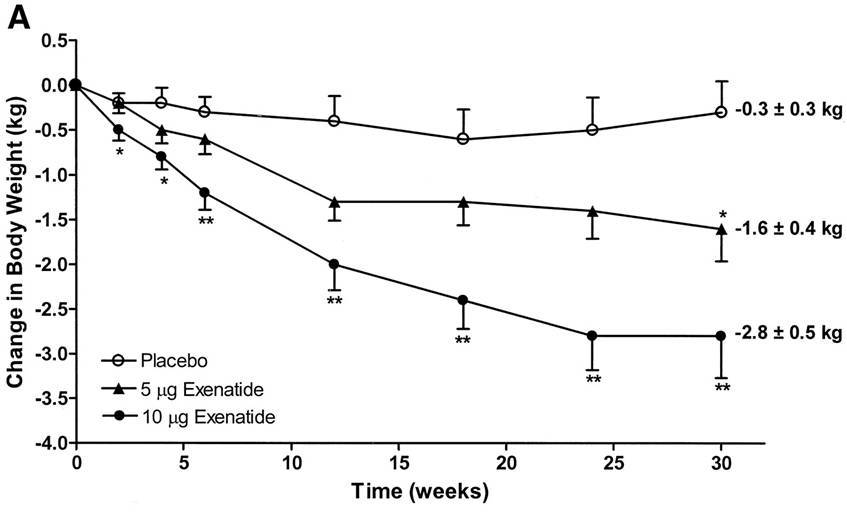
Many people like to blame obesity and weight gain on insulin, but
exenatide, which restores insulin spikes in type 2 diabetics, causes
weight loss:


Effects of exenatide (Byetta) on body weight
Part of this weight loss is due to an improvement in satiety
Exenatide is a drug that mimics the effects of a hormone called
glucagon-like peptide-1 (GLP-1).  GLP-1 is an intestinal
insulin-stimulating hormone (known as an incretin).  GLP-1 potentiates
insulin secretion, enhances the synthesis of insulin, upregulates
insulin gene expression, and inhibits glucagon (insulin's opposing
hormone) secretion.  Yet Exenatide, which mimics GLP-1 and helps
stimulate insulin secretion, causes weight loss.


The fact is that rapid insulin spikes in and of themselves are not a
bad thing.  Protein causes rapid insulin spikes, yet protein reduces
appetite and helps with weight loss.  GLP-1 and drugs like exenatide
contribute to insulin spikes, yet they reduce appetite and cause weight
loss.  The problem is that people confuse insulin spikes and blood
glucose spikes.  It is well established that rapid rises and falls in blood glucose can contribute to hunger
Because rapid rises in blood glucose also cause rapid rises in insulin,
people end up blaming insulin (and the effects of high glycemic
carbohydrates on insulin) for the problem. 


MYTH:  Since diabetics who inject insulin gain weight, this means that insulin is the reason for weight gain in non-diabetics


FACT:  Amylin is co-secreted with insulin in non-diabetics; amylin has appetite suppressant and lipolytic effects


I would like to thank Dr. Stephan Guyenet
for this information.  I had known about amylin but hadn't looked into
it in any great detail.  Amylin is a hormone that is secreted by your
pancreas at the same time as insulin.  Amylin decreases appetite, and also stimulates lipolysis (the breakdown of fat into fatty acids).


Type 1 diabetics do not produce amylin, and amylin secretion is impaired in type 2 diabetics.  Pramlintide, a drug that mimics the effects of amylin, has been found to produce weight loss in diabetics.


This information demonstrates that the effects of insulin injection
in a diabetic cannot be compared to the effects of physiological changes
in insulin in a non-diabetic, yet many people erroneously make this
comparison as if they are similar.


MYTH:  Lowering Insulin Will Improve Appetite Regulation


FACT:  Insulin Is One of the Many Hormones Critical to Satiety


I already most addressed this myth in my previous article on insulin,
showing how protein stimulated insulin secretion and helped reduce
appetite, and also showing how insulin injection into the brain reduces
appetite.  I again want to thank Dr. Guyenet for this information, but when you knock out the insulin receptors of a mouse's brain, the mouse will overeat and develop obesity.


MYTH:  All of this information only applies to healthy people


FACT:  The information applies to obesity and diabetes


On other forums, I saw people comment on my previous article and
claim that the information I provided only applied to healthy people,
and not diabetics or obese individuals.  They continued to believe that
treating diabetes and obese individuals was all about insulin control. 
Nothing could be further from the truth.  Not only is this evident from
information mentioned earlier in this article (such as how exenatide
restores insulin spikes and improves blood sugar control and body weight
in diabetics), but it is also evident from the fact that high protein
diets have been found to help both diabetics and obese individuals,
despite the fact that protein is a powerful stimulus of insulin
secretion.


As I mentioned earlier, people seem to confuse blood glucose control
and insulin control.  It is the management of blood glucose itself that
is partly responsible for the health benefits of low-glycemic
carbohydrates, or reducing carbohydrates, or increasing protein intake,
or consuming dietary fiber, or consuming fruits and vegetables, or
consuming whole foods over processed foods.  It is not the control of
insulin; the control of insulin ends up being a byproduct of these other
behaviors through improvements in insulin sensitivity (how responsive
your cells are to insulin) and reductions in blood sugar swings.


Remember, insulin is not the bad guy.  Click here to read part 3 of this series, where I discuss how dairy products are extremely insulinemic, yet do not promote weight gain.


Insulin…an Undeserved Bad Reputation » Weightology Weekly

Insulin…an Undeserved Bad Reputation » Weightology Weekly


I feel sorry for insulin.  Insulin has been
bullied and beaten up.  It has been cast as an evil hormone that should
be shunned.  However, insulin doesn't deserve the treatment it has
received. 
Insulin: A Primer


Insulin is a hormone that regulates the levels of sugar in your
blood.  When you eat a meal, the carbohydrate in the meal is broken down
into glucose (a sugar used as energy by your cells).  The glucose
enters your blood.  Your pancreas senses the rising glucose and releases
insulin.  Insulin allows the glucose to enter your liver, muscle, and
fat cells.  Once your blood glucose starts to come back down, insulin
levels come back down too.  This cycle happens throughout the day.  You
eat a meal, glucose goes up, insulin goes up, glucose goes down, and
insulin goes down.  Insulin levels are typically lowest in the early
morning since it's usually been at least 8 hours after your last meal.


Insulin doesn't just regulate blood sugar.  It has other effects as well.  For example, it stimulates your muscles to build new protein (a process called protein synthesis).  It also inhibits lipolysis (the breakdown of fat) and stimulates lipogenesis (the creation of fat).


It is the latter effect by which insulin has gotten its bad
reputation.  Because carbohydrate stimulates your body to release
insulin, it has caused some people to argue that a diet high in
carbohydrate will cause you to gain fat.  Their reasoning, in a
nutshell, goes like this:


High Carbohydrate Diet -> High Insulin -> Increased
Lipogenesis/Decreased Lipolysis -> Increased Body Fat -> Obesity


Using this same logic, they argue that a low carbohydrate diet is
best for fat loss, because insulin levels are kept low.  Their logic
chain goes something like this:


Low Carbohydrate Diet -> Low Insulin -> Decreased Lipogenesis/Increased Lipolysis -> Decreased Body Fat


However, this logic is based on many myths.  Let's look at many of the myths surrounding insulin.


MYTH:A High Carbohydrate Diet Leads to Chronically High Insulin Levels


FACT:Insulin Is Only Elevated During the Time After a Meal In Healthy Individuals


One misconception regarding a high carbohydrate intake is that it
will lead to chronically high insulin levels, meaning you will gain fat
because lipogenesis will constantly exceed lipolysis (remember that fat
gain can only occur if the rate of lipogenesis exceeds the rate of
lipolysis).  However, in healthy people, insulin only goes up in
response to meals.  This means that lipogenesis will only exceed
lipolysis during the hours after a meal (known as the postprandial period). 
During times when you are fasting (such as extended times between
meals, or when you are asleep), lipolysis will exceed lipogenesis
(meaning you are burning fat).  Over a 24-hour period, it will all
balance out (assuming your are not consuming more calories than you are
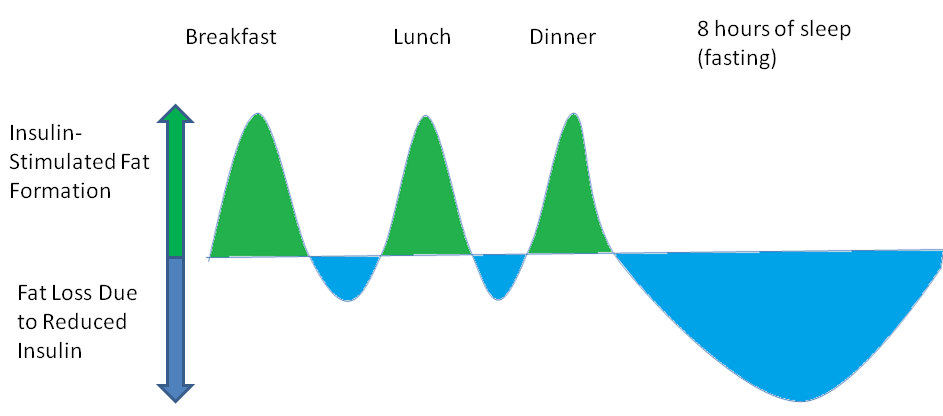
expending), meaning you do not gain weight.  Here's a graph showing how
this works:


After
meals, fat is deposited with the help of insulin. However, between
meals and during sleep, fat is lost. Fat balance will be zero over a
24-hour period if energy intake matches energy expenditure.
This is just a rough chart that I made, but the green area represents
the lipogenesis occuring in response to a meal.  The blue area
represents lipolysis occuring in response to fasting between meals and
during sleep.  Over a 24-hour period, these will be balanced assuming
you are not consuming more calories than you expend.  This is true even
if carbohydrate intake is high.  In fact, there are populations that
consume high carbohydrate diets and do not have high obesity rates, such
as the traditional diet of the Okinawans.  Also, if energy intake is lower than energy expenditure, a high carbohydrate diet will result in weight loss just as any other diet.


MYTH:  Carbohydrate Drives Insulin, Which Drives Fat Storage


FACT:  Your Body Can Synthesize and Store Fat Even When Insulin Is Low


One of the biggest misconceptions regarding insulin is that it's
needed for fat storage.  It isn't.  Your body has ways to store and
retain fat even when insulin is low.  For example, there is an enzyme in
your fat cells called hormone-sensitive lipase (HSL).  HSL helps break
down fat.  Insulin suppresses the activity of HSL, and thus suppresses
the breakdown of fat.  This has caused people to point fingers at
carbohydrate for causing fat gain.


However, fat will also suppress HSL even when insulin levels are low
This means you will be unable to lose fat even when carbohydrate intake
is low, if you are overeating on calories.  If you ate no carbohydrate
but 5,000 calories of fat, you would still be unable to lose fat even
though insulin would not be elevated.  This would be because the high
fat intake would suppress HSL.  This also means that, if you're on a low
carbohydrate diet, you still need to eat less calories than you expend
to lose weight.


Now, some people might say, "Just try and consume 5000 calories of
olive oil and see how far you get."  Well, 5000 calories of olive oil
isn't very palatable so of course I won't get very far.  I wouldn't get
very far consuming 5,000 calories of pure table sugar either.


MYTH:  Insulin Makes You Hungry


FACT:  Insulin Suppresses Appetite


It is a well known fact that insulin acutely suppresses appetite.  This has been demonstrated in dozens and dozens of experiments.  This will be important when we talk about the next misconception...


MYTH:  Carbohydrate Is Singularly Responsible for Driving Insulin


FACT:  Protein Is a Potent Stimulator of Insulin Too


This is probably the biggest misconception that is out there. 
Carbohydrates get a bad rap because of their effect on insulin, but
protein stimulates insulin secretion as well.  In fact, it can be just
as potent of a stimulus for insulin as carbohydrate.  One recent study compared the effects of two different meals on insulin
One meal contained 21 grams of protein and 125 grams of carbohydrate. 
The other meal contained 75 grams of protein and 75 grams of
carbohydrate.  Both meals contained 675 calories.  Here is a chart of
the insulin response:


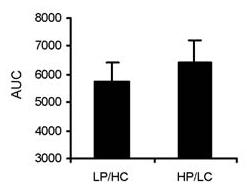
Comparison of insulin response between low protein, high carb meal and high protein, low carb meal
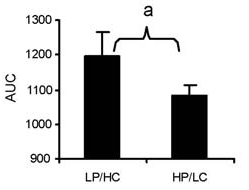
Now here's a chart of the blood sugar response:


Comparison of blood sugar response to low protein, high carb meal and high protein, low carb meal
You can see that, despite the fact that the blood sugar response was
much higher in the meal with more carbohydrate, the insulin response
wasn't higher.  In fact, the insulin response was somewhat higher after
the high protein meal, although this wasn't statistically significant.


Some people might argue that the "low-carb" condition wasn't really
low carb because it had 75 grams of carbohydrate.  But that's not the
point.  The point is that the high-carb condition had nearly TWICE as
much carbohydrate, along with a HIGHER glucose response, yet insulin
secretion was slightly LOWER.  The protein was just as powerful at
stimulating insulin as the carbohydrate.


I can also hear arguments coming like, "Yeah, but the insulin
response is longer and more drawn out with protein."  That wasn't true
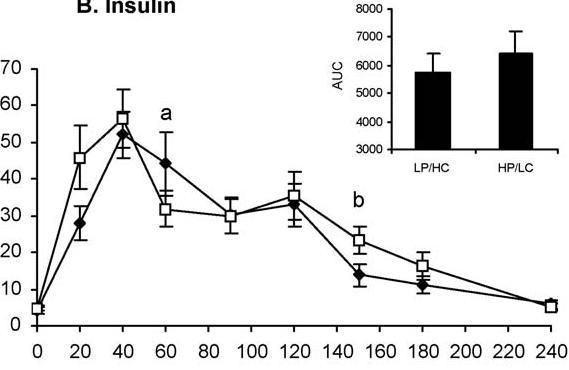
in this study either.


Insulin response to high protein and high carb meals
You can see in the chart that there was a trend for insulin to peak
faster with the high protein condition, with a mean response of 45 uU/mL
at 20 minutes after the meal, versus around 30 uU/mL in the high carb
condition.


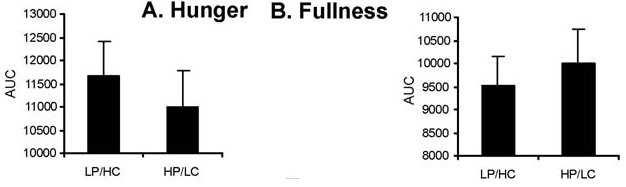
This tendency for a higher insulin response was associated with a
tendency towards more appetite suppression.  The subjects had a tendency
towards less hunger and more fullness after the high protein meal:


Comparison of low protein, high carb and high protein, low carb meals and their effects on hunger and fullness
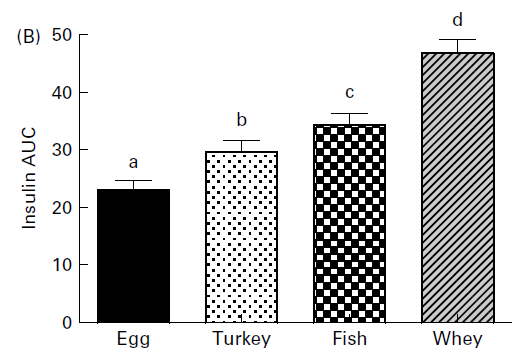
Here's the results of another study
that compared the effects of 4 different types of protein on the
insulin response to a meal.   This study was interesting because they
made milkshakes out of the different proteins (tuna shakes???? 
YUCK!!!!!  Of course some people may remember the tuna shake recipes
from the misc.fitness.weights
days).  The shakes contained only 11 grams of carbohydrate, and 51
grams of protein.  Here's the insulin response to the different shakes:


Insulin Response to 4 Different Proteins
You can see that all of these proteins produced an insulin response,
despite the fact that the carbohydrate in the shake was low.  There was
also different insulin responses between the proteins, with whey
producing the highest insulin response.


Now, some might argue that the response is due to gluconeogenesis
(a process by which your liver converts protein to glucose).  The
thought is that the protein will be converted to glucose, which will
then raise insulin levels.  As I mentioned earlier, people will claim
that this will result in a much slower, more drawn-out insulin response,
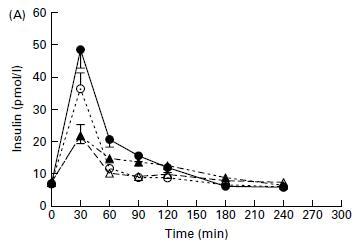
since it takes time for your liver to turn protein into glucose. 
However, that's not the case, because the insulin response was rapid,
peaking within 30 minutes and coming back down quickly at 60 minutes:


Insulin response to different types of protein
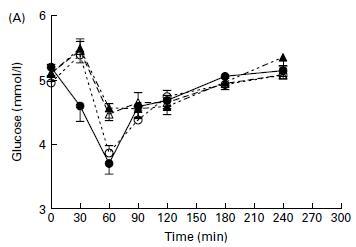
This rapid insulin response was not due to changes in blood glucose. 
In fact, whey protein, which caused the greatest insulin response,
caused a drop in blood glucose:


Glucose response to different types of protein
The insulin response was associated with appetite suppression.  In
fact, the whey protein, which had the highest insulin response, caused
the greatest suppression of appetite.  Here's a chart showing the
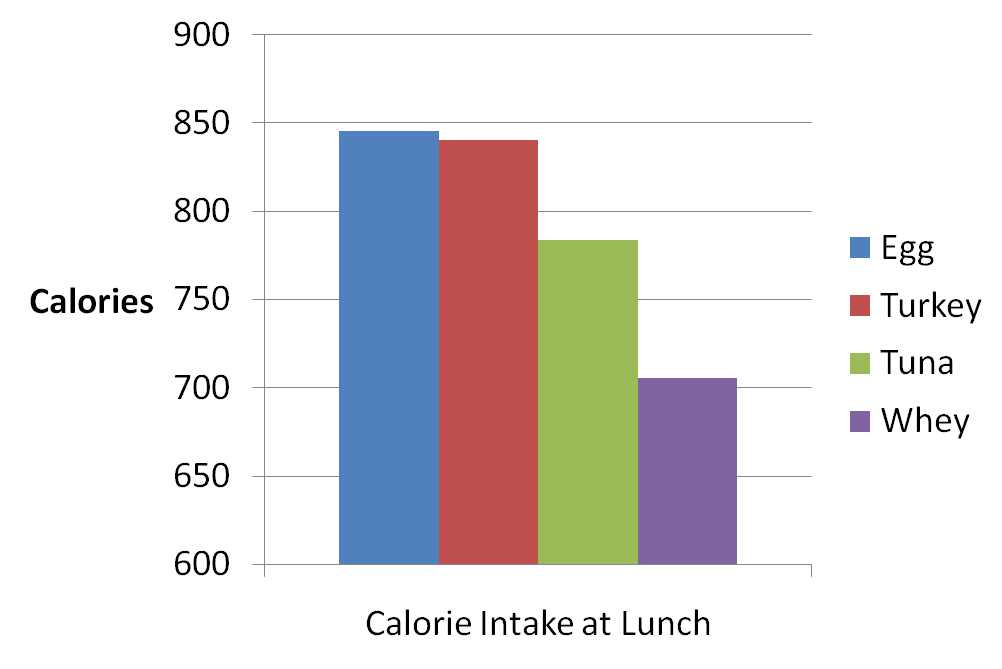
calorie intake of the subjects when they ate lunch 4 hours after
drinking the shake:


Calorie intake at a lunch consumed 4 hours after consuming various protein
The subjects ate nearly 150 calories less at lunch when they had whey
protein, which also caused the greatest insulin response.  In fact,
there was an extremely strong inverse correlation between insulin and
food intake (a correlation of -0.93).


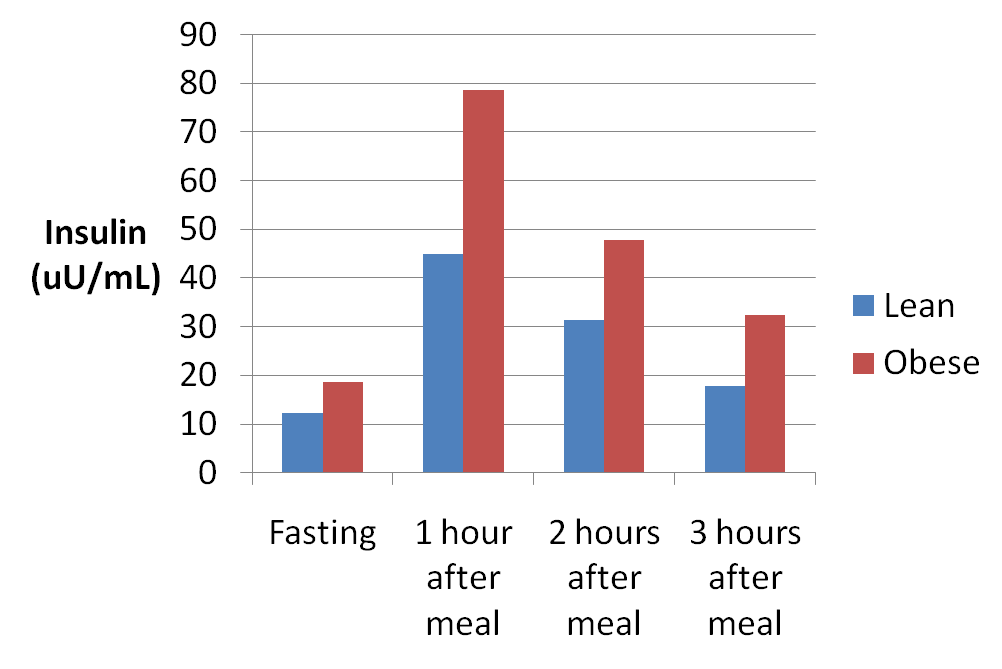
Here's data from another study
that looked at the insulin response to a meal that contained 485
calories, 102 grams of protein, 18 grams of carbohydrate, and almost no
fat:


Insulin response to a high protein, low carb meal in lean and obese people
You can see that the insulin response was exaggerated in the obese
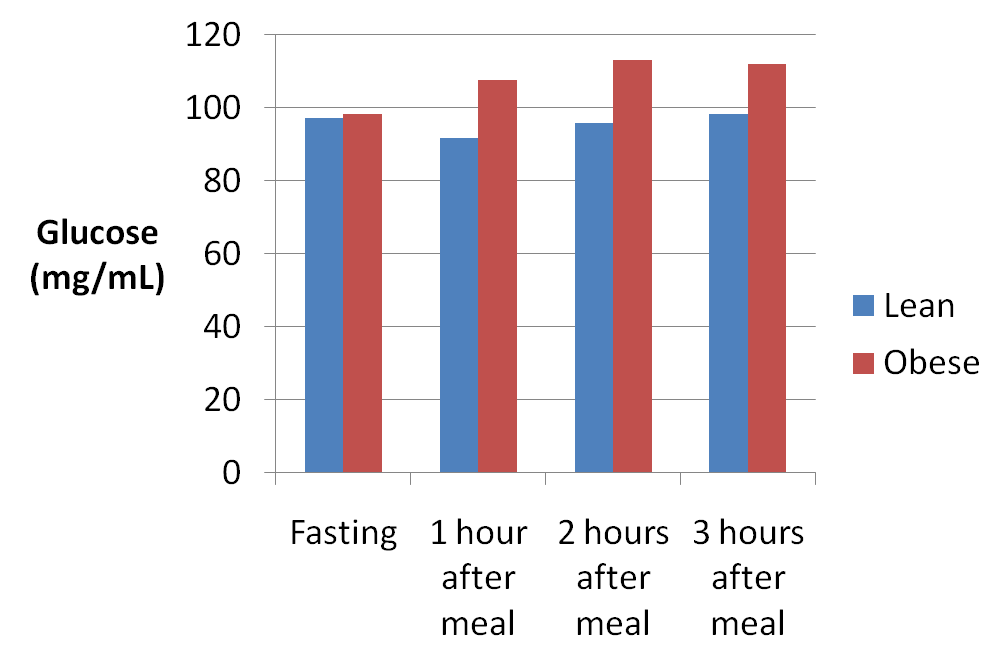
subjects, probably due to insulin resistance.  Here's a chart of the
blood glucose response.  You can see there was no relationship between
the glucose response and insulin, which was similar to the study
discussed earlier.


Blood glucose response in response to a high protein, low carb meal in lean and obese
The fact is that protein is a potent stimulator of insulin secretion,
and this insulin secretion is not related to changes in blood sugar or
gluconeogenesis from the protein.  In fact, one study found beef to stimulate just as much insulin secretion as brown rice
The blood sugar response of 38 different foods could only explain 23%
of the variability in insulin secretion in this study.  Thus, there's a
lot more that's behind insulin secretion than just carbohydrate.


So how can protein cause rapid rises in insulin, as shown in the whey
protein study earlier?  Amino acids (the building blocks of protein)
can directly stimulate your pancreas to produce insulin, without having to be converted to glucose first.  For example, the amino acid leucine directly stimulates pancreas cells to produce insulin, and there's a direct dose-response relationship (i.e., the more leucine, the more insulin is produced).


Some might say, "Well, sure, protein causes insulin secretion, but
this won't suppress fat-burning because it also causes glucagon
secretion, which counteracts insulin's effects."  I mentioned earlier
how insulin will suppress lipolysis.  Well, some people think that
glucagon increases lipolysis to cancel this out.


The thought that glucagon increases lipolysis is based on 3 things:  the fact that human fat tissue has glucagon receptors, the fact that glucagon increases lipolysis in animals, and the fact that glucagon has been shown to increase lipolysis in human fat cells in vitro (in a cell culture).  However, what happens in vitro isn't necessarily what happens in vivo (in your body).  We have a case here where newer data has overturned old thinking.  Research using modern techniques has shown that glucagon does not increase lipolysis in humans.  Other research using the same techniques has shown similar results.  I will also note that this research failed to find any lipolytic effect in vitro.


It should be remembered why glucagon is released in response to
protein in the first place.  Since protein stimulates insulin secretion,
it would cause a rapid drop in blood glucose if no carbohydrate is
consumed with the protein.   Glucagon prevents this rapid drop in blood
sugar by stimulating the liver to produce glucose.


Insulin:  Not Such a Villain After All


The fact is that insulin is not this terrible, fat-producing hormone
that must be kept as low as possible.  It is an important hormone for
appetite and blood sugar regulation.  In fact, if you truly wanted to
keep insulin as low as possible, then you wouldn't eat a high protein
diet...you would eat a low protein, low carbohydrate, high fat diet. 
However, I don't see anybody recommending that.


I'm sure some are having some cognitive dissonance reading this
article right now.  I know because I experienced the same disbelief
years ago when I first discovered this paper
and how protein caused large insulin responses.  At the time, I had the
same belief that others have...that insulin had to be kept under
control and as low as possible, and that spikes in insulin were a bad
thing.  I had difficulty reconciling that study and my beliefs regarding
insulin.  However, as time went on, and as I read more research, I
learned that my beliefs regarding insulin were simply wrong.


Now, you may be wondering why refined carbohydrates can be a
problem.  Many people think it's due to the rapid spikes in insulin. 
However, it's obviously not the insulin, because protein can cause rapid
spikes in insulin as well.  One problem with refined carbohydrate is a
problem of energy density.  With refined carbohydrate, it is easier to
pack a lot of calories into a small package.  Not only that, but foods
with high energy density are often not as satiating as foods with low
energy density.  In fact, when it comes to high-carbohydrate foods, energy density is a strong predictor of a food's ability to create satiety (i.e.,
low-energy density foods create more satiety).  There are other issues
with refined carbohydrate as well that are beyond the scope of this
article.


The bottom line is that insulin doesn't deserve the bad reputation
it's been given.  It's one of the main reasons why protein helps reduce
hunger.  You will get insulin spikes even on a low-carb, high-protein
diet.  Rather than worrying about insulin, you should worry about
whatever diet works the best for you in regards to satiety and
sustainability.  As mentioned in last week's issue of Weightology Weekly,
individual responses to particular diets are highly variable and what
works for one person will not necessarily work for another.  I will be
writing a post in the future on the need for individualized approaches
to nutrition.


Click here to read part 2 of this series on insulin.


18.2.15

High-fiber oats compared with wheat cereal consumption favorably alters LDL-cholesterol subclass and particle numbers in middle-aged and older men

High-fiber oat cereal compared with wheat cereal consumption favorably alters LDL-cholesterol subclass and particle numbers in middle-aged and older men

Conclusions: The oat compared with the wheat cereal produced lower concentrations of small, dense LDL cholesterol and LDL particle number without producing adverse changes in blood triacylglycerol or HDL-cholesterol concentrations. These beneficial alterations may contribute to the cardioprotective effect of oat fiber. 

Background: No studies have examined whether increased consumption of oat cereal, rich in soluble fiber, favorably alters lipoprotein particle size and number.

Objective:
We examined the effects of large servings of either oat or wheat cereal on plasma lipids, lipoprotein subclasses, lipoprotein particle diameters, and LDL particle number.

Design: Thirty-sixoverweight men aged 50–75 y were randomly assigned to consume daily for 12 wk either oat or wheat cereal providing 14 g dietary fiber/d. Before and after the intervention, plasma lipid and lipoprotein subclasses were measured with proton nuclear magnetic resonance spectroscopy, and whole-body insulin sensitivity was estimated with the frequently sampled intravenous-glucose-tolerance test. 

Results: Time-by-treatment interactions (P < 0.05) for LDL cholesterol (oat: −2.5%; wheat: 8.0%), small LDL cholesterol (oat: −17.3%; wheat: 60.4%), LDL particle number
(oat: −5.0%; wheat: 14.2%), and LDL:HDL cholesterol
(oat: −6.3%; wheat: 14.2%) were observed.
Time-by-treatment interactions were nearly significant for total cholesterol (oat:−2.5%; wheat: 6.3%; P = 0.08), triacylglycerol (oat: −6.6%; wheat: 22.0%; P = 0.07), and VLDL triacylglycerol (oat: −7.6%; wheat: 2.7%; P = 0.08). No significant time-by-treatment interactions were observed for HDL cholesterol, HDL-cholesterol subclasses, or LDL, HDL, and VLDL particle diameters. Insulin sensitivity did not change significantly with either intervention.
  1. Christopher L Melby
+ Author Affiliations
  1. 1From the Department of Food Science and Human Nutrition (BMD, KPD, RCH, and CLM) and the Department of Health and Exercise
    Science (KPD, SDB, and LRD), Colorado State University, Fort Collins.

3.2.15

Advice on Statin Risks > FDA Expands Advice on Statin Risks

Consumer Updates > FDA Expands Advice on Statin Risks

Reports of Memory Loss

FDA has been investigating reports of cognitive impairment from
statin use for several years. The agency has reviewed databases that
record reports of bad reactions to drugs and statin clinical trials that
included assessments of cognitive function.

The reports about memory loss, forgetfulness and confusion span all
statin products and all age groups. Egan says these experiences are rare
but that those affected often report feeling “fuzzy” or unfocused in
their thinking.

In general, the symptoms were not serious and were reversible within a
few weeks after the patient stopped using the statin. Some people
affected in this way had been taking the medicine for a day; others had
been taking it for years.

What should patients do if they fear that statin use could be
clouding their thinking? “Talk to your health care professional,” Egan
says. “Don’t stop taking the medication; the consequences to your heart
could be far greater.”

1.2.15

Ketosis & Oxygen Toxicity - Dominic D’Agostino: Podcast #187


Published on 9 Jan 2015
 
Dominic
D’Agostino is a neuroscientist, a researcher in the fields of molecular
pharmacology and physiology, and assistant professor at the University
of South Florida. His research on the impact of ketogenic diets on cell
metabolism, and their neuroprotective effects on oxygen toxicity, is
supported by the Office of Naval Research, US Department of Defense, and
the Alzheimer’s Association. 

Dom is a member of the Aerospace Medical
Association, the Undersea and Hyperbaric Medicine Society, the Society
of Neuroscience, the American Physiological Society, and also serves on
the Editorial Board for the Journal of Applied Physiology, and as a
reviewer for several other scholarly publications. He is one of the
world’s foremost experts on ketosis and ketongenic supplements such as
MCT oil.

Why you should listen –

Robert comes on
Bulletproof Radio, live from the Bulletproof Conference, to discuss his
metabolic therapy research, how starvation can be beneficial for brain
metabolism, how ketones and ketogenic diets can enhance performance, and
the use of MCT oil and ketogenic supplements. Enjoy the show!

For more info & to follow Dom:
Resources:

What is Paleo? - Angelo Coppola Humans Are Not Broken

About Humans Are Not Broken, Latest in Paleo, Angelo Coppola Humans Are Not Broken

What is Paleo?

  • To me, Paleo means Humans are not Broken, by default (see below).
  • To the media and many others, Paleo is Loren Cordain’s trademarked The Paleo DietTM: lean meat, no dairy, no alcohol, no starch, etc. For what it’s worth, I think his diet is orders of magnitude superior to the Standard American Diet.
    It is not, however, the diet that I practice, nor is it the Paleo diet
    practiced by most people who label their eating under a Paleo umbrella.
  • Robb Wolf is a leading thinker and advocate of Paleo, and this is what he says. Mark Sisson offers a Primal spin and Chris Kresser suggests moving to a Paleo Template. The Whole 9 offers practical implementation advice, which can be a great starting point.
  • Paul Jaminet says his Perfect Health Diet (PHD) is more Paleo than The Paleo DietTM
    and many other implementations of Paleo. By this, he means that his
    diet more closely emulates what most people ate during the Paleolithic
    period. This is the Paleo-esque diet that most closely resembles my own.
    However, my approach includes legumes, more vegetables, occasional grains, and less meat and starch than the PHD.
  • Many people who consider themselves to be Paleo eaters eventually start to eat a diet that resembles the diet advocated by the Weston A. Price Foundation…usually everything except for the grains and legumes with some variance on partaking in dairy.
  • When Paleo becomes a dogmatic system of do’s and don’ts, it is natural for people to push the limits of those rules. As such, many recipe websites and apps have come to feature calorie dense foods that are not particularly nutritious.
    These can include desserts, dips, snacks, and even entire meals…just
    about anything. While the foods themselves can be perfectly fine when eaten occasionally, and are fantastic to prepare for special events — they can also derail certain health goals like weight loss when eaten regularly. I wrote about this in an article called You Might be Getting Too Good at Paleo. I recommend Eating Dinners, Not Menus — deeply enjoying real food and not obsessing about the rules once you find yourself seated at the dinner table.
  • Sometimes, I refer to Paleo as PaleoTM — this doesn’t refer to Cordain’s diet (which is The Paleo DietTM), but rather a form of Paleo that is blatantly commercial, uninformed, and that is designed to benefit the propagators rather than the readers / users / followers.

Is Paleo about Emulating the Past?

  • A popular mantra in the Paleo community is: Paleo is not an historical reenactment, but rather it is a logical framework.
    I agree with this insofar as it rejects the dogmatism of “If Paleo man
    did it, I should do it.” However, epidemiological studies and research
    tell us that cooked legumes are healthful and promote longevity as well as a happy gut microbiome, yet most Paleo eaters avoid them. This may tell us reenactment carries at least some weight with Paleo eaters and thinkers. The phytate argument may be incomplete. Many Paleo “approved” foods contain phytates and lectins; they are not unique to legumes.
  • I believe biomimicry (nature mimicry, reenactment, etc.) is a valid
    starting point for hypothesis formation and experimentation. See my
    post, On Paleo Reenanctment. Forming a hypothesis based on observations and experiences of nature is in no way a naturalistic fallacy.
  • I suggest listening to Latest in Paleo Episode 76: The Yoga of Eating with Charles Eisenstein. In this episode, we discuss emulating the motivation of Paleolithic man, and not simply the content of their diets.
“Do not seek to follow in the footsteps of the wise. Seek what they sought.”

— Matsuo Basho

31.1.15

“Spanish Ketogenic Diet” - Wine, Weight Loss and Low Carbs

“Spanish Ketogenic Diet” - Wine, Weight Loss and Low Carbs

Posted by - Friday, January 30th, 2015

Another study came out this week illustrating the powerful
health benefits of restricting carbohydrates. While this study was not a
randomized trial comparing a low and high-fat diet (we already have
dozens of those showing the superiority of a higher-fat diet), it added
some new twists and turns to the traditional low-carb and ketogenic
diet.

This group constructed what it referred to as the “Spanish Ketogenic Diet”1,
which is basically a merging of the ketogenic and Mediterranean diets.
The resulting diet is, well pretty much what you would expect — the
ketogenic diet with a European flavor.

In fact, they looked at a ketogenic diet that, in their words,
encompassed “4 important healthy components of the Mediterranean diet in
Spain: olive oil, salad, fish and red wine.”


The Spanish Ketogenic (Mediterranean) Diet

In only a way that Europeans can, they took an already clinically
useful diet, and made it better. In regards to the details of the diet,
they were as follows:
  1. Unlimited calories: like nearly all high-fat diets, one does not have
    to count calories. When humans eat satiating and satisfying foods rich
    in fat, hunger naturally subsides. These diets generally do not consist
    of the annoying and ineffective calorie counting or the painful
    starvation diets that many would have you believe are necessary to lose
    weight.

  2. The major source of fat came from olive oil, with over 30ml consumed
    per day. This provided a hefty supply of monounsaturated fatty acids.
    Again, this was a European, Mediterranean-esque diet.

  3. Green vegetables and salads were the major form of carbohydrates.

  4. Fish was the major source of protein.

  5. A moderate amount of daily wine consumption - By a moderate amount, they mean 200-400ml per day. To put that in context, a standard wine bottle is 750ml in size.

As a Side Note

When I was reading this study, I easily pictured the scientists and physicians as they discussed it:

Physician 1: This study layout sounds good, but are we sure that the subjects will follow and enjoy the diet?

Physician 2: Yes good point. My colleagues in the United States give
patients protein shakes full of vegetable oils and polyunsaturated fats
and even high-fructose corn syrup to get them to follow meal plans.
While I would never in a million years do that myself, what if we took
that approach?

Physician 3: That sounds terrible. What if we don’t do either of
those things, but just tell the patients that they can drink up to a
half-bottle of wine per day?

Physicians 1, 2, 3, and the entire room: Of course! What were we thinking?! Red wine it is!


Sometimes the Europeans just do things better…

While I am not advocating drinking a half bottle of wine a day (though a glass of red is fine and has some established health benefits),2 I think you get the point.


The Study Participants

The study took place in Córdoba, Spain and included 40 overweight
subjects (22 male and 19 female). They had a high body mass index of 37
(on average). Interestingly, they had to be consuming a diet with over
50% consumption of carbohydrates to be considered for the study, which
oddly enough would likely be considered healthy by many low-fat
advocates. They then followed the Spanish Ketogenic Diet for 12 weeks.

Ketosis was confirmed in the subjects through ketone strips in the
morning; though they do not specify if these were urine or finger-stick
tests (urine strips generally become unreliable after 2-3 weeks). Along
these lines, I would question whether this was a ketogenic diet or
simply a very low-carbohydrate diet.


So How Did They Do?

The improvements were globally quite drastic:
  1. Bodyweight was reduced from 240 to 208 lbs overall. The authors also
    described what they observed as a clear loss of fat over muscle.

  2. Body mass index (BMI) was reduced from 36.46 to 31.76 kg/m2.

  3. Systolic blood pressure was reduced from 125.71 to 109.05 mmHg and diastolic blood pressure dropped from 84.52 to 75.24 mmHg.

  4. Total cholesterol dropped significantly from 208.24 to 186.62 mg/dl.

  5. Triglycerides were reduced from 218.67 to 113.90 mg/dl.

  6. Glucose levels dropped from 109.81 to 93.33 mg/dl.

  7. There was a significant reduction in LDL cholesterol from 114.52 to 105.95 mg/dl.

  8. HDL cholesterol was increased from 50.10 to 54.57 mg/dl.
Overall, the largest reduction by far was the massive drop in
triglycerides. This is especially important as elevated triglycerides
are associated with the increased risk of stroke, heart disease, and
cancer.3–5 A near 50% reduction of this potentially dangerous
number is quite impressive. While many would be suspicious of a
high-fat diet promoting the consumption of red wine, the weight loss,
reduced blood pressure, and improvement of all lipid (cholesterol)
numbers may make the skeptics rethink a few things.

Keep in mind that these changes occurred in rather obese individuals,
so it remains difficult to tease out how many of these changes were a
result of the large loss in weight. Regardless, the large loss of weight
is a very important and impressive result of this diet.


Conclusions

The Spanish Ketogenic Diet was a successful lifestyle modification
that led to significant improvement in weight and several important
metabolic risk factors. It also sounds like a fun diet to try.

In fact, this diet actually sounded very similar to the one that I followed during my time in Southern Italy,except that the fish was often replaced with squid and octopus in my
experience. The addition of wine was a nice touch, as it brought the
diet back down to reality for many of us by adding a common element of
many of our days (or nights) that adds another social and humanistic
aspect to the diet. It must be remembered that many of these “diets” in
actuality must be lifestyle changes and the authors of this study
clearly considered that aspect. The authors even go as far to mention
that when we do not starve people with extreme low-calorie diets, they
have the energy to be more active.

There is no one perfect diet for everyone. Lowering carbohydrates
seems to work well for many or even most people. The Spanish Ketogenic
Diet shows us that this lifestyle change does not have to be boring.

I will raise my nightly glass of red wine to this article, and
tonight I may have an extra. It seemed to work well in this study.

To Your Health,

Dr. Colin Champ

Follow us on Facebook and Twitter.

Dr. Colin Champ is a practicing radiation oncologist and nutritional expert. He is the author of Misguided Medicine: The truth behind ill-advised medical recommendations and how to take health back into your hands” You can hear more from him as the host of the incredibly popular Caveman Doctor podcast.

References:

1. Pérez-Guisado J, Muñoz-Serrano A,
Alonso-Moraga A. Spanish Ketogenic Mediterranean Diet: a healthy
cardiovascular diet for weight loss. Nutr J. 2008;7(1):30. doi:10.1186/1475-2891-7-30.

2. Corder R, Mullen W, Khan NQ, et al. Oenology: red wine procyanidins and vascular health. Nature. 2006;444(7119):566. doi:10.1038/444566a.

3. Goodwin PJ, Boyd NF, Hanna W, et al.
Elevated levels of plasma triglycerides are associated with
histologically defined premenopausal breast cancer risk. Nutr Cancer. 1997;27(3):284-292. doi:10.1080/01635589709514539.

4. Hokanson JE, Austin MA. Plasma
triglyceride level is a risk factor for cardiovascular disease
independent of high-density lipoprotein cholesterol level: a
meta-analysis of population-based prospective studies. J Cardiovasc Risk. 1996;3(2):213-219. http://www.ncbi.nlm.nih.gov/pubmed/8836866.

5. Freiberg JJ, Tybjærg-Hansen A, Jensen JS,
Nordestgaard BG. Nonfasting Triglycerides and Risk of Ischemic Stroke in
the General Population. JAMA J Am Med Assoc. 2008;300(18):2142-2152. doi:10.1001/jama.2008.621.

Cancer cure - Keytruda wins Ron Walker's war on cancer

Cancer cure - Keytruda wins Ron Walker's war on cancer


Keytruda is an immunotherapy drug, like Yervoy, which co-opts the body's
immune system into recognising, attacking and destroying cancer cells.
It acts in a different way to Yervoy; Keytruda blocks a molecule called
PD-1. "The cancer is very clever. It puts out this molecule PD-1 and
turns off the body's immune response so it can survive and stop the
immune system from attacking it," says McArthur. Keytruda specifically
disrupts that molecular interaction. "We still have to stop and take a
breath at how it could be this relatively simple," says McArthur. "We
are very surprised. This is the biggest breakthrough we've had."