6.2.12

Free range egg versus battery hen eggs

Dairy and Eggs: Good for You!

Let’s Take Eggs…

Below is a chart comparing commercial eggs to free-range organic eggs (the free rangers are from the people at Mother Earth News, hence the caption “Mother’s Four Free Range Flocks.” The chart is lifted from the website www.motherearthnews.com/eggs/.

Looking at the chart, notice that the free-range organic eggs have nearly twice the vitamin E, four times the beta carotene (a precursor to vitamin A), four times the omega-3 fatty acids, and half the cholesterol. In addition, the free-range eggs have a significant amount of folic a

cid—the commercial eggs have none. Several studies have shown similar results—one even showed free-range organic eggs to have thirteen times the omega-3 fatty acids!

It is important to remember that food sources of A & E play a huge role in preventing cancer, heart disease, stroke, and other degenerative diseases. Vitamin E and A supplements, however, produce no such effect, and may even harm you. That’s right, several studies have shown that supplements containing beta-carotene, and vitamins C and E increase your risk of cancer and/or heart disease.

Eggs are Natural Statins - Sherdog Mixed Martial Arts Forums

Eggs are Natural Statins - Sherdog Mixed Martial Arts Forums

Recent research suggests eggs mimic the cholesterol lowering effects of statin drugs

Last week, a client of mine brought her husband in to observe her training session. A recently retired college professor, he was in typical academic shape: sharp of the mind but dull in the stomach. At 78 years old, however, he’s managed to keep himself off of “any drugs,” in spite of the fact that his doctor keeps “trying to sell them to [him].” He has high cholesterol, like so many overweight individuals I encounter. My knee-jerk reaction of switching to a paleo-mimicking style of eating seems, based on recent studies, to be half of the prescription I should have given.

Cholesterol, for the lay among us, is a lipid sterol found in the cell membranes of all animal tissues.(1) Cholesterol plays many important roles in the body including being required for cell membrane construction, manufacturing bile, ****bolizing fat soluble vitamins, and is a major precursor of the various steroid hormones produced in the body. The problem lies in too much cholesterol, or specifically, too much LDL. Enter statins.
Statins are hypolipidemic drugs that lower cholesterol through inhibition of the enzyme HMG-CoA reductase. HMG-CoA reductase is the rate-limiting enzyme (like the neck of a funnel) that, when reduced, cause the liver cells to make more LDL receptors.(2) This allows for an increased clearance of LDL from the bloodstream. While there is controversy regarding whether statins are as safe or effective as suggested, new evidence suggests that a simple dietary change can mimic the cholesterol-lowering benefits.

New research published in November of 2007 at the University of Connecticut indicates that a diet low in carbs with a cholesterol challenge (addition) of 640 mg per day, or 3 eggs worth, significantly reduces HMG-CoA reductase, mimicking statins. According to the researchers, “The findings indicate that dietary cholesterol during a weight loss intervention alters the expression of genes regulating cholesterol homeostasis.”(3) The same researchers later showed, in two separate studies, that adding cholesterol to a low carb diet raises HDL (4) and modulates inflammation in overweight individuals (5).

Now, those of us “drinking the paleo kool-aid” will find these studies further validation to what we already believe: eating a wide variety of foods in their natural packaging is best for health. Emerging information like this works well in showing those who are “on the fence” about switching to paleo eating, for fear of harm through increasing fat and cholesterol, that there are demonstrated health benefits to be gained. Next time I’m presented with the question, I’ll suggest paleo eating with at least 3 eggs a day.

Sources:
(1) Discovery of the Lipoproteins, Their Role in Fat Transport and Their Significance as Risk Factors
(2) The discovery and development of HMG-CoA reductase inhibitors
(3) Carbohydrate restriction and dietary cholesterol modulate the expression of HMG-CoA reductase and the LDL receptor in mononuclear cells from adult men
(4) Dietary Cholesterol from Eggs Increases Plasma HDL Cholesterol in Overweight Men Consuming a Carbohydrate-Restricted Diet
(5) Eggs modulate the inflammatory response to carbohydrate restricted diets in overweight men.

Eggs Reduces Visceral Fat & Promotes Healthy Cholesterol Metabolism

SuppVersity - Nutrition and Exercise Science for Everyone: Eat Whole Eggs All Day and Throw Your Statins Away? 375x Increased Dietary Cholesterol Intake From Eggs Reduces Visceral Fat & Promotes Healthy Cholesterol Metabolism

Eat Whole Eggs All Day and Throw Your Statins Away? 375x Increased Dietary Cholesterol Intake From Eggs Reduces Visceral Fat & Promotes Healthy Cholesterol Metabolism

Image 1: You better make sure you don't miss out on these delicious heart- and brain-healthy cholesterol bombs.
Most of you will probably be familiar with the good old saying "An apple a day, keeps the doctor away!", right? And if you are an otherwise healthy individual the micronutrients from the apple will probably really help you maintain this status. But what if the doctor was already there to put you on the healthy low fat diet, the negative health consequences of which I have addressed in yesterday's blogpost? In that case, whole eggs probably provide a more promising escape route from that low-fat, high-carb trap - at least this is what the the results of a soon to be published study from the Huazhong Agricultural University in Wuhan, China would suggest (Yang. 2012).

Surprising(?) -9% belly-fat reduction on whole egg diet

In their 60 to 90 day experiment, the Chinese researchers put a group of 8-week old Sprague-Dawley rats (n=18 for each group) on dietary regimen which differed in either cholesterol content (control vs. experimental groups) or the source of dietary cholesterol, i.e. 17.5% lard + synthetic cholesterol, 31.25% freeze dried egg yolk or 55.56% whole egg powder.
Figure 1: Composition of the control and the three experimental diets (adapted from Yang. 2012)
If you take a closer look at the exact composition of the diets in figure 1 the you will probably notice that macronutrient-wise the three standard-chow + lard/yolk/whole egg "high cholesterol" diets are miles-apart from what the average "low carber" would consider a healthy high fat diet. Still, the idea of choosing whole eggs as a major constituent (>55%) of one's diet should ring a bell for everyone who is familiar with the practical realization of the so-called "induction phase" of the purportedly (from the perspective of the same people who recommend the purportedly "heart-healthy low-fat diet") artery-clogging Atkins diet.
Figure 2: Body weight gain, food intake, food efficiency (food intake / weight gain) and relative visceral fat weight (per body weight) in Sprague Dawley rats after 60 and 90 days on experimental diets; data expressed relative to control group on standard rodent chow (data calculated based on Yang. 2012)
Interestingly, the data in figure 2 shows that even this version of "Atkins gone wrong", with a 40% carbohydrate content in the whole egg group (cf. figure 1) lead to significant reductions in weight gain and food efficiency (weight gain per gram of chow) and, more importantly, produced statistically significant reductions in the visceral fat / total body weight ratio at the end of the 90day study period (at 60 days there were no statistical significant inter-group differences).

55.56% whole egg diet kickstarts healthy cholesterol metabolism

In view of the fact that it has never been the notion that eggs would make you fat, but rather their purported negative effect on cholesterol levels due to which eggs, in general, and yolks, in particular, have gotten a bad rep over the last years, I guess that the visceral fat argument, alone, won't suffice to convince the egg-white consumer that they are missing out on the best part of the egg. After all, it was and unfortunately still is their purported negative effect on cholesterol that is literally at the heart of the egg(yolk)-scare.
Figure 3: Triglyceride, total, low density (LDL) and high desnity (HDL) cholesterol in Sprague Dawley rats after 60 and 90 days on experimental diets; data expressed relative to control group on standard rodent chow (data calculated based on Yang. 2012)
If you do yet take a look at the actual effects the natural cholesterol from the egg-containing diets had on the blood lipids of the rodents (cf figure 3), you will notice that those were statistically non-existent. In other words, only the lard + synthetic cholesterol diet had a statistically significant negative impact on the plasma lipids of the rats.
Figure 4: mRNA expression of hydroxymethylglutaryl CoA reductase (HMG-CoA R), LDL receptor (LDL-r), cholesterol 7a -hydroxylase (CYP71A), acyl-CoA:cholesterol acyltransferase (ACAT) lecithin cholesterol acyltransferase (LCAT) expressed relative to control (data adapted from Yang. 2012)
The 375x higher dietary cholesterol intake in the egg-groups, on the other hand, did not only shut down the endogenous cholesterol synthesis, as evidenced by the reduction in hydroxymethylglutaryl CoA reductase expression (HMG-CoA R, cf. figure 4) and increase its metabolization into bile acid via cholesterol 7a -hydroxylase (CYP71A), it also increased the LDL receptor expression in the liver (lack of LDL-r expression in the brain is associated with increased plaque formation in Alzheimer's, cf. Katsouri. 2011), lowered the formation and storage of cholesterol esterified cholesterol in the tissue by reducing acyl-CoA:cholesterol acyltransferase (ACAT) and increased the maturation of HDL and peripheral tissue cholesterol efflux via increased lecithin cholesterol acyltransferase (LCAT) expression.
In case you doubt that this rodent data has any significance for human beings, I just want to remind you that a 2008 study by Mayurasakorn et al., which found that "[i]n the majority of healthy adults" the addition of one egg per day to a "normal fat diet" lead to increases in HDL-c and decreases of the total cholesterol to HDL ratio (Mayurasakorn. 2008). Their conclusion that "egg consumption might benefit blood cholesterol" was however similarly ignored as the absence of scientific data to support the "eggs = increased risk of heart disease"-myth.
It is thusly not surprising that the Chinese scientists conclude that contrary to the "conventional approach to weight reduction", of which the scientists state that it is "a high-carbohydrate, low-fat, energy-deficient diet" that "has not proven to be very effective for many obese and over-weight individuals [I am not making that up, it is the exact wording from the study ;-]", an "egg diet", which "theoretically [...] would be more likely to cause obesity", could not only help those individuals finally shed unhealthy visceral fat, it could also lead to significant improvements in their lipid metabolism. If it were not for the statement that
[...] the mechanisms by which an egg diet lowers plasma cholesterol need to be further characterized and the special functional factors in egg need to be identified
one could be led to believe that Yang et al. had finally grasped the notion that just eating the right (whole) foods could solve the problem... the term "functional factors" does yet tell me that they are probably just trying to developing an "egg in a pill" that will soon be patented and sold as an adjunct to the standard statin therapy,

How to Make Sauerkraut

How to Make Sauerkraut

How to Make Sauerkraut

By Joanne Hay

Sauerkraut, sour cabbage, is a german lacto fermented cabbage dish. In the 18th Century Captain James Cook used sauerkraut to prevent the death of his sailors from scurvy but Germany’s sauerkraut is actually a version of chinese kraut, brought to Europe by the hoards of Gengis Khan.
Raw cabbage is implicated in depressed thyroid functioning, while fermented cabbage and other vegetables provide many health benefits and should not be under estimated for their healing powers. Sally Fallon in her book, Nourishing Traditions provides some excellent instructions on the fermentation of vegetables and fruits, in addition to grains, nuts, seeds, fish and meat.

Basic Recipe for Sauerkraut

  • 1 litre glass jar with plastic lid or spring lid
  • 1 Cabbage Medium sized (1kg)
  • 1 tablespoon sea salt
  • 4 tablespoons of Kefir whey (you may use already fermented sauerkraut for an innoculant or simply add another tablespoon of salt.)
  • 1 tablespoon of carraway seeds or fresh chopped dill.

Germans have always sliced the cabbage with a specially made machine and pounded them with a wooden mortar in a large crock to bruise the cell walls.
Grate cabbage with a hand grater or process in a food processor, then mix in a large food grade plastic bucket (get them at a hardware store) with the salt and Kefir whey. Pound with a meat mallot or wooden pounder of some kind. I’ve been known to use a pick handle, a clean one of course. Pound until the juices cause suction when you pull the pounder out of the mix.

Press the mixture into a clean glass jar using a wooden spoon. Press firmly until the juice rises to the top and covers the mixture, which it will do when it is pounded enough. Leave at least one inch or more of space at the top of the jar to allow for expansion.
Cover the kraut and store the jar in a cupboard for 3-5 days (depending on the ambient temperature) before transferring to the refrigerator. The sauerkraut may be consumed after a couple of weeks, though if you allow the fermentation process to continue for a month or so in the refrigerator you will be well rewarded with a most delicious flavour. I love sauerkraut at 4 months old.

As with all fermenting, follow your nose. If it smells putrid or you have any doubts about the quality, then discard the sauerkraut and start again.

To explore this topic further we recommend…

Wild Fermentation: The Flavor, Nutrition, and Craft of Live-Culture Foods
Kefir Rediscovered!: The Nutritional Benefits of an Ancient Healing Food (Kaufmann Food Series)
Nourishing Traditions: The Cookbook that Challenges Politically Correct Nutrition and the Diet Dictocrats

5.2.12

Hyperinsulinemia - Wikipedia

Hyperinsulinemia - Wikipedia, the free encyclopedia

Hyperinsulinemia

From Wikipedia, the free encyclopedia
Insulin binding to its receptor.
Hyperinsulinemia
Classification and external resources
ICD-9 251.6

Hyperinsulinemia, or hyperinsulinaemia is a condition which there are excess levels of insulin circulating in the blood than expected relative to the level of glucose. While it is often mistaken for diabetes or hyperglycaemia, hyperinsulinemia can result from a variety of metabolic diseases and conditions. While hyperinsulinemia is often seen in people with type two diabetes mellitus, it is not the cause of the condition and is only one symptom of the disease. Hyperinsulinemia can be seen in a variety of conditions including diabetes mellitus type 2, in neonates and in drug induced hyperinsulinemia

In type two diabetes, the cells of the body become resistant to the effects of insulin as the receptors which bind to the hormone become less sensitive to insulin concentrations resulting in hyperinsulinemia and disturbances in insulin release. [1] With a reduced response to insulin, the beta cells of the pancreas secrete increasing amounts of insulin in response to the continued high blood glucose levels resulting in hyperinsulinemia. In insulin resistant tissues, a threshold concentration of insulin is reached causing the cells to uptake glucose and therefore decreases blood glucose levels. Studies have shown that the high levels of insulin resulting from insulin resistance might enhance insulin resistance[1] .

4.2.12

Stephan Guyenet: a list of contradictions/inconsistencies, deception/lies.

The Scribble Pad: Stephan Guyenet: a list of contradictions/inconsistencies, deception/lies.

Stephan Guyenet: a list of contradictions/inconsistencies, deception/lies.

I am pretty fed up with Guyenet.
I'm sort of tired with the nonchalant way he spouts contradictions, inconsistencies, deceptive statements and overt lies (which he never clarifies or addresses).

This is a problem because many impressionable sick overweight diabetic individuals look up to him for guidance, meanwhile he is a lying / being deceptive to preserve his theory. That's pretty horrid. He pimps himself out as a VIP authority on the cutting edge of obesity research; naturally he has garnered a devout following of fat diabetic people looking for answers. In reality he is borderline mercola-ish in his kooky illogical beliefs; he gets away with it because he cleans up well, sounds like he makes sense when he spouts off, and has a PhD.

I have decided to maintain a blog post which will serve the purpose of CAPTURING AND ISOLATING the numerous contradictions and inconsistencies and deceptive statements uttered by Stephan Guyenet. That will be this post.
-----------------------------------------------


Inconsistency/contradiction: Belief in set point theory co-existing with acknowledging sustained body fat growth from hypoglycemia

Deception: Using the case of Jenny Ruhl to support his belief of insulin as an anti-obesity hormone

Deception: Using a 30 year old study of low dose insulin in rats as evidence that insulin prevents obesity. This is deceptive because he is not mentioning the vast majority of evidence in humans supports the opposite conclusion. He is misleading his readers into believing that this 30 year old study is typical when investigating the relationship between insulin and body fat. No medical practitioner, diabetes expert, or diabetic patient will affirm Guyenet's crazy idea that insulin therapy inhibits body fat. It is generally well accepted that insulin therapy leads to body fat gain even outside of frequent hypoglycemic episodes.

Deception: Using the case of type II diabetic weight loss with amylin administered with short acting insulin as evidence that insulin is not intrinsically fattening.


(this will be updated frequently, stay tuned!)

5 comments:

Stipetic said...

These two posts line up the dominos pretty well. You really have an uncanny grasp of reality.

ItsTheWooo said...

Thxu!

I feel like this blog post will be very necessary. Too often Guyenet gets away with spouting off, and then just casually modifying his views / contradicting himself. You can't call yourself a VIP of obesity research PhD rockstar and pull that crap. You have many, many people listening to you and looking up to you. This blog entry is very necessary.

gallier2 said...

You can add following comment in your list
http://wholehealthsource.blogspot.com/2012/01/insulin-and-obesity-another-nail-in.html?showComment=1328154692262#c7816253102359327910
which is extremely clear how far off he's gone. 38% percent body fat is huge difference especially if the lean mass atrophied accordingly.

This capacity to wipe such inconvenient facts under the rug with a straight face would be funny if it wasn't so sad.
Reminds me of CarbSane some months ago, when she asserted that DNL is negligible in obesity. She then put up a blog entry to "refute" my counter that it isn't negligible especially in presence of fructose.
She put up some link to studies of which one was really interesting. It showed without a shadow of a doubt that in young healthy individuals on a quite balanced diet (not a couch potatoe diet, it had around 160g of carbs a day, which is even bordering low-carb) there was at least 10% of the trigs entering fat cells that came from DNL. The 10% was a mean over all people on the diet, the highest guy had around 30%. The method used had an asymptotic behaviour, this mean that had the study continued the proportion would have still gone up. The reasearcher thought that they cut off the study a bit too early but that they weren't far from the baseline. It's obvious from that study that if you take an obese patient on the SAD diet you will land on much, much more DNL. Nothing negligible at all.

3.2.12

Which Odd Animal Bits Should You Be Eating? | Mark's Daily Apple
Which Odd Animal Bits Should You Be Eating? | Mark's Daily Apple

Tails, Tendons and Tripe: A Guide to Discovering the Odd Bits

chickenfeet 1Put down your rib-eyes, don’t thaw those chicken legs just yet, and step away from the pot roast. Don’t get me wrong – those are fine examples of animal muscle meat. Delicious, even. But they’re not all that we should be eating. Not by a long shot. Allow me to explain.

The other day, I received an enthusiastic email from a reader who’d just returned home from the grocery store with a sack of smoked turkey tails. Thanks to a little holiday called Thanksgiving, meat counters across the country are inundated with turkey parts: gizzards, livers, hearts, necks, backs, and tails. Most consumers rarely think of using turkey other than as a “healthy” replacement for ground beef or during Thanksgiving. But not our reader. No, he filled his freezer with smoked turkey tails and the whole experience apparently inspired him, because he wrote to tell me that maybe if I wrote a post extolling the benefits of all the “odd bits” of the animals you eat, other readers would also discover a whole new culinary world.

I know what you’re thinking, because I thought the same thing. I already make bone broth regularly and eat liver on occasion. And I may pick up some “strange” things if I come across them (say, a lamb kidney, or beef heart). I usually thoroughly enjoy it all, too. But offal isn’t usually at the top of my shopping list. If we truly want to eat nose to tail, though – and we should, you know – we have to branch out. We have to delve deeply. We have to get creative. Our wallets, our taste buds, and our bodies will thank us.

So I went out and spent a couple days hunting down odd parts at the farmers’ market, the Asian supermarket, and my other sources. Here’s what I found:

Heads
heads 1

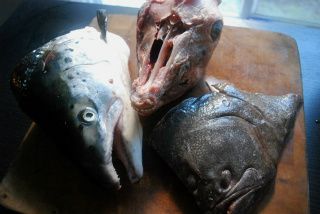
Ever since the Mad Cow Disease scare, heads of ruminants are hard to come by. I’ve asked many a farmer for a cow head on many an occasion, but I’ve always been rejected. It’s sad, but I guess I understand. Luckily, I managed to dig up a pastured goat head for a mere dollar per pound. This particular head ran me two bucks, and while its meat content is pretty scant when compared to a cow or pig head, it’s still a head, and that’s what I came for.

Goats aren’t geniuses, but they do have brains. Split open that head, scoop out the brain, and make like an ancestral hominid and cook it up. Okay, while our ancestors probably weren’t stir-frying their brain in garam masala and turmeric, they were eating it. Brain is a rich source of omega-3s, especially pastured brain, and it’s likely that landlocked hunter-gatherers satisfied some of their omega-3 requirements through brain. If you don’t want to bother splitting skulls, why not make some broth out of your head? Throw it in a pot, cover it with water, and toss in some spices, herbs, and a bit of vinegar. Turn it into head cheese (that’s what I’m doing) if you prefer, or just make some soup. Once the meat is tender enough, remove it from the skull to avoid overcooking.

I also picked up a couple fish heads – halibut and salmon. Three and a half pounds worth for $10. I’ve gotten these before, and my favorite thing to do is apply a light dusting of salt and pepper, rub some olive oil all over, and pop in the oven at around 350 degrees for just under twenty minutes. That’s enough to crisp the skin without drying out the meat or burning the fat. Once it’s done, go to town on it. The cheek is the best part, but use your hands to access the interior and keep a lot of napkins handy. You’re going to make a pretty big mess if you want to get everything. It should go without saying that these contain omega-3s, but there should also be a big dose of fat soluble vitamins, selenium, iodine, and other minerals found in ocean water. You could also make fish head soup, of course. If you want to make soup, have the heads cut at the butcher.

Feet
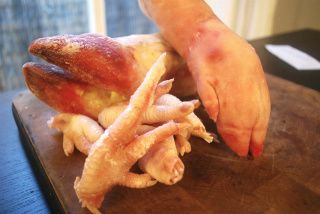
feet 1 1

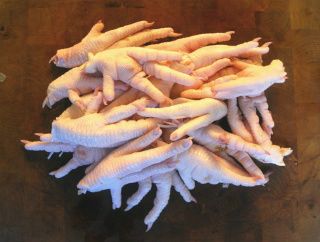
People find feet gross, for some reason. Maybe it’s the fact that they’re in constant contact with the ground, and the ground is definitely not sterile. I guess I see where they’re coming from, but I look at feet differently. I like the fact that feet are what the animal uses to get around, because that means the feet bear all the weight. And any body part that has to handle a lot of force – like the foot – tends to have a lot of collagen, cartilage, and other connective tissue to deal with all that stress. That’s why feet make the best stock. Chicken feet, pig feet, beef feet – they’re all incredibly gelatinous and when you cover them with water and apply heat for 24-48 hours, amazing stuff happens. There is very little meat, so soup/broth/stock is the best option here. Dim sum joints serve fried and braised chicken feet, so I suppose you could play around with that dish. Now that I think of it, a chicken foot braised to the point of disintegration would be really good.

I got pig, beef, and chicken feet for $0.99/lb, $1.29/lb, and $1.99/lb respectively. I’m going to make some stock so rich and so thick that you could sleep quite comfortably on a bed made of it. I suggest you do the same. I kept the beef and pig feet intact for the photo’s sake, but if you get any sort of large animal foot from the butcher, have them cut it up to make the stock-making easier.

Tails
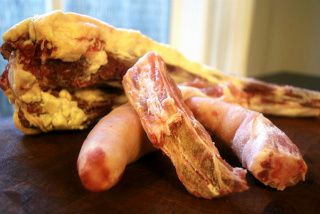
bettertails 1

As you can see, the bison tail (which is very similar to beef oxtail, really) is meaty and massive, while the pig’s tail is quite small (and unfortunately not curly). Both are super-gelatinous and both make excellent broth. Both tails have a fair bit of meat on them, so I’d recommend a braise or a crockpot recipe where the meat is featured prominently. Don’t just treat the tails like broth bones. They’ll make a fine, rich stock, sure, but there’s also some good eating to be had. Cook ‘em long and slow and let them cool a little bit before you plunge in.

I picked up a box of pastured bison tails for $2.90 a pound and a few pork tails for a dollar per pound. The bison tails were whole, so I had to cut them up myself. Cutting a big bison tail without professional equipment requires getting in between the vertebrae. Use your fingers to find the joints and go from there.

Stomach
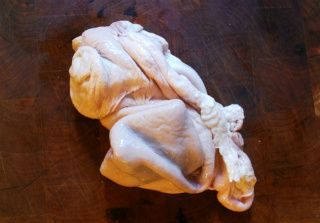
pigstomach 1

While your first inclination may be to retch at the idea of eating a pig’s stomach, I like to call it the Primal crockpot (or, alternately, the Foolproof Sausage Casing). It’s tender, rich, mild, and assumes other flavors really well. Most cooks usually use stomach as an encasing for ground up meat and vegetables. Since what stomachs do in the wild is hold food, it’s an obvious way to cook with it, but another option is to boil and chop it. You could eat the boiled stomach as is (or in soup), or you could dry it off, toss it in spices and fat, and roast/saute it until browned and crispy. I recommend something spicy and sour, maybe a cumin-chili-lime-olive oil spice mix, or even a turmeric-chili-vinegar-coconut oil one.

Stomach isn’t a nutritional powerhouse on par with liver or kidney – it’s mostly fat and protein with a nice dose of selenium – but it’s cheap, it’s tasty, and you can fill it up with other foods (think massive rotund sausage). I paid $1 per pound for mine.

Spleen
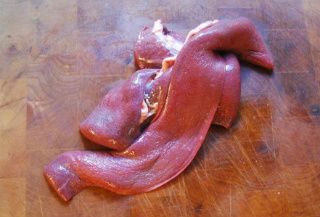
porkspleen 1

Spleen is sometimes called a poor man’s liver. It tastes a bit like it, but not as strong. It kinda looks like it, but not when you look closely. It’s high in iron, copper, selenium, and vitamin B12. It’s more delicate than liver with none of the retinol.

I got pork spleen, also called pork melt, for a couple bucks per pound.

Tendon
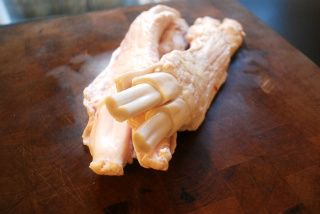
beeftendon 1

When most people want real broth, they turn to bones. I mean, bone broth is great. It’s alliterative, for one. It makes your house smell good (or terrible, depending on whom you ask), and it is filling on a cold day in a way that only meaty liquid can be. But if you’re a true rich broth fiend, if you’re a devout Ray Peat-ian, if you’re all about the gelatin – you had better go out and procure yourself some beef tendons. A tendon is a prime piece of connective tissue designed to hold muscle to bone and withstand all the crazy tension and force and stress that such a relationship inevitably entails. Thus, it is pure collagen, which means good things for your broth. Of course, it’s just collagen without the bone, so the broth won’t have that boney meatiness, but if you add a few bones to the mix you’ll get the best of both worlds. Tendons are basically fat-free, but a well-cooked tendon gives a mouthfeel similar to good pork belly. Good braised, good in soups.

Beef tendon ran $2.99 a pound. I got two large tendons for $4.

Tripe
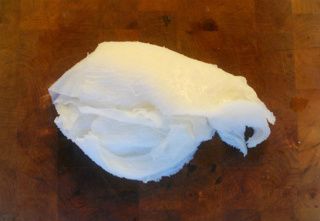
moretripe 1

Tripe is (usually beef) stomach lining. Of course, cows have several stomachs, so there are several types of tripe. I bought book tripe, which comes from the third compartment in a cow’s digestive system – the omasum. As you can see, it’s white, but that’s only because to prepare it for human consumption, tripe is thoroughly cleaned. Uncleaned tripe is intense stuff. Dogs love it, it smells like a barn, it’s green thanks to all the partially digested plant matter, and because it’s literally a cow’s gut, it’s a good source of probiotic bacteria. I almost wish it was palatable in its uncleaned state, because it’s supposed to be a nutritional powerhouse. Cleaned tripe is very mild. Its fibrous texture demands long, slow cooking and it goes well with spicy soups (a lot of tripe is used in Southeast Asian and Mexican cuisine). High in protein with a good amount of calcium.

A little over a pound of tripe cost me $3.75.

Blood
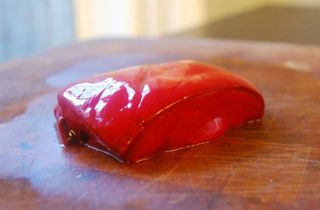
pigblood 1

Blood is scary. Too much of it in the room at once means someone’s hurt, usually seriously. It’s red, really red. But countless cultures across history have used (and still use) blood in their cooking. Okay, so what does one do with blood? If you’re Maasai, maybe you drink it raw. If you’re an ancient Spartan, you make melas zomos, the “black soup.” If you’re a cured meat artisan, you’d probably make blood sausage. Cubed fully coagulated pork blood is often used in Southeast Asian cooking. One of my favorite soups from a local Hollywood Thai restaurant uses pork blood cubes. The texture makes it feel like blood tofu.

The blood I bought came from a pig and cost $2 a pound. When you buy blood from the meat counter, it’s already partially coagulated. This makes for easy handling, as you’re not dealing with a pure liquid. When it’s coagulated, you can pick it up and it stays relatively solid. Coagulated blood is incredibly fragile, though, and it’ll break apart at a moment’s notice. Nutritionally, there’s not a lot of available information. It’s definitely going to be high in iron, and it has a fair amount of protein, while according to this source (which references lamb blood), it’s quite low in fat and carbs. I plan on trying blood cubes in a homemade coconut milk soup (from Primal Blueprint Quick & Easy Meals). If you want to cook with blood without it fully coagulating, add vinegar.

Trim
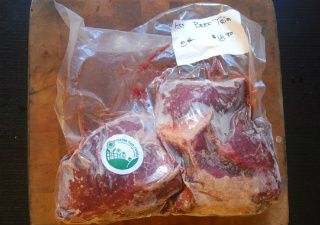
beeftrim 1

After the butcher removes the steaks, the roasts, the burger meat, the ribs, the loin, and every other cut that enjoys name recognition, he’s left with scraps of meat attached to the animal carcass. Of course, if you’re dealing with an animal as big as a cow, those “scraps” are actually quite substantial. Enter beef trim. The beef trim I purchased came in three oddly shaped slabs of good, deep-red grass-fed beef. They weren’t steaks, and they weren’t roasts, and the angles were all weird, but these were solid cohesive pieces of meat that could easily be cut up for stews, soups, ground into ground beef, or even made into jerky. It’s only trim because it wouldn’t look pretty in a display case. Other than that, it’s great meat at a great price.

I paid $3.50 a pound for grass-fed organic beef trim.

Well, that’s my haul. Between all of that, the “regular” parts described in my offal post from way back, and the post showing how to get this stuff into your diet, I’d say you have plenty of material to work with.

The beauty of buying all the odd bits is trifold. First, you’re getting a wider range of vital micronutrients, vitamins, minerals, and connective tissues that just don’t exist in large amounts in regular muscle meat. Second, it’s an affordable way to get your hands on high-quality, pastured animal products. You think you could ever find grass-fed, pastured muscle meat for a few dollars per pound? No way. And third, you are personally seeing to it that the animal in question does not go to waste. It’s not turned into poor quality pet food, nor is it discarded. It is utilized and enjoyed by a person that truly appreciates it.

Now I’d like to hear from you. What are your favorite odd bits? Are there any parts you’ve been dying to try, but haven’t found the courage to go out and find? Well, consider this post a challenge. Go branch out. Eat some weird stuff. It’s good for you and it’s delicious to boot. Make it so that it’s no longer weird, it’s no longer a special occasion, but just something you eat.

Why We Should Eat Leafy Greens | Mark's Daily Apple

Why We Should Eat Leafy Greens | Mark's Daily Apple

Why You Should Eat Leafy Greens

Mark Sisson Feb 1, 2012 3:00 AM - Show original item

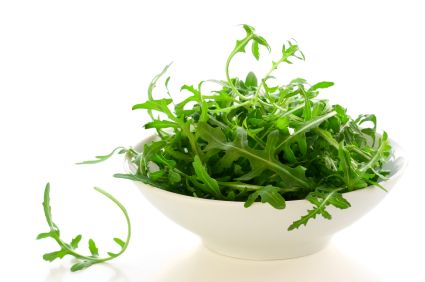
arugulaBy now, you’ve probably seen the TedX video from Dr. Terry Wahls, a former Tae Kwon Do champ and current MD diagnosed with secondary progressive multiple sclerosis (the kind that degenerates your brain and has you relying on a wheelchair to get around) who describes her transformative experience with a dairy-free Paleo diet rich in fruits, vegetables, grass-fed meat and organs, and seaweed. Relegated to and totally dependent on a wheelchair in 2007, by 2008 Wahls had adopted the diet and was commuting to work on a bicycle and now incorporates this kind of intensive directed nutrition into her primary care and brain injury clinics. If you haven’t, go ahead and take twenty minutes out of your day to go watch it. It’s a real eye-opener (but not all that surprising to longtime readers). Think of it as a grass-fed, wild-caught success story.

I already linked to this video a couple months back, so why bring it up again, you might ask? Back when I watched it for the first time, something caught my ear: the focus on vegetation. Wahls speaks of eating nine cups of plants every day, with three coming as leafy greens, three as sulfur-rich vegetables, and three as brightly colored fruits and vegetables. She explains why each category is so important, not just for someone looking to reverse MS, but for anyone who wants to be healthier in general. She got me excited all over again about incorporating more vegetation into my diet. It’s not like it’s lacking or anything, either. I had just taken it for granted – some spinach here, a Big Ass Salad there, some roasted Brussels sprouts for dinner – and instead focused on the animal food. If you remember, the base of the old Primal Blueprint food pyramid was vegetation, and I still maintain that the optimal Primal plate is overflowing with mineral-and-antioxidant-rich plant matter. I think the (understandable) tendency of some to knee-jerkily rebel against anything resembling Conventional Wisdom means that leafy greens and other vegetables fall to the wayside. That’s a mistake, I think, and it’s important to understand that eating both loads of leafy green things and things that crawled, flew, or swam is not mutually exclusive. You can do both. You should eat both. And I’m going to tell you why.

Before I start, when we talk about greens, we mean leaves. So things like:

  • Kale
  • Chard
  • Lettuce
  • Mustard
  • Collards
  • Parsley
  • Spinach
  • Beet greens
  • Sweet potato leaves
  • Arugula
  • Baby greens
  • Endive

I haven’t covered all the regional leaves utilized in various cuisines across the world. These are the basics that most people reading this will be able to find at their grocer, farmers’ market, farm stand, and/or frozen section. Other vegetables like broccoli or certain types of cauliflower are green, but aren’t “greens.” A discussion on those guys will come next week.

Terry Wahls likes greens for the minerals and vitamin content. With that, I agree. Greens represent a convenient, essentially non-caloric, nutrient-dense source of otherwise hard to obtain minerals, like magnesium, calcium, potassium, and manganese. Heh, so what have those minerals done for me lately, you might be wondering. Well…

Magnesium

Of all the minerals we Primal folks talk up, magnesium may very well be the most widely supplemented. It’s certainly one of the most important; over 300 physiological processes in the human body require magnesium to function optimally, foremost among them the production of ATP for energy. Your mitochondria use magnesium to produce ATP, the body’s energy currency. So if it’s so important, why must we all supplement? How did people get enough magnesium before Natural Calm? There are a few factors, including the disappearance of magnesium from our drinking water and top soil, but the fact remains that most of us aren’t even trying to get enough magnesium through our food. That should change. Eating greens like spinach and chard will go a long way toward adding dietary magnesium.

Calcium

Of all the minerals we discuss, calcium may be the least-supplemented or most-ignored. That’s a mistake. While I’ve certainly called into question the wisdom of supplementing with handfuls of calcium pills without considering the roles of vitamins D and K2 in bone mineralization, we still need calcium. We still need that raw building block (and crucial trigger for neurotransmitter release). And if you’re not eating dairy, leafy greens are probably your best source.

Potassium

Potassium is another nutrient a lot of people miss out on, especially if they’re overcooking their meat (the juices contain the potassium), avoiding tubers and fruits (both are high in potassium), and shying away from avocados because of the linoleic acid (don’t stress out over a little whole-food omega-6, folks, especially when it comes in such a creamy, green package). I just got done writing about the importance of the potassium:sodium ratio in regulating blood pressure, so if you’re not eating the aforementioned potassium-rich items (and even if you are), be sure to eat your greens.

Manganese

Your mitochondria use manganese to manufacture manganese superoxide dismutase, a potent mitochondrial antioxidant. With inadequate superoxide dismutase, you increase your chances of ischemic brain injury (think stroke) or developing a neuropathology. Simply put, manganese keeps your mitochondria running cleanly.

Unless you’re eating bones, drinking blood/meat juice, and eating hoof, fur, and tail, you’ll be missing out on magnesium, potassium, and calcium by excluding leafy greens.

Terry Wahls also likes greens for their vitamin content, specifically B-vitamins like folate. I tend to agree, and I’ll highlight a couple key nutrients that greens provide.

Folate

Though it’s widely touted as particularly crucial for expectant mothers and the development of the babies they bear, folate is also important for anyone’s general health. Inadequate dietary folate intake can lead to elevated homocysteine levels (which can impair endothelial function and is a risk factor for heart disease). Modern processed grain-based foods are usually fortified with folic acid, but you’re not eating that stuff. And unless you’re also eating plenty of liver, if you shun greens you are most likely lacking this vital nutrient.

Betaine

Betaine is another important but oft-ignored nutrient that many people, even Primal eaters, lack. Like folate, it regulates proper homocysteine levels. Betaine also helps maintain liver health. Spinach is perhaps the greatest vegetable source of betaine (other than maybe wheat germ, but who wants that?). Spinach tastes pretty darn great steamed and tossed with olive oil, sauteed in bacon fat, or raw on a salad, so go ahead and eat some.

Besides the micronutrient content, there are other benefits of eating leafy things, especially in concert with the other foods on your plate. For those interested in eating less or losing weight, eating a salad with your meal spontaneously reduces overall caloric intake. I dunno about you, but I think any weight loss “diet” should include spontaneous caloric reduction. Although we know that caloric intake factors into weight loss or gain, we also know that many, if not most, people have difficulty consciously reducing calories. It simply doesn’t work very well, so the key is to spontaneously reduce calories by eating satisfying foods that don’t derange our satiety hormones. That’s what going Primal is all about, and research shows that eating salad (perhaps a Big Ass Salad?) can help in that regard.

Although I’m coming up dry right now, I remember reading research that showed eating leafy greens, like spinach or kale or a green salad, alongside your grilled steak reduced the absorption of heterocyclic amines (HCAs) from the meal. HCAs are carcinogenic and form with high-heat cooking, especially on meat, and absorbing fewer of them is a good thing. I’d be much obliged if anyone could pull up the research. In the meantime, I’ll keep looking.

But the real beauty of leafy greens? They are prepackaged whole food “supplements” with safe and well-balanced vitamin and mineral levels. You eat a few cups of spinach, a romaine lettuce salad, maybe some kale chips and you’ll be getting a nice healthy range of nutrients. Your overall caloric intake won’t really be impacted and you’ll be safe. No, you won’t have a nutritional profile from the manufacturer telling you exactly how many milligrams of magnesium your bowl of sauteed kale contained, or the amount of betaine in that head of spinach you chopped up and turned into a salad. The nutrient range will vary from head to head and leaf to leaf. And that’s okay. Heck, that might even be optimal. I can imagine an organism that evolved eating a varied diet with lots of ups and downs and big blocks of this mineral in one meal and another big block of that vitamin in the next. I can imagine an organism that evolved eating food, rather than prepackaged, preordained, pre-meted out collections of vitamins, minerals, and antioxidants. Can you?

That’s why it’s food, without a label: it doesn’t need to be exact. So if you ever find yourself paused in front of the grocery store display, agonizing over the respective folate content of two particularly large heads of romaine lettuce and frozen – totally unable to act – hang it up. Start back at square one. Realize that this is food that’s meant to be eaten, not over-analyzed.

If it’s green, leafy, crisp, and free of chemicals, it’s safe, healthy, and good to eat. Adding such a food to your diet – in sauteed, steamed, boiled, dehydrated, baked, or raw form – will most likely help, so eat it! I’m not saying you have to eat three heaping platefuls of vegetation, like Terry Wahls did. I’m suggesting that adding leafy greens to a diet lacking in them will almost certainly improve the nutritional content of that diet.

How Do Asians Eat So Much Rice and Not Gain Weight? | Mark's Daily Apple

How Do Asians Eat So Much Rice and Not Gain Weight? | Mark's Daily Apple

The “Asian Paradox”: How Can Asians Eat So Much Rice and Not Gain Weight?

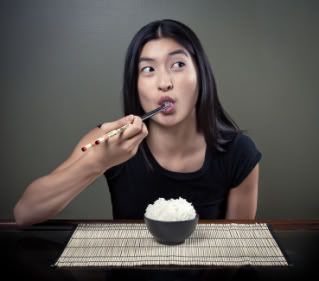
eatingrice

How the Primal community loves the concept of a dietary paradox. How we eagerly point to its various manifestations as supportive evidence for our way of eating, living, and moving. You know the French Paradox and how it confounds the experts. To mention all those smug surrender monkeys with their brie and their butter and their duck confit and their Gauloises and their seeming imperviousness to heart attacks is to make Dean Ornish binge on bran and pull out tuft after tuft of frizzy hair. And then there’s the lesser-known Israeli Paradox, which attempts to answer why Israelis have skyrocketing rates of heart disease despite a skyrocketing intake of “healthy” omega-6 fatty acids. In its wake, Walter Willet might be found weeping into a mug of safflower oil. There’s even an American Paradox – those who ate the most saturated fat had the least coronary heart disease – that had the minds of researchers thoroughly boggled.

All those paradoxes work out in “our favor.” Saturated fat gets off pretty much scot-free and omega-6 vegetable oils get raked over the coals (and, presumably, oxidized). And if people were honest about things, they would see these paradoxes not as paradoxes, but as reasons to reevaluate previously-held beliefs about health and diet.

But what about the Asian Paradox? How can Asian countries consume so much white rice and so many noodles and remain so thin? If carbs make you fat, how do they eat so many of them? This is a question I get from Mark’s Daily Apple readers all of the time, so it’s about time I gave a thorough response.

First of all, I want to confirm that Asia eats a lot of rice. It may be a “side dish” or not the main course, but there’s no dancing around the fact that a lot of rice gets eaten – the stats (PDF) are pretty clear on Asian rice consumption. I briefly covered the Asian Paradox in the rice post, but I think the subject deserves more than a brief paragraph. So, today, I’m going to explain why the Asian Paradox (like all “paradoxes,” really) isn’t actually a paradox, and why I consider it to happily coexist with all of the other Primal-friendly paradoxes. I’ll also explain why I think the Asian Paradox offers us Primals a chance to evaluate our own beliefs (because that’s the only honest thing to do).

They Move(d) Frequenty at a Slow Pace

Whenever I’m in a large city with a sizable Asian immigrant population, I notice a different approach to walking. For instance, Carrie and I were recently visiting San Francisco’s Golden Gate Park. We spent the day just walking around and getting sort of lost, and we both noticed the difference. Of all the multitudes of people walking, jogging, and otherwise being active, everyone but the older Asian folks seemed to be actively exercising. Exercising on purpose. Trying to “burn calories” or “improve VO2 max.” We noticed as a young mother with strollered child powerwalked down the path, wearing compression tights, a baseball cap, and the latest running shoes, while the elderly Chinese grandma she passed wore some keds and a knit sweater. Two seemingly identical joggers (one in Vibrams!) with Bluetooth earpieces jabbed at each other with business-speak opposite a pair of old friends strolling along and loudly speaking (in another language) of politics and times long past (again, it was another language) in well-worn suits and loafers. A group of cyclists could have passed for pros with all their gear and advertisements and special cycling shoes, while an older Asian gentleman wearing a collared shirt and slacks cruised by on a simple ten-speed. I got the distinct impression that walking or cycling or just getting around using your own limbs as the vehicles was simply a way to get from here to there for the older Asian folks. It wasn’t a special occasion. It was an everyday occurrence. It was normal. For everyone else, it was exercise. It was a big event that you had to get geared up and spend money for. Exercise is great, and walking with intent of getting healthier is great – I do it all the time. But my observations speak to a huge cultural difference between the way older Asian folks who immigrated over (and, presumably, the cultures back at home) and Americans treat moving frequently at a slow pace.

People living in Asian countries have historically been more active than people living in the States. It’s not that they’re all lifting weights and running sprints and joining gyms; it’s that their average daily activity levels are higher. And as everyone here probably already knows, the simple act of walking on a regular basis does wonders for one’s health. Daily walking is consistently associated with (among other health benefits) improved insulin sensitivity (better tolerance of carbohydrates like white rice), better mood, lowered blood pressure and triglycerides, and greater longevity. America is a car country, and has been for about a hundred years. We don’t – and haven’t for over 50 years – have to walk to get around. Heck, oftentimes we can’t walk to get where we want to go even if we wanted to walk, since many of us live in a kind of suburban sprawl that requires the use of cars just to buy groceries or take the kids to school. The result is a country that takes fewer steps per day than the rest of the world. As Asians start buying more cars, relying more on vehicular transportation, and moving further away from labor-intensive work, I suspect you’ll see more carbohydrate intolerance, fat gain, and general ill health begin to emerge. It’s already happening, as you’ll see.

I think daily activity levels are probably the biggest determinant in tolerance to carbs. In American cities where walking is required or more convenient than driving, like New York, people are generally healthier, slimmer, and longer-lived. Things are changing, though. In 1989, 65% of Chinese performed heavy labor on a daily basis. By 2000, that proportion had dropped to 50% – still far more than in Western nations, but the downward trend is clear. You’ll notice on that same page that the proportion of overweight children also increased by the year 2000.

An Otherwise Unprocessed, Nutritious Diet

Traditional Asian food is highly nutritious. Go to a Vietnamese noodle house and the signature dish is pho, a big bowl of homemade beef marrow bone broth, tripe, tendons, brisket, and rice noodles. Go to a real Thai restaurant and get bone broth soup with cubes of pork blood, greens, rice noodles, and a duck egg. Go to a Chinese restaurant and get sauteed (alas, in soybean or corn oil these days) pork kidneys with Chinese broccoli and rice on the side. Go to a Japanese restaurant and get wild caught salmon eggs rolled with seaweed and rice, mackerel sashimi, and some fermented miso soup with kelp strips. Go to Korean barbecue and eat a dozen different kinds of kimchi, grilled short ribs, beef tongue, and liver all wrapped in lettuce, with rice on the side. In all these foods, rice is present, but so are real bone broth, fresh meat, fermented cabbage, offal, and vegetables. The presence of rice does not invalidate or negate the presence of every other nutrient.

Of course, that’s restaurant food. If you want to get an idea of how Asian folks cook at home, go to their supermarkets and note what people are buying. It’s not as fancy or flavorful, but it’s just as nutritious. Stand by the register and you’ll see twenty kinds of whole fish; live oysters, mussels, clams, crabs, snails, and sea urchins; a pig’s entire digestive tract; buckets of chicken feet; bags full of strange leafy green things and exotic vegetables like bitter melon; all sorts of herbs, roots, and teas; fermented, pickled foods; a dozen different kinds of root vegetable; and yes, rice. If you want to isolate the rice from that list of nutrient-dense offerings and say “What about that?” be my guest, but not me. I’ll be admiring the handsome beef foot oozing collagen and marrow and imagining all the wonderful dishes it could make (while I mentally compare the contents of shopping carts in Asian markets to the contents of shopping carts in standard American grocery stores… guess who wins).

Before recently, Asians ate less refined sugar and used animal fats for cooking. Sugar intake is rising now, of course, and cooking oils made from corn and soybean have largely replaced lard and tallow, but rice in the context of a low-sugar, no-HFCS (remember, the oft-cited 55/45 fructose/glucose breakdown for HFCS is highly misleading and actually quite often incorrect), low-vegetable oil, nose-to-tail nutrient-dense diet is (or was) acceptable. You can’t reduce a food down to its constituent parts and focus on, say, the bit of fructose in a blueberry and then condemn the entire berry because of it. Similarly, you can’t reduce a diet down to a single constituent food and condemn – or praise – it based on that single food. You have to look at the entire picture, and the Asian diet is largely a nutritious one.

More Rice, Less Wheat

Thanks to regular monsoons, 90% of the world’s rice production is located in Asia. It’s been cultivated in the region for close to 10,000 years, so the region’s occupants tend to eat a fair amount of the stuff.

Luckily for them, rice, especially white rice (the favored type across most of Asia; as a Thai friend of mine who grew up there and came to Hollywood in the 60s told me, “rice bran was for the chickens”), is a mostly non-toxic source of glucose. On the grain spectrum, where wheat and other gluten grains reside at one end, rice relaxes at the opposite end. It’s not “good,” but it’s also not “bad.” It just is. It’s pretty much neutral. Whether you can handle (or need) the glucose load is another thing, but you can rest assured that white rice will be generally free of gut irritants, phytic acid, and deleterious lectins. If you’re eating wheat, on the other hand, you have gluten, wheat germ agglutinin, and a host of other antinutrients with which to contend. And, as Ned Kock’s masterful (and under-appreciated) series of stats posts on the China study data suggests, rice intake is associated with a reduction in cardiovascular disease while wheat flour intake is associated with an increase in cardiovascular disease. The upper level of rice intake did correlate with a slight increase in CHD, however, but not a major one.

All else being equal, people will be healthier on a rice-heavy junk food diet than on a wheat-heavy junk food diet.

Is Asia Even All That Healthier Anymore?

Healthy, long-lived Asia isn’t so healthy and long-lived. Both China and India are facing diabetes epidemics. In Taiwan, Korea, Vietnam, and Thailand, diabetes is also increasing. The perfect storm – of sedentary living, processed junk food full of carbs and bad fats, and poor sleep – that has ravaged America and other industrialized nations for almost a century and led to a host of debilitating illnesses is beginning to descend upon Asia. Cooking oils have displaced traditional animal fats and sugar intake is rising. People walk less and eat more wheat.

Even the low BMIs of Asian countries are misleading. At equal BMIs, Asians generally have more body fat than other groups (PDF). So, on average, the American or the Pacific Islander with a BMI of 25 has less body fat than the Chinese guy with a BMI of 25. It’s not clear whether these higher body fat levels (at lower BMIs) correspond to increased risks for certain diseases, but it does suggest that BMI is an unreliable barometer for a country’s leanness on a particular diet. You can be skinny-fat with a low BMI – and it appears that significant numbers of Asians with low BMIs fit that profile.

So, like every other one before it, the Asian Paradox topples: there is actually no paradox. Asian countries remain lean (if they’re actually lean, that is) on a rice-heavy diet by virtue of lots of low-level aerobic activity to promote insulin sensitivity, lots of nutrient-dense food to go with that rice, and because rice is the least offensive grain.