The Misinformation of Barry Groves and Weston Price : Disease Proof
I am glad Barry Groves (an electronic engineer, and honorary board member of the Weston Price Foundation) returned and chimed in again. (This is a continuation of an earlier conversation--if you haven't already please read the whole thing.) Now that his name has been mentioned many times here at DiseaseProof.com when people search for it on the web, hopefully they will be able to read his comments and my responses and see that his nutritional viewpoints are illogical and dangerous.
Hopefully this will have some effect from anyone dying needlessly from his writings elsewhere and some book publisher will have second thoughts about publishing anything he puts together.
Barry Groves doesn't get the idea that I am not defending the American diet or the almost worthless recommendations of the American Heart Association. However, I am claiming that my dietary and nutritional recommendations are dramatically protective and can enable people to heart-attack-proof their bodies.
Barry Groves obviously did not read Disease-Proof Your Child or Eat To Live, but maybe others too, are not clear that I clearly explain that processed foods, sugar, white flour, and other low-fat, low-nutrient foods promote heart disease. Saturated fat is only one causative factor; but one I do not ignore.
Dangerous Advice
I realize the web allows a forum for people with potentially dangerous advice, but I think most intelligent people can see through his straw arguments, so I welcome the opportunity to comment again to his skewed nutritional viewpoints and unsubstantiated claims. Each time Barry Groves reports on a medical study he gave a different conclusion to the data than the researchers do, and the studies are usually some poorly done old study. It is typical stuff for the Atkins crowd and the Weston Price Foundation to find one research paper they can claim makes their argument legitimate, but even when they hand pick one study, they typically don't report the research accurately.
Fortunately we have a comprehensive body of knowledge today with over 15,000 articles written since the 1950's documenting the link between a diet high in saturated fat and low in fresh fruits, nuts, seeds, vegetable and beans and the increase risk of cancer and heart disease. Thousands of research scientists don't agree with Barry Groves' meat-centered diet recommendations and the platform of the Weston Price Foundation.
see also:
TierneyLab: Nutrition Science and Gary Taubes : Disease Proof
The Meat and Butter Diet : Disease Proof
Showing posts with label Weston A. Price Foundation. Show all posts
Showing posts with label Weston A. Price Foundation. Show all posts
1.7.11
Saturated fat Study (1997) - An Example of Junk Science
Low Carbohydrate Nutrition: An Example of Junk Science
Extract:
While the establishment is finally recognizing the dangers of trans fatty acids, conventional dietary gurus continue to warn the public about the alleged dangers of saturated fats.
In this article, we will look at a study published in 1997 in the American Journal of Cardiology (79:350-354) used to justify avoidance of red meat and butterfat, the two main sources of saturated fatty acids in the Western diet.
Arthur Agatston, author of the best-selling South Beach Diet refers to this research when he states:
In the study, carried out by Robert A. Vogel and his team at the University of Maryland School of Medicine, ten volunteers were tested for "endothelial function" by measuring.....[ ].
But was it saturated fat that caused the decline in endothelial function?
The high-fat meal consisted of an egg McMuffin, sausage McMuffin, two hash brown patties and a noncaffeinated beverage. The lowfat meal consisted of Frosted Flakes, skimmed milk and orange juice. According to the authors, the high fat meal contained 50 grams of fat, of which 14 were saturated fat. So only 28 percent of the fat in the high-fat meal was saturated. The rest was a combination of trans fats, monounsaturated and polyunsaturated fat, any one of which, or all together are the likely culprits in the decline in endothelial function.
But Agatston (along with the study authors) blames the adverse effects on saturated fats!
Extract:
An Example of Junk Science
By Mary Enig PhdWhile the establishment is finally recognizing the dangers of trans fatty acids, conventional dietary gurus continue to warn the public about the alleged dangers of saturated fats.
In this article, we will look at a study published in 1997 in the American Journal of Cardiology (79:350-354) used to justify avoidance of red meat and butterfat, the two main sources of saturated fatty acids in the Western diet.
Arthur Agatston, author of the best-selling South Beach Diet refers to this research when he states:
"The major problem I have with the Atkins Diet is the liberal intake of saturated fats. There is evidence now that immediately following a meal of saturated fats, there is dysfunction in the arteries, including those that supply the heart muscle with blood. As a result, the lining of the arteries (the endothelium) is predisposed to constriction and clotting. Imagine: Under the right (or rather, wrong) circumstances, eating a meal that’s high in saturated fat can trigger a heart attack! In addition, after a high-fat meal certain elements in the blood called remnant particles, persist for longer than is healthy. These particles contribute to the buildup of plaque in the vessel wall."Agatston recommends consuming polyunsaturated and monounsaturated vegetable oils, including tub spreads, rather than animal fats like butter.
In the study, carried out by Robert A. Vogel and his team at the University of Maryland School of Medicine, ten volunteers were tested for "endothelial function" by measuring.....[ ].
But was it saturated fat that caused the decline in endothelial function?
The high-fat meal consisted of an egg McMuffin, sausage McMuffin, two hash brown patties and a noncaffeinated beverage. The lowfat meal consisted of Frosted Flakes, skimmed milk and orange juice. According to the authors, the high fat meal contained 50 grams of fat, of which 14 were saturated fat. So only 28 percent of the fat in the high-fat meal was saturated. The rest was a combination of trans fats, monounsaturated and polyunsaturated fat, any one of which, or all together are the likely culprits in the decline in endothelial function.
But Agatston (along with the study authors) blames the adverse effects on saturated fats!

Barry Groves Phd - Profile
Blogger: User Profile: Barry Groves
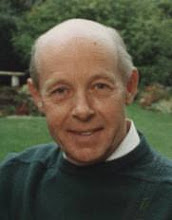

Barry Groves
- Gender: Male
- Occupation: Independent researcher, author and lecturer
- Location: Oxford, UK
About Me
Nutritional author, lecturer and journalist; doctorate in nutritional science; 2002 Sophie Coe Prize winner; currently: a director of the Foundation for Thymic Cancer Research; a founder member of the Fluoride Action Network; a founder member of THINCS –The International Network of Cholesterol Sceptics; and an honorary member of the board of the Weston A Price Foundation. E-mail: barry@second-opinions.co.uk
Interests
Favourite Music
My Blogs | |
| Second Opinions | |
|---|---|
| Support for"Trick and Treat" |
26.6.11
Interview with Ray Peat - link to, and critique of
Interview with Dr. Ray Peat
Interview with Dr. Ray Peat
Ultrasounds Radio with Eluv
http://eluv.podbean.com/2008/10/10/eluv-live-interview-with-dr-ray-peat/
If you have read Eat Fat, Lose Fat, or Wise Traditions journals and website, you know coconut oil is pretty amazing stuff. There are a few other people out there who think so too. Dr. Ray Peat is one of them. Early on in this interview he states that saturated fat is good fat—not something you hear every day, except from us. From there, he focuses in on coconut oil and details some of the benefits, which include regulating metabolism and helping to keep weight under control, controlling estrogen, helping the thyroid issues and even preventing or reducing sunburn damage.
While he gives out some good and intriguing information, one must be careful when listening to him. He mentions that there is no such thing as essential fatty acids. Well, yes there are. Dr. Mary Enig tried to straighten out his confusion on this subject in our Spring 2005 Wise Traditions, but apparently he is still confused. He also says we wouldn’t need vitamin E if we didn’t eat any polyunsaturated fats. Dr. Enig points out that there is some polyunsaturated fat in all food. So even if that is true, it is kind of like saying, “If pigs could fly, [fill in the blank].” If pigs could fly, I would give him a thumbs up for saying things like that. THUMBS DOWN.
This article appeared in Wise Traditions in Food, Farming and the Healing Arts, the quarterly magazine of the Weston A. Price Foundation, Winter 2009.
About the Reviewer
Tim Boyd was born and raised in Ohio, graduated from Case Western Reserve University with a degree in computer engineering, and worked in the defense industry in Northern Virginia for over 20 years. During that time, a slight case of arthritis led him to discover that nutrition makes a difference and nutrition became a serious hobby. After a pleasant and satisfying run in the electronics field, he decided he wanted to do something more important. He is now arthritis free and enjoying his dream job working for the Weston A. Price Foundation.
written by Matt Stone, Mar 08 2010
Interview with Dr. Ray Peat
Ultrasounds Radio with Eluv
http://eluv.podbean.com/2008/10/10/eluv-live-interview-with-dr-ray-peat/
If you have read Eat Fat, Lose Fat, or Wise Traditions journals and website, you know coconut oil is pretty amazing stuff. There are a few other people out there who think so too. Dr. Ray Peat is one of them. Early on in this interview he states that saturated fat is good fat—not something you hear every day, except from us. From there, he focuses in on coconut oil and details some of the benefits, which include regulating metabolism and helping to keep weight under control, controlling estrogen, helping the thyroid issues and even preventing or reducing sunburn damage.
While he gives out some good and intriguing information, one must be careful when listening to him. He mentions that there is no such thing as essential fatty acids. Well, yes there are. Dr. Mary Enig tried to straighten out his confusion on this subject in our Spring 2005 Wise Traditions, but apparently he is still confused. He also says we wouldn’t need vitamin E if we didn’t eat any polyunsaturated fats. Dr. Enig points out that there is some polyunsaturated fat in all food. So even if that is true, it is kind of like saying, “If pigs could fly, [fill in the blank].” If pigs could fly, I would give him a thumbs up for saying things like that. THUMBS DOWN.
This article appeared in Wise Traditions in Food, Farming and the Healing Arts, the quarterly magazine of the Weston A. Price Foundation, Winter 2009.
About the Reviewer
Tim Boyd was born and raised in Ohio, graduated from Case Western Reserve University with a degree in computer engineering, and worked in the defense industry in Northern Virginia for over 20 years. During that time, a slight case of arthritis led him to discover that nutrition makes a difference and nutrition became a serious hobby. After a pleasant and satisfying run in the electronics field, he decided he wanted to do something more important. He is now arthritis free and enjoying his dream job working for the Weston A. Price Foundation.
Comments (6)
 Subscribe to this comment's feed
 ...
written by LA, Feb 23 2011
written by LA, Feb 23 2011
I just heard an interview with Ray Peat on the thyroid today and he sounded tired and not vibrant. It was actually painful and boring to listen and follow him. I love learning about nutrition and health, but I lost interest. He sounded much older than 74. I've met people who were older and sounded more vibrant. Sorry for the negative review, but it's my truth.
-

- -4
-
-
too bad
written by MCA, Feb 02 2011
written by MCA, Feb 02 2011
This site had gone down in quality for a few years, I noticed this when I saw the homeopathy articles and some "spiritual" gobbledeegocks writings. Homeopathy is quack science, any kid in sixth grade who just learned about Avogadro's number can understand that.
This "review" and the other reply about Peat's views on EFA are another low value writing which drag down the average value of the WAP site and philosophy and make someone to doubt the credibility of the whole ...
This "review" and the other reply about Peat's views on EFA are another low value writing which drag down the average value of the WAP site and philosophy and make someone to doubt the credibility of the whole ...
-
- +1
-
-
Poor argument
written by Chris, Oct 30 2010
written by Chris, Oct 30 2010
"Well, yes they are!" is not an argument. You'll have to counter Rays extensive knowledge of biochemistry to make this article less of a joke. To prove that they are not essential, all you have to do is feel what happens when you are able to make significant adaptive changes through intermittent fasting. No EFA's required.
-
- +6
-
-
FRIEND OF Dr. Peat
written by Ed Reich, Oct 26 2010
written by Ed Reich, Oct 26 2010
Greetings,
I am a friend and associate of Dr. Peat. In fact, I am staying at his Mexican home right now.
If you read the articles on Omega 3 and 6 polyunaturated oils,
carefully, on Dr. Peat's website (raypeat.com), I believe taht you will come to the conclusion that the N-3 and N-6 lipids are dangerous. And the Omega 3s are more dangerous that the Omega 6s. Ray Peat is in great health, mentally and physically, and at 74, he looks about 62! The marketing teams of the supplement industry are hard at work deceiving the public about some of
the products they proffer. The guy, above, in particular, needs to bone up on Dr. Peat's great ideas!
I am a friend and associate of Dr. Peat. In fact, I am staying at his Mexican home right now.
If you read the articles on Omega 3 and 6 polyunaturated oils,
carefully, on Dr. Peat's website (raypeat.com), I believe taht you will come to the conclusion that the N-3 and N-6 lipids are dangerous. And the Omega 3s are more dangerous that the Omega 6s. Ray Peat is in great health, mentally and physically, and at 74, he looks about 62! The marketing teams of the supplement industry are hard at work deceiving the public about some of
the products they proffer. The guy, above, in particular, needs to bone up on Dr. Peat's great ideas!
-
- +13
-
-
what an absurd 'review'
written by andrew, Jul 06 2010
Think for yourselfwritten by andrew, Jul 06 2010
Phrases like 'straighten out' and 'still confused' insult Peat's extensive knowledge. He often calls some fats the 'so called essential fatty acids.' Believing that we don't need to consume essential fatty acids, or having a differing opinion, does not make someone 'confused.' You're trying to say that Peat is wrong because Mary Enig says so. Mary Enig's 'scientific' reasoning goes something like this: 'Peat is wrong because I say he's wrong.' Why don't you actually try to discuss the issue. Cite studies that you think demonstrate the necessity of the so called essential fatty acids, or try to point out what you believe to be flaws in his reasoning. You can read more at laproline.blogspot.com.
-
- +20
-
-
written by Matt Stone, Mar 08 2010
Peat is not a bumbling idiot. He too knows that polyunsaturated fats are pervasive. But there are foods that contain tiny traces of polyunsaturated fats, which Peat recommends wholeheartedly, and there are foods with extremely high amounts of polyunsaturated fats, such as those recommended by the Weston A. Price Foundation, such as crispy nuts, lard, goose and duck fat, and poultry skin.
On a WAPF-sytle diet I had many health problems, and I estimate my PUFA intake to have been around 20 grams per day. Since cutting that back to 3 grams per day, my health has improved dramatically.
The longer Enig stays entrentched in the belief that nuts, seeds, cod liver oil, and poultry and pork fat are healthy for Americans, who already have 8 times the tissue concentration of PUFA's that can be considered healthy, the longer they delay what could easily be the most significant thing a person can do to improve their health... Eat 1% of their dietary calories from PUFA's as advised by the world's leading PUFA expert, Dr. William Lands.
On a WAPF-sytle diet I had many health problems, and I estimate my PUFA intake to have been around 20 grams per day. Since cutting that back to 3 grams per day, my health has improved dramatically.
The longer Enig stays entrentched in the belief that nuts, seeds, cod liver oil, and poultry and pork fat are healthy for Americans, who already have 8 times the tissue concentration of PUFA's that can be considered healthy, the longer they delay what could easily be the most significant thing a person can do to improve their health... Eat 1% of their dietary calories from PUFA's as advised by the world's leading PUFA expert, Dr. William Lands.
21.6.11
Bone broths - nutritional super food
Sally Fallon, co founder of The Weston A. Price Foundation , and a co-author of the 1989 book Nourishing Traditions: The Cookbook That Challenges Politically Correct Nutrition and the Diet Dictocrats, speaking about bone broth:
progressive nutritional science interest in bone broth:
the paleo diet take on bone broth - from Mark's Daily Apple (excellent):
Fallon's detailed article on the history and benefits here: Broth is Beautiful:
progressive nutritional science interest in bone broth:
the paleo diet take on bone broth - from Mark's Daily Apple (excellent):
- Cooking with Bones | Mark's Daily Apple
- Bone Marrow: Delicious, Nutritious and Underappreciated | Mark's Daily Apple
Fallon's detailed article on the history and benefits here: Broth is Beautiful:
"Science validates what our grandmothers knew. Rich homemade chicken broths help cure colds. Stock contains minerals in a form the body can absorb easily—not just calcium but also magnesium, phosphorus, silicon, sulphur and trace minerals. It contains the broken down material from cartilage and tendons--stuff like chondroitin sulphates and glucosamine, now sold as expensive supplements for arthritis and joint pain. Fish broth will cure anything," is another South American proverb. Broth and soup made with fishheads and carcasses provide iodine and thyroid-strengthening substances. When broth is cooled, it congeals due to the presence of gelatin. The use of gelatin as a therapeutic agent goes back to the ancient Chinese. Although gelatin is not a complete protein, containing only the amino acids arginine and glycine in large amounts, it acts as a protein sparer. The French were the leaders in gelatin research, which continued up to the 1950s. Gelatin was found to be useful in the treatment of a long list of diseases including peptic ulcers, tuberculosis, diabetes, muscle diseases, infectious diseases, jaundice and cancer. Babies had fewer digestive problems when gelatin was added to their milk. The American researcher Francis Pottenger pointed out that as gelatin is a hydrophilic colloid, which means that it attracts and holds liquids, it facilitates digestion by attracting digestive juices to food in the gut."
Grains - The Weston A. Price Foundation
Sally Fallon is the co founder of The Weston A. Price Foundation , and a co-author of the 1989 book Nourishing Traditions: The Cookbook That Challenges Politically Correct Nutrition and the Diet Dictocrats. Here she is speaking about dietary grains:
.....and in context of the USDA's now superceded Food Pyramid:
related:
.....and in context of the USDA's now superceded Food Pyramid:
related:
- 50kzone: Food Industry Lobby - Why Grains (And Soy) Are Gov Endorsed
- 50kzone: Mark Sisson - "Abadon all grains, eat more fat"
Subscribe to:
Posts (Atom)
http://westonaprice.org/moderndiseases/benefits_cholest.html
And as Mary Enig says, a total blood lipoprotein count between 200 and 240 is normal, not a disease process.
http://westonaprice.org/knowyourfats/fats_phony.html
In any population, all measurable characteristics vary within a normal range in a Bell Curve fashion. Just as some people are shorter than average and some taller than average, some have smaller and some have larger feet, and some have lower and some have higher total lipoproteins. Thus, "high" cholesterol is not by itself indicative of a disease process any more than above average height indicates a disease process.
I have read that taller people have, in general, a lower life expectancy than shorter people (don't have the reference). Assuming this is true, it would not give warrant for height reduction surgery for taller than average people. Similarly, even if it could be demonstrated that people with lower total lipoprotein counts did live longer, that would not give warrant to subject individuals with "above average" total lipoprotein counts to artificial cholesterol reduction.
This gets back to the whole issue of reductionism. Tim's doctor thinks a blood cholesterol of 226 is a disease process. He completely ignores the context (patient) in which this occurs. Rather than evaluating the patient, he reduces the patient to a lab number. He wants to treat the cholesterol, not the patient.
Don