28.5.13

15 Million Reasons We’re Told to Eat a Low-Fat Diet

15 Million Reasons We’re Told to Eat a Low-Fat Diet
May 25, 2013 | by Kris Gunnars | 11,518 views | 30 Comments 

Take Home Message

This was just a sample of two organizations, in one country. The food and drug companies exert their influence all over the world.

Here is a list of many more health organizations who receive money from food and drug companies that have a vested interest in keeping people dependent on bad food and drugs.
I think it’s a conservative estimate that the food and drug companies pay tens, if not hundreds of millions of dollars per year to health authorities all over the world to influence their policy and guidelines.
I’m not the kind of guy who believes in “conspiracies” – but it’s hard to ignore things like these when the facts are staring you right in the face.

Boy Eating a Sandwich, Large
For the past 6.5 years, I have been pretty much obsessed with nutrition and health.

At first, I thought the government was mostly right and I blindly accepted conventional wisdom.
But as I dug into the literature, I realized that the mainstream authorities seem to have got it mostly wrong.

Their recommendations are based on outdated science that has been thoroughly debunked in the past few decades.

The diet they ALL seem to recommend… a low-fat, calorie restricted diet, has been proven to be useless.

In a massive study that included tens of thousands of people, women who follow such a diet for 7.5 years end up weighing only 0.4kg (1 lb) less than women eating the standard western diet. There is also no effect on heart disease (1, 2).

I asked myself… what is the reason they are still pushing a diet that is proven to be ineffective for the people it is supposed to be helping?

Well, I’ve realized that there are many good reasons for this. In fact, there are tens of millions of good reasons.

It turns out that the organizations that tell us what to eat and why are being sponsored by the food and drug companies, by millions of dollars every year.

The diet these organizations recommend keeps people dependent on the foods and drugs these companies sell. There is such a massive conflict of interest going on that these organizations can not be trusted.

Academy of Nutrition and Dietetics

Academy of Nutrition and Dietetics Logo
The Academy of Nutrition and Dietetics (AND) is “the world’s largest organization of food and nutrition professionals” and formerly known as the American Dietetic Association.

Most health professionals associated with the AND are Registered Dietitians and Dietetic Technicians.
Registered dietitians in the U.S. receive their license from this organization. The AND also has a research journal and is a highly influential organization in shaping public nutrition policy.
The AND recommends that people eat a low-fat, calorie restricted diet rich in whole grains, fruits, vegetables, lean meats, vegetable oils and low-fat dairy products.

They encourage the consumption of sugar as part of a “healthy, balanced diet.”

Who Sponsors The AND?

It is scary that this highly influential health organizations, which educates Registered Dietitians (RDs) and grants them their licenses, is heavily sponsored by companies that sell the unhealthy foods that are making people fat, sick and diabetic.

The corporate sponsors of the Academy of Nutrition and Dietetics:
  • The Coca Cola Company
  • Pepsico
  • Kellogg’s
  • General Mills
  • Hershey’s
  • Truvia
  • SoyJoy
  • Abbott Nutrition
  • National Dairy Council
  • Unilever
Don’t believe me? It’s right here on the AND’s official website.

Is it possible that this highly influential organization recommends that people eat a high-carb, grain-based diet that includes sugar… because it profits their corporate sponsors?

If you want to learn more about the massive conflicts of interests of the AND, read this damning report created by Michele Simon of Eat Drink Politics.

One of many things uncovered in this report is that companies like Coca Cola and Pepsico provide continuing education courses to RDs… where among other things, they’re “taught” that sugar isn’t harmful to children.

Academy of Nutrition and Dietetics - Corporate Sponsors

It gets even worse… the AND is actively trying to have laws put in place in the U.S., forbidding everyone who is not an AND-licensed registered dietitian to give dietary advice to others.

If they could have their way, you giving dietary advice to your loved ones (or blogging about it) could land you in jail.

My advice… don’t take dietary advice from anyone who has been sponsored or educated by the likes of The Coca Cola Company.

Of course, this does NOT apply to all registered dietitians.

Many of them seriously object to this conflict of interest and are actively fighting against these financial ties. You can support them on their Facebook page and help spread the word, Dietitians For Professional Integrity.

American Diabetes Association

American Diabetes Association Logo

The American Diabetes Associaton is a U.S.-based organization dedicated to the fight against diabetes… or so they say.

Their stated purpose is to fund research, deliver services and provide objective and credible information.

They also recommend that people eat a low-fat, high-carb diet. According to them, diabetics should eat 45-65 grams of carbohydrates per meal.

Anyone with a basic understanding of biochemistry knows that carbs get broken down into glucose, which spikes blood sugars. Diabetics can’t handle all that blood sugar and need to take drugs to bring it down, otherwise they’ll get sick and may die.

The people who stand to benefit the most from low-carbohydrate diets are diabetics. Such a diet has been proven to be much more effective against diabetes than a higher carb diet (3, 4, 5).

Anyone with half a brain who has an elementary of understanding of biochemistry will understand how a high-carb causes harm to diabetic patients… and keeps them dependent on drugs.

Why would the American Diabetes Association recommend such an awful diet that keeps people sick?

Maybe their corporate sponsors have something to do with it.

Let’s see which drug companies pay for this excellent advice:
  • Abbott Laboratories – 675.741$
  • Merck – 1.118.925$
  • Amylin Pharmaceuticals – 502.235$
  • Novo Nordisk – 3.606.495$
  • Eli Lilly and Company – 2.436.840$
  • BD Diabetes Care – 526.704$
  • GlaxoSmithKline – 145.325$
  • Pfizer – 185.073$
… and more. For a sum total of 15 million dollars in the year 2011 alone.

This information is right here on the ADA’s official website.

The ADA takes money from companies that sell drugs to treat symptoms of diabetes. Then they tell diabetic patients to eat a diet that keeps them sick and dependent on the drugs sold by these companies.
It’s important to keep in mind that these drugs are no actual solution to the problem. It’s not like people just take a few pills and a few shots of insulin and then live happily ever after.

No, diabetes is a progressive disease and the drugs only mask the symptoms. This disease gets worse over time, ending in early death or heart disease. Diabetes is a leading cause of blindness and amputation.

Recommending a high-carb diet to diabetics is a crime against humanity in my opinion, especially when there’s another solution available that is FREE and scientifically proven to work MUCH better.

Take Home Message

This was just a sample of two organizations, in one country. The food and drug companies exert their influence all over the world.

Here is a list of many more health organizations who receive money from food and drug companies that have a vested interest in keeping people dependent on bad food and drugs.

I think it’s a conservative estimate that the food and drug companies pay tens, if not hundreds of millions of dollars per year to health authorities all over the world to influence their policy and guidelines.

I’m not the kind of guy who believes in “conspiracies” – but it’s hard to ignore things like these when the facts are staring you right in the face.

The Nitrate and Nitrite Myth: Another Reason not to Fear Bacon

The Nitrate and Nitrite Myth: Another Reason not to Fear Bacon:
Beyond just being loaded with “artery-cloggingsaturated fat” and sodium, bacon has been long considered unhealthy due to the use of nitrates and nitrites in the curing process. Many conventional doctors, and well-meaning friends and relatives, will say you’re basically asking for a heart attack orcancer by eating the food many Paleo enthusiasts lovingly refer to as “meat candy”.
The belief that nitrates and nitrates cause serious health problems has been entrenched in popular consciousness and media. Watch this video clip to see Steven Colbert explain how the coming bacon shortage will prolong our lives thanks to reduced nitrates in our diets.
In fact, the study that originally connected nitrates with cancer risk and caused the scare in the first place has since been discredited after being subjected to a peer review. There have been major reviews of the scientific literature that found no link between nitrates or nitrites and human cancers, or even evidence to suggest that they may be carcinogenic. Further, recent research suggests that nitrates and nitrites may not only be harmless, they may be beneficial, especially for immunity and heart health. Confused yet? Let’s explore this issue further.
Bacon: the new health food? Tweet This
It may surprise you to learn that the vast majority of nitrate/nitrite exposure comes not from food, but from endogenous sources within the body. (1) In fact, nitrites are produced by your own body in greater amounts than can be obtained from food, and salivary nitrite accounts for 70-90% of our total nitrite exposure. In other words, your spit contains far more nitrites than anything you could ever eat.
When it comes to food, vegetables are the primary source of nitrites. On average, about 93% of nitrites we get from food come from vegetables. It may shock you to learn that one serving of arugula, two servings of butter lettuce, and four servings of celery or beets all have more nitrite than 467 hot dogs. (2) And your own saliva has more nitrites than all of them! So before you eliminate cured meats from your diet, you might want to address your celery intake. And try not to swallow so frequently.
All humor aside, there’s no reason to fear nitrites in your food, or saliva. Recent evidence suggests that nitrites are beneficial for immune and cardiovascular function; they are being studied as a potential treatment for hypertension, heart attacks, sickle cell and circulatory disorders. Even if nitrites were harmful, cured meats are not a significant source, as the USDA only allows 120 parts per million in hot dogs and bacon. Also, during the curing process, most of the nitrite forms nitric oxide, which binds to iron and gives hot dogs and bacon their characteristic pink color. Afterwards, the amount of nitrite left is only about 10 parts per million.
And if you think you can avoid nitrates and nitrites by eating so-called “nitrite- and nitrate-free” hot dogs and bacon, don’t be fooled. These products use “natural” sources of the same chemical like celery and beet juice and sea salt, and are no more free from nitrates and nitrites than standard cured meats. In fact, they may even contain morenitrates and nitrites when cured using “natural” preservatives.
It’s important to understand that neither nitrate nor nitrite accumulate in body. Ingested nitrate from food is converted into nitrite when it contacts our saliva, and of the nitrate we eat, 25% is converted into salivary nitrite, 20% converted into nitrite, and the rest is excreted in the urine within 5 hours of ingestion. (3) Any nitrate that is absorbed has a very short half-life, disappearing from our blood in under five minutes. (4) Some nitrite in our stomach reacts with gastric contents, forming nitric oxide which may have many beneficial effects. (56) You can listen to my podcast “Does Red Meat Increase Your Risk of Death?“ for more information on this topic.
In general, the bulk of the science suggests that nitrates and nitrites are not problematic and may even be beneficial to health. Critical reviews of the original evidence suggesting that nitrates/nitrites are carcinogenic reveals that in the absence of co-administration of a carcinogenic nitrosamine precursor, there is no evidence for carcinogenesis. (7) Newly published prospective studies show no association between estimated intake of nitrite and nitrite in the diet and stomach cancer. (8) Nitric oxide, formed by nitrite, has been shown to have vasodilator properties and may modulate platelet function in the human body, improving blood pressure and reducing heart attack risk. (91011) Nitrates may also help boost the immune system and protect against pathogenic bacteria (121314)
So what do we take from this? There’s no reason to fear nitrates and nitrites in food. No reason to buy nitrate-free, uncured bacon. No reason to avoid cured meats in general, particularly those from high quality sources. In fact, because of concerns about trichinosis from pork, it makes a lot more sense in my opinion to buy cured bacon and other pork products. I do.
Have I changed your mind about the safety of eating bacon? Let me know your thoughts on nitrates and nitrites in the comments below.

How plastic food containers could be making you fat, infertile and sick

How plastic food containers could be making you fat, infertile and sick

By on October 27, 2011 
plastic food containers
[UPDATE: Recent research [considered suspect until reviewed] has been published that casts doubt on the hypothesis that BPA is estrogenic in humans. Please see this article for more information.

In previous articles here, here and here, I wrote about the dangers of an environmental toxin called bisphenol-A (BPA). BPA is a chemical that is found in several plastics and plastic additives. It’s in the water bottles some folks carry to gyms, the canned tomatoes and coconut milk they cook with, and in the baby bottles moms use to feed their infants.

We’ve known for decades that BPA has estrogenic activity. In vivo animal studies and in vitro cell-culture research has linked low-level estrogenic activity associated with BPA exposure to all kinds of fun stuff, like diabetes, ADHD, heart disease, infertility and cancer.

There is now significant evidence suggesting that even low levels of BPA-exposure can cause harm, and this is particularly true in vulnerable populations like pregnant women, infants and the chronically ill. (1)

Because of this research, and the growing public awareness that BPA should be avoided, a new crop of “BPA-free” plastic food containers and baby bottles has been introduced. However, a recent study published in the journal Environmental Health Perspectives in July has shown that even BPA-free plastics have chemicals with estrogenic activity (EA), and can cause serious health problems as a result. (2)

What is “estrogenic activity” (EA)?

Chemicals with estrogenic activity (EA) are those that mimic or antagonize the actions of naturally occurring estrogens. These chemicals are capable of binding with one or more of the nuclear estrogen receptors in the body.

The best way to think of chemicals with EA is as a counterfeit key fitting into a loose lock. When these chemicals activate the estrogen receptor, they produce an increase in circulating estrogen, which in turn can cause problems such as early puberty in females, reduced sperm counts, altered function of the reproductive organs, obesity, increased rates of certain cancers and problems with infant and childhood development. (3)
As I mentioned above, vulnerable populations such as pregnant women, developing fetuses, infants and children are especially sensitive to even very low doses of chemicals with EA. (4)

BPA-free is not EA-free

In the Environmental Health Perspectives study, Yaniger et al. set out to determine the estrogenic activity of commonly used plastic consumer products.

They bought more than 500 plastic products at places like Wal-Mart, Whole Foods, Trader Joe’s, Target, and other major retailers. They selected from all categories of plastic, including tupperware containers, bags and wraps.

Then they cut the containers into pieces, put them into liquids that contain similar chemicals found in food and drinks, and subjected them to stresses that mimic normal use, like UV light (sunlight), microwaving, or moist heat (like boiling or dishwashing).

Their results showed that over 90 percent of the products leached estrogenic chemicals before they were even stressed, and after being stressed essentially all of the products showed estrogenic activity.

According to Stuart Yaniger, one of the lead authors of the study:
Baby bottles, plastic bags, plastic wrap, clamshell food containers, stand-up pouches: Just about anything you can think of that’s made of plastic that food or beverages are wrapped up in, we found this activity. It was shocking to us.
What plastics do and don’t have EA? It’s impossible to tell.

Perhaps the most troubling outcome of this study is that it’s currently impossible to determine which consumer plastic products are likely to have chemicals with EA, and which are not. The exact chemical composition of most plastic products is proprietary and thus not known, and a single plastic item containing many parts (e.g. a baby bottle) may consist of >100 chemicals, all of which can leach from the product.

In light of the researchers’ finding that nearly all of the 500 plastic products they tested leached when stressed, and 90 percent of them leached even without stress, I think it’s pretty safe to assume that most plastic products you can buy in the store have chemicals with EA.

It’s important to reiterate that this is true even with BPA-free plastics. In fact, the Environmental Health Perspectives study found that some BPA-free products had even more EA than BPA-containing products!

Should you be concerned about chemicals with EA?

There are still a lot of unknowns in the discussion of the EA of various chemicals in plastic products, such as the number of chemicals having EA, their relative EA, their release rate under different conditions, and their half-lives in human beings of different ages.

However, there are 3 strong arguments for being “better safe than sorry” when it comes to plastics and EA (5):
  • in vitro data overwhelmingly show that exposures to chemicals with EA (even in very low doses) change the structure and function of human cell types;
  • many studies present clear cellular, molecular and systemic mechanisms by which chemicals having EA produce changes in cells, organs and behaviors; and,
  • recent epidemiological studies strongly suggest that chemicals with EA produce measurable changes in the health of various human populations.
Perhaps the study authors summed it up best in their conclusion:
Many scientists believe that it is not appropriate to bet our health and that of future generations on an assumption that known cellular effects of chemicals having EA released from most plastics will have no severe adverse health effects.
I couldn’t agree more.

What you can do to reduce your exposure to chemicals with EA

Here’s a list of things you can do to reduce your exposure – and especially your baby’s and children’s exposure – to chemicals with EA.
  • Use glass containers and canning jars at home for food storage. Be aware that the lids of Mason and Kerr brand canning jars contain BPA and chemicals with EA. There are BPA-free lids, but they still may contain chemicals with EA, and I’ve been told they’re made with formaldehyde. Weck makes 100% glass jars that are a good alternative. Crate and Barrel sells them here.
  • Use stainless steel containers in the freezer instead of freezer bags.
  • Use a stainless steel water bottle (like the Klean Kanteen) instead of plastic bottles.
  • Don’t drink bottled water from plastic bottles, especially when they’ve been exposed to sunlight.
  • Parents: use glass baby bottles instead of plastic. Evenflo is a commonly available brand you can buy at Target, Wal-Mart, Walgreens, Rite-Aid, etc. and online at Amazon and other retailers.
Special note for Sous Vide users: After reading this study, I’m feeling very uncomfortable about the idea of eating anything that comes out of a plastic bag that has been sitting in a hot water bath for several hours. This is a crushing blow, as I love cooking with the Sous Vide. But in light of the evidence that even BPA-free plastics bags leach chemicals with EA even without added stress like a hot water bath, I think erring on the side of caution is probably wise.

UPDATE 10-28-11: make sure to read the comments section for some good recommendations.

UPDATE 11-7-11: check out this article on Nom Nom Paleo, one of my favorite Paleo food blogs. She did some homework and found some information claiming that re-usable silicon bags don’t have EA chemicals. However, Stuart Yaniger, one of the authors of the paper I referenced in this article, commented on her post (and below) that most silicon products do, in fact, leach EA chemicals.

I’m also wary of the claim that FoodSaver bags don’t have any EA without 3rd party, independent testing. As Yaniger’s article demonstrated, we should assume all plastics have EA until proven otherwise.

Resources for those who want to avoid plastic entirely

Is it time to stop blaming insulin for “fat storage”? | Evolving Health

Is it time to stop blaming insulin for “fat storage”? | Evolving Health

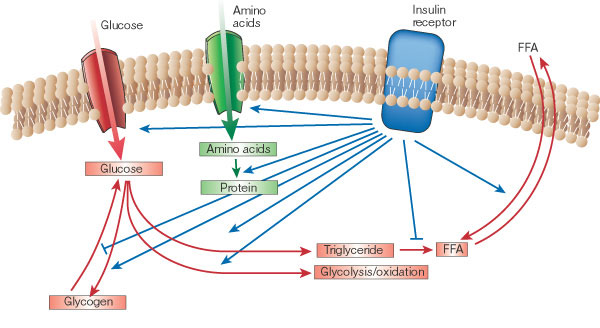
insulin paths
Source: Saltiel & Kahn 2001.

Crack open any physiology textbook and chances are you’ll learn that after eating any normal meal, the release of insulin from the pancreas then signals the shutdown of the release of fatty acids from adipose (body fat) tissue and the increase of fatty acid uptake.

Because of this well-known role of insulin, one of the more puzzling explanations offered by some – including a few respected scientists and medical professionals — for weight gain is that elevated insulin is to blame because of its involvement in “fat storage”. In addition, they argue that the reason why a diet lower in carbohydrates works for weight loss is because of reduced levels of the peptide hormone.

It’s an easy conclusion to make. The logic goes that carbohydrates through their stimulation of insulin are fattening beyond their contribution of energy as kilocalories. It doesn’t matter how much you eat, so long as you avoid carbs to lose weight.


Another growing belief floating mainly around fitness circles is that it’s best to forego foods containing carbs when heading to the gym. It’s for fear that the carbs’ action on insulin will squash fat burning stimulated by exercise. Then again, some low-carb proponents have also argued, physical activity as a means to expend energy for weight management is pointless altogether. Again, carbs are really all that matter because of their action on insulin.

Where does all the extra energy from excess protein and fat go when overconsumed? And what about protein’s own effects in stimulating insulin or insulin’s role in promoting satiety? These questions are often overlooked or not easily answered by those that promote the “insulin is a fat storage hormone” proposition.

Out to help repair insulin’s reputation is obesity researcher Stephan Guyenet, Ph.D., of the University of Washington, who studies regulation of body fat by the brain. He downplays insulin as a primary regulator of long-term fat storage calling it a misrepresentation and oversimplification of what the hormone’s role really is. “There has been a lot of confusion about the role of insulin in the regulation of fat tissue,” Guyenet comments.

“Insulin is a critical coordinator of dynamic fatty acid flux on a meal-to-meal basis,” Guyenet clarifies. Through coordination, insulin is the main hormone that, essentially, tells the body what to do with the food energy just eaten. For example, when carbohydrate or protein is eaten, insulin directs the body to burn the carbohydrate or protein instead of using fat. And when mostly fat is eaten, the lack of an insulin response directs the body to burn the fat just eaten.

“Either way, you burn what you eat, and when that runs out, you go back to burning stored fat,” according to Guyenet. “This process is easily misinterpreted because one of insulin’s main functions following a meal is to shut down fat release from fat cells while the body burns carbohydrate and protein.

From Guyenet’s explanation, it sounds more as if insulin’s role is really that of a traffic cop— signaling where nutrients should go (carbs, protein, and fat) just after meals. Overall, however, insulin does not promote fat accumulation in the long run. Keep in mind that insulin also promotes the transport of glucose and amino acid into muscle for synthesis of glycogen and proteins after meals.
“At the end of the day, the total 24-hour ‘flux’ of fat in and out of fat cells does not appear to depend on these insulin spikes,” Guyenet comments.

Making friends with insulin through exercise

Exercise researcher John Ivy, Ph.D., of the University of Texas, is in agreement that insulin is an often-misunderstood hormone and also makes the point that insulin’s specific action following meals does not relate to long-term fat storage. “The most important thing is calories burned in a day,” he comments.

As previously shared on this blog, Ivy emphasizes that understanding how to make the best use of insulin and carbohydrate can be critical for long-term weight management. The main reason is because of their support to muscle maintenance and growth. Ivy reminds that insulin’s role extends well beyond its action on promoting fatty acid synthesis. The hormone also both prevents protein breakdown and boosts protein synthesis in muscle. Although protein by itself promotes insulin’s release (again, often overlooked by low-carb proponents), carbohydrates can boost both these effects.

Additionally, when carbohydrates are consumed during or after exercise, they can help fuel a better workout overall (as a fitness-model-nutrition-scientist colleague of mine once put it, “working out without eating some carbs makes you feel like @*$”). Carbohydrates also replenish glycogen for faster recovery and better workouts later. Finally, carbohydrates also help reduce levels of the exercise stress-induced adrenal hormone cortisol, which is implicated in protein catabolism, aiding muscle recovery.

The main consideration, Ivy explains, is that “one does not want to lose muscle.” Skeletal muscle can be a primary source of glucose disposal and energy consumption (with exercise) and can play a role in determining metabolic rate. But dieting alone often leads to both fat and muscle loss, which can lead to a reduced metabolic rate and an increasingly harder time continuing to lose weight. Without exercise, the chances of putting weight back on increases and that, in turn, leads to greater risk of insulin resistance. “Dieting alone is not the answer. To prevent muscle loss, one needs to exercise when dieting, which will accelerate fat loss,” he said.

He also emphasized the role of nutrient timing, or consuming nutrients at times that coincide with (e.g. carb/protein drinks) or directly after physical activity, to make the most of insulin. Directly after exercise is when muscles are most insulin sensitive increasing the likelihood that nutrients will be used for muscle protein and glycogen synthesis.

Diabetes researcher Joseph Henson, Ph.D., of University of Leicester, affirms that physical activity’s powerful effects on promoting insulin sensitivity makes it the “first line” of defense for prevention and treatment of insulin resistance. But while perhaps timing nutrients for after exercise may be best, he says that just getting any activity is what counts most. “A single bout of exercise can increase insulin sensitivity for at least 16 hours post exercise in healthy people as well as people with type 2 diabetes,” Henson comments.

On the other hand, the lack of activity, or general muscle contraction, Henson argues, can exacerbate insulin resistance and decrease insulin sensitivity, which are prerequisites for type 2 diabetes. Henson’s recent research suggests that probably more important than exercising regularly is simply avoiding staying sedentary for too long for cardiovascular health.

“We found that it was the amount of time that people spent sitting that had the biggest impact on glucose, triglycerides, and HDL cholesterol and not the level of exercise,” he said. “This just shows what a negative impact too much sitting can have on an individual’s health, independent of the level of exercise.”

With respect to the powerful effects of physical activity on insulin sensitivity and maintenance of skeletal muscle, it’s unclear why “insulin as a fat-storage hormone” proponents would argue against the use of exercise as an additional support for weight management. Of course, one could point out studies that have shown that exercise alone does little for long-term weight loss, but doesn’t that discredit further the idea that insulin is a long-term fat storage regulator?* “This is particularly ironic,” Guyenet explains, “since exercise is probably the most effective way to increase the insulin sensitivity of lean tissue. Exercise can also reduce fasting insulin to some extent.”

Why low carb really works for weight loss

If not because of reduced insulin, how then does a lower-carb diet really work for weight loss? Professor of regulation of food intake Margriet Westerterp-Plantenga, Ph.D., of Maastricht University Medical Centre, suggests that the reason low-carb works has nothing to do with carbohydrates at all, but everything to do with protein and its role on energy balance.

In a review paper last year, Westerterp-Plantega (along with colleagues Sofie Lemmens and Klaas Westerterp) wrote that controlled trials have shown that the answer is that it is the relatively higher protein of the diets including Atkins, South Beach Diet, Paleo, etc., and not the relatively lower carbohydrate content that has led to the success of these approaches for weight loss. The reason is that dietary protein acts on three “metabolic targets”: it increases satiety, stimulates energy expenditure, and spares fat-free muscle (helping to maintain resting energy expenditure).

Westerterp-Plantenga’s hypotheses are now supported further by a new study of which she was the lead author published earlier this year. The study compared two energy-restricted diets, one normal in protein (0.8g/kg/d) and one higher in protein (1.2g/kg/d) on 72 overweight and obese men and women. While both groups lost weight, as expected, the group that consumed more protein retained more muscle and had a higher resting metabolism (this was independent of physical activity).
Along with the study’s findings, which were published in the Journal of Nutrition, Westerterp-Plantenga points out that the protein in both diets facilitated satiety. The study evaluated satiety through measurement of concentration of appetite-regulating hormones glucagon-like peptide 1 (GLP1) and peptide YY 3-36 (PYY).

In addition, another recent study by Anita Belza and her colleagues, of the University of Copenhagen, evaluated different protein intakes on appetite-regulating hormones including GLP-1, PYY, and glucagon. The study was performed on 25 men in a three-way randomized, double blind manner that involved test meals with 30 percent energy from fat and normal protein (14 percent energy), medium-high protein (25 percent energy), and high protein (50 percent energy). The study, published in AJCN earlier this year, found that protein induced satiety in a dose-dependent manner.

These findings might explain why it has been observed in other previous studies, as reported by KJ Acheson, that “for every 1 percent increase in protein intake, replacing fat or carbs, observed decreases of energy intake range from 32 to 51 kilocalories.” That’s some satiety. In addition, he wrote that animal protein stimulates 24-hour energy expenditure slightly but significantly more than vegetable proteins (likely due to animal protein’s content of branched-chain amino acids and action on insulin).
All of this research support Guyenet’s assertions that fat regulation probably has a lot more to do with appetite than with insulin. “Insulin regulates fat cell function in a dynamic, meal-to-meal manner, but it is probably not a major regulator of total fat tissue size (despite its ability to alter body fatness in extreme circumstances like type 1 diabetes and insulin injections into the same spot every day),” he writes.

Leptin

In his final thoughts on what is really involved in controlling long-term fat storage, Guyenet adds, “The primary known regulator of body fatness is the hormone leptin.” How does leptin work to regulate fat storage? So far, what is known is that leptin inhibits food intake by affecting long-term appetite, although it doesn’t appear to have any effects on short-term satiety signals (as protein does).
Leptin acts specifically by signaling the hypothalamus that energy stores are sufficient. Notably, when leptin is absent (as in genetically altered mice and humans with rare mutations) it can lead to severe obesity. The effects of leptin in humans are not as well understood; however, obesity is thought to involve a resistance to the effects of leptin on appetite centers.

For more of Guyenet’s thoughts on carbs and insulin, you can head over to his blog. And, you can expect to hear more from Guyenet on the topic of leptin soon.

In the meantime, it’s safe to say that we should all lay off the naming and blaming of insulin for weight gain and obesity. Instead, it’s probably best to continuing to watch energy intake and expenditure, as well as making sure to include physical activity for improved muscle maintenance and insulin sensitivity, for long-term weight management.

*Note: Ivy suggests that to make the most of physical activity for weight loss, it’s important to get enough each day for its additional effects on appetite in the brain that could help diminish overeating. ”When physical activity declines below a threshold level of about 60 percent of resting metabolic rate, the relationship between caloric expenditure and appetite becomes uncoupled. The further one moves below this threshold level of caloric expenditure, the more one overeats,” he said.
References
Acheson KJ. Diets for body weight control and health: the potential of changing the macronutrient composition. Eur J Clin Nutr. 2012 doi: 10.1038/ejcn.2012.194.
Belza A, et al. Contribution of gastroenteropancreatic appetite hormones to protein-induced satiety. Am J Clin Nutr. 2013 doi: 10.3945 / ajcn.112.047563
Henson et al. Associations of objectively measured sedentary behaviour and physical activity with markers of cardiometabolic health. Diabetologia. doi: 10.1007/s00125-013-2845-9.
Saltiel AR, Kahn CR. Insulin signalling and the regulation of glucose and lipid metabolism. Nature. 2001. doi: 10.1038/414799a
Soenen S, et al. Normal Protein Intake Is Required for Body Weight Loss and Weight Maintenance, and Elevated Protein Intake for Additional Preservation of Resting Energy Expenditure and Fat Free Mass. J Nutr. 2013. doi: 10.3945 / jn.112.167593
Westerterp-Plantenga MS, et al. Dietary protein – its role in satiety, energetics, weight loss and health. Br J Nutr. 2012 Aug;108 Suppl 2:S105-12. doi: 10.1017/S0007114512002589.
Wolfe R. The underappreciated role of muscle in health and disease. Am J Clin Nutr. 2006;84:475-82.

Paleo diet Conversations! ha ha - YouTube


Published on 20 May 2013
Paleo Diet Nonsense. Free article, vids, and reports: http://www.brinkzone.com/

Should you eat "paleo"? Some humor poked at the current cave man eating craze. As one Archaeologist stated at a scientific meeting:

"Look, the diet itself is sound; it's the philosophy that's bullshit. Eat what you want. Just leave the damn cavemen out of it."

Comments
There's nothing inherently wrong with "paleo" other than maybe their irrational fear of beans. The bullshit begins when they try to pretend like it's somehow drastically different from other low(er) carb diets.
And then there are those that promote it by talking to me like we all have celiac disease, that having the occasional piece of bread is going to cause violent gastrointestinal distress and millions of pounds added.
I'm beginning to think that Atkins had it figured out....
· 3

27.5.13

Egg yolk same / better lecithin composition than soy-lecithin: Emulsification of coconut oil/MCT oil

Coconut Oil, Ketones and Alzheimer's: Emulsification of coconut oil/MCT oil

"Lecithin proper (phosphatidylcholine), is the substance that all our cells walls are made of. Besides soy, another source of lecithin is egg yolks. This is why egg yolks and soy lecithin can be used, nearly interchangeably, as emulsifiers"
The name "lecithin" was originally defined from the Greek lekithos (λεκιθος, egg yolk) by Theodore Nicolas Gobley, a French chemist and pharmacist of the mid-19th century, who applied it to the egg yolk phosphatidylcholine that he identified in 1847. Gobley eventually completely described his lecithin from chemical structural point of view, in 1874.
Phosphatidylcholine - Wikipedia, the free encyclopedia


This lecithin is from soy, yes? To the best of my knowledge, not only does that mean it is GMO, lecithin quality is difficult to track. Lecithin is often a 'bottom of the barrel' product. Perhaps you find the benefits outweigh the risks?
By Anonymous Anonymous, At July 16, 2011 at 1:40 PM


Lecithin *oil* is definitely a "bottom of the barrel" product. In fact, it is made from the sludge that is left over from making liquid soybean oil. Liquid lecithin is not really pure lecithin, though it does contain some. Even the dry version of lecithin is not pure lecithin, but it has a much higher percentage than the liquid version.

Lecithin proper (phosphatidylcholine), is the substance that all our cells walls are made of. Besides soy, another source of lecithin is egg yolks. This is why egg yolks and soy lecithin can be used, nearly interchangeably, as emulsifiers.

I find the liquid lecithin a little easier to use in some circumstances, but I use both.

Finally, it ha been found that lecithin increases cerebral nerve functioning, elevating clarity, etc., better than prescription drugs that are designed for the same use. I have heard many accounts of people not being able to consume lecithin at night due to restless sleep and increased cognitive function during dreams. That is, it gives them nightmares. I have experienced the same thing.

On coconut oil: I love the stuff. But then I love coconut milk, coconut cream, and Almond Joy. I prefer the Louana version for most food-related purposes because as much as I love coconut, I don't want *everything* tasting like a tropical drink. The Louana version is deodorized, so it is ideal for frying and replacing and/or combining with omega-6 fats.

Unlike most available fats, coconut oil is able to be readily metabolized into energy via the liver. In other words, MCT fats are less likely to be stored in fat cells, and much more likely to be used for energy.
By Anonymous Anonymous, At August 19, 2011 at 1:36 PM 


The Only Way I Drink Coffee…high fat (butter and / or coconut oil)

Healthy Coffee Recipe

The Only Way I Drink Coffee…

A way to supercharge coffee and make it healthy and great for your skin The Only Way I Drink Coffee...

After a recent facebook post where I mentioned I put some strange ingredients in my coffee, I’ve gotten a few emails asking for more details…

I have a love/hate relationship with coffee. Basically, I love coffee but my adrenals don’t always love it! Also, since I don’t eat/drink sugar or much pasteurized dairy, it can make for some pretty boring coffee… until now.

I’d always mixed coconut oil into my coffee or tea to help get my 1/4 cup a day, though it always floated on the top and the texture was sometimes rough (especially when I was pregnant…  the texture made me so nauseous!). At the suggestion of a site I sometimes read, I tried a strange twist that has become my new favorite!

Basically, I blend coconut oil and grassfed organic unsalted butter (yes… butter) into coffee with a dash of vanilla and sometimes a drop of stevia. The blender emulsifies the coconut oil and butter so the texture is more creamy than oily and it is a delicious way to get a boost of beneficial fats. This type of coffee also gives much more extended energy throughout the day without making me jittery.

I also tried his Bulletproof Coffee which is much smoother than regular coffee and produced carefully to avoid the presence of Mycotoxins: “Most coffee beans are processed by either leaving them in the sun and elements to wither and dry, or by pressing them and letting them ferment (spoil) to remove the outer layer of the bean.  Both of these techniques are known to produce significant levels of mycotoxins as they enhance flavor. Upgraded Coffee beans are mechanically processed right after picking using only clean cold water.  This more expensive process is safer because it dramatically reduces harmful molds or bacteria from impacting your health.”

Seriously, try this coffee at your own risk, because it will ruin you for drinking other coffee!
Bulletproof coffee and herbal coffee are the only ones I drink anymore and I always prepare it this way…

The Only Way I Drink Coffee…
A way to supercharge coffee and make it healthy and great for your skin The Only Way I Drink Coffee...
A delicious and creamy coffee that packs a powerful nutritional punch!

Ingredients
Instructions
  1. Put all ingredients in a blender or food processor. Mix on high speed for 20 seconds until frothy. Drink immediately and enjoy all the energy!
Prep time
Cook time
Total time

Notes:

I take my fermented cod liver oil right before drinking this to give all the fat soluble vitamins some beneficial fats to digest with. If you aren’t regularly taking coconut oil, start with a teaspoon and work up as too much at once might upset your stomach. Coconut oil often increases metabolism and some people notice feeling warmer or like their heart is racing if they start off too fast.
Do you drink coffee? Put butter in it? Too weird? Weigh in below!


Leave a message...
  • Avatar

    Danielle O. 10 months ago


    That's how I take my coffee, too. People give you the strangest looks when you tell them you put butter in your coffee. But it tastes SOO good! Can't imagine going back now.

  • Avatar

    Carole 10 months ago


    i drink bulletproof coffee too, although it's been so hot & humid lately that -- ick. but the coffee is delish. now that's it hot outside, i've been drinking sweetner-free smoothies with a heavy pour of coconut oil. that way i still get my fats, i drink something cool and refreshing, and life is generally good.

  • Avatar

    Cotopaxipamela 10 months ago


    I put coconut oil, two tbsp of chia seeds, one tbsp
    of unflavored beef gelatin, and a little of my home made coconut milk, and some raw honey. Yum! Gets me my energy fix in the morning for WODS!

  • Avatar

    Kaleyf 10 months ago


    I just made some to try. OMG I am hooked!

  • Avatar

    Amy 10 months ago


    I make home made hazelnut creamer, basically hazelnut milk without diluting it with water. It is *amazing* in coffee. Sadly butter is not on menu here since my boys are very allergic dairy.

  • Avatar

    Julie 10 months ago


    This morning, my pastured heavy cream had turned to butter without my consent!  However, I went ahead and put it in my coffee since I had none other and can't get it down straight.  Despite the presence of little yellow dots of butter floating on the surface, the coffee was fine, so I'm trying this as soon as I get home today!  Thanks!

  • Avatar

    Julie 10 months ago


    P.S. What's the butter for, anyway?  Taste or nutrition or texture?

  • Avatar

    Chantel 10 months ago


    haha! I tried blending coffee and butter once because I read it on another blog somewhere and decided I needed to try it that instant. The problem was that all I had at my house at the time was salted butter. While the texture was luscious...salty coffee just did not satisfy. But this reminds me I need to seek out some unsalted butter and try it again. What kind of butter do you use? I use either kerrygold or organic valley. Even though I don't recall seeing it, they must sell unsalted, right?

  • Avatar

    Liv 10 months ago


    What are your views on coffee while pregnant? I'd like to try this, but I'm about 10 weeks and there is a lot of conflicting info on coffee while pregnant. I'm assuming one cup/day is fine?

  • Avatar

    Kalileko 10 months ago


    I'm sure I would love this. But before I try (and potentially ruin an excellent cup of coffee): is your butter soured? I'm in Scaandinavia and both our salted and unsalted butters are soured.
    This week my supermarket has an organic, pastured and welltasting butter on sale - and they are located only 20 steps from my door. Alas my pockets are empty but maybe I can spare a little for a butter stash ;)


    • Wellness Mama Mod Kalileko 10 months ago


      It isn't soured... that would probably create a different taste. you could even just use the coconut oil if you need to...

      • Avatar

        Kalileko Wellness Mama 10 months ago


        I've tried it a couple of times now with the butter I had in my fridge and in both matcha and coffee. The souredness doesn't actually put me of but i think I'll get some unsalted butter to use instead! I'm adding both sweetener and vanilla, which I normally don't do, and that may counteract for the souredness i think?
        Thanks for this idea! I would never had thought of it but have been thinking about how I could lessen my use of cream lately. (leadint up to actually forgoing dairy.... oi, the horror;))
        Also I don't really like the taste of coconut but like this I can get more coconut oil in without trouble and might even come to enjoy it. Double yay!

  • Avatar

    warmtiles Lolly 10 months ago


    I use canned coconut milk in my coffee - love it

  • Avatar

    Holly1414 10 months ago


    I've been blending coconut oil into my coffee for about a month, and I LOVE it! Sometimes I add vanilla and/or cinnamon, or some homemade whipped cream, but I've never tried butter. Sounds good!

  • Avatar

    Alexandra 10 months ago


    Coffee's a rare treat for me nowadays.  A nice cup of hot tea does the trick for me!  I will definitely give this a try.

  • Avatar

    Laura 10 months ago


    What kind of coconut oil do you use?  I've been reading about the many uses of this oil and would like to know your opinion on what's good out there.

  • Avatar

    MeliSsa murphy 10 months ago


    On the recommendation of my Ayurvedic doctor, I put a pinch of freshly ground cardamom into my coffee. I keep a separate spice mill just for this purpose. Sometimes I'll also add ground cinnamon and ginger. I like adding coconut oil as well. And double cream!


  • Amanda Lindahl 10 months ago


    This is money!


  • Diane Vigna 10 months ago


    do you use hot, warm or cooled coffee?

  • Avatar

    Dragonherb 10 months ago


    Doesn't sound at all weird to me.  I love coffee, but I'm limited to one cup a day.  I'm going to try your recipe so I can at least enjoy that one cup!  Right now, digestive problems are an issue...would be nice to find an answer to that!

  • Avatar

    Sherylsprague24 10 months ago


    Do you think coconut sugar is better than stevia to put in your coffee or tea in the morning? Ty


  • Wendy Vania 10 months ago


    My daughter and I have coffee every weekday morn, with organic full cream.  We have been wanting to try our coffee "your way" but didn't have the unsalted grassfed butter-only salted.  Anyway, as necessity would have it (I was out of our cream) we did your coffee :) with regular unsalted butter- WOW so impressed.....I must always have cream in my coffee (I thought until NOW), but today ran out of the rich cream that I love,  and I did not miss it! Coffee done Mama's way was GREAT!   Now I know what you were talking about, so rich, so creamy, (not in a thick weird way) it was absolutely delish!   Thank you!

  • Avatar

    Bumfamily 10 months ago


    I LOVED IT!    WOW!

  • Avatar

    Christina 10 months ago


    I made this with my breakfast this morning.  I was a bit skeptical about the butter (I had used coconut oil before though, and liked it so that wasn't an issue), but after blending it up it tasted like a yummy, frothy cappucino!  I think tomorrow I am going to put a little cinnamon on top!


  • Grandma 10 months ago


    I've ordered Mountain rose's herbal coffee and am looking forward to trying it.  Different brands of coffee affect my stomach at times so this should be good.  I have started adding a little coconut oil to my coffee also but I need to get a small blender.   I think I'll order some of the butter from tropical traditions also.  While I don't believe in "depriving" myself of all the things I enjoy, I can make some changes and pass them on to my daughter and her young son.

  • Avatar

    Janekay 10 months ago


    Is there a reason why you don't add the MCT oil?  Is coconut oil giving you the same medium chain triglycerides as the oil?  Thanks for any advice.

  • Avatar

    RacheL H. 10 months ago


    I wonder if this would be good substituting raw fresh cream instead of the butter? Thankfully, my Mom has unsalted organic butter due to a mixed up order via an almost-local creamery! :) I suppose I can try my coffee both ways. 

  • Avatar

    theresa gianna 9 months ago


    i finally tried this -- it's good! i use cinnamon instead of vanilla. i'm really glad you posted this recipe, because i cannot *stand* taking coconut oil. i don't like the taste at all, and have been struggling to find ways to successfully incorporate it. and this works! i can get in a full two tablespoons (probably more)!

  • Avatar

    Lisa 9 months ago


    Just tried it... looking forward to all that energy today!


  • Andrea Crowe Davis 9 months ago


    All I gotta say is....I am absolutely and completely addicted to drinking coffee this way. I never thought anything would replace my straight, black coffee, but this blend is AMAZING!!!!!!


  • Canadian Girl 9 months ago


    Our dairy in Canada isn't the same as in the U.S. Our farmers are regulated to not use hormones or antibiotics on their animals. I tried this recipe with a coconut butter/ghee product and it worked great. I do like cream in my coffee. Can I add it?

  • Avatar

    carole 9 months ago


    Nummy! I always thought this sounded kind of icky and how could it be better than heavy cream, right? But this recipe just kept "coming back to me". So I broke down and tried it this morning.
    Nummy!
    Thanks for posting this.

  • Avatar

    JessieO 9 months ago


    I remembered your post about this and I put half a teaspoon of coconut oil in my coffee. I didnt remember what amount you said to start with. I guess I'll see how it goes. The coffee loooked a little oily but didnt feel that way when I drank it. It was smooth.


  • Alde 8 months ago


    Oh My God amazing thank you so much this is my now my fav way of drinking coffee :D

  • Avatar

    Nicole 8 months ago


    I love this!

  • Avatar

    Kim Bryant 8 months ago


    Maybe everyone is already doing this but I thought I would mention the immersion blender.... so much easier than the regular blender!


  • Catherine Peisher Knight 7 months ago


    I call this turbo coffee. Sometimes I add cocoa powder to it, sometimes I add cinnamon, nutmeg and a dollop of pumpkin to it (I don't want to be left out of the fall frenzy for pumpkin spice lattes)


  • Jenn 7 months ago


    Who'd have thought....I didn't have any unsalted butter just cream being cultured to make butter so I used some of that with 1 tsp of coconut oil in my honey latte...not bad. I can't even taste the coconut oil...I steamed it with the cream using an expresso maker. Nice and frothy.


  • chinyaray 7 months ago


    I am 32 weeks along and don't plan on drinking coffee until I am finished breastfeeding, which will be quite a while from now. I am bookmarking this but I did purchase some Bulletproof for a friend and now she is hooked! So thank you for sharing, from both of us!